 Barsha Heights, Tecom, Dubai
 +971 (4) 266 6763
Whitening Powder Teeth: What Is Actually in the Tub?
10/10/2026 · Teeth Whitening in Dubai
 10/10/2026
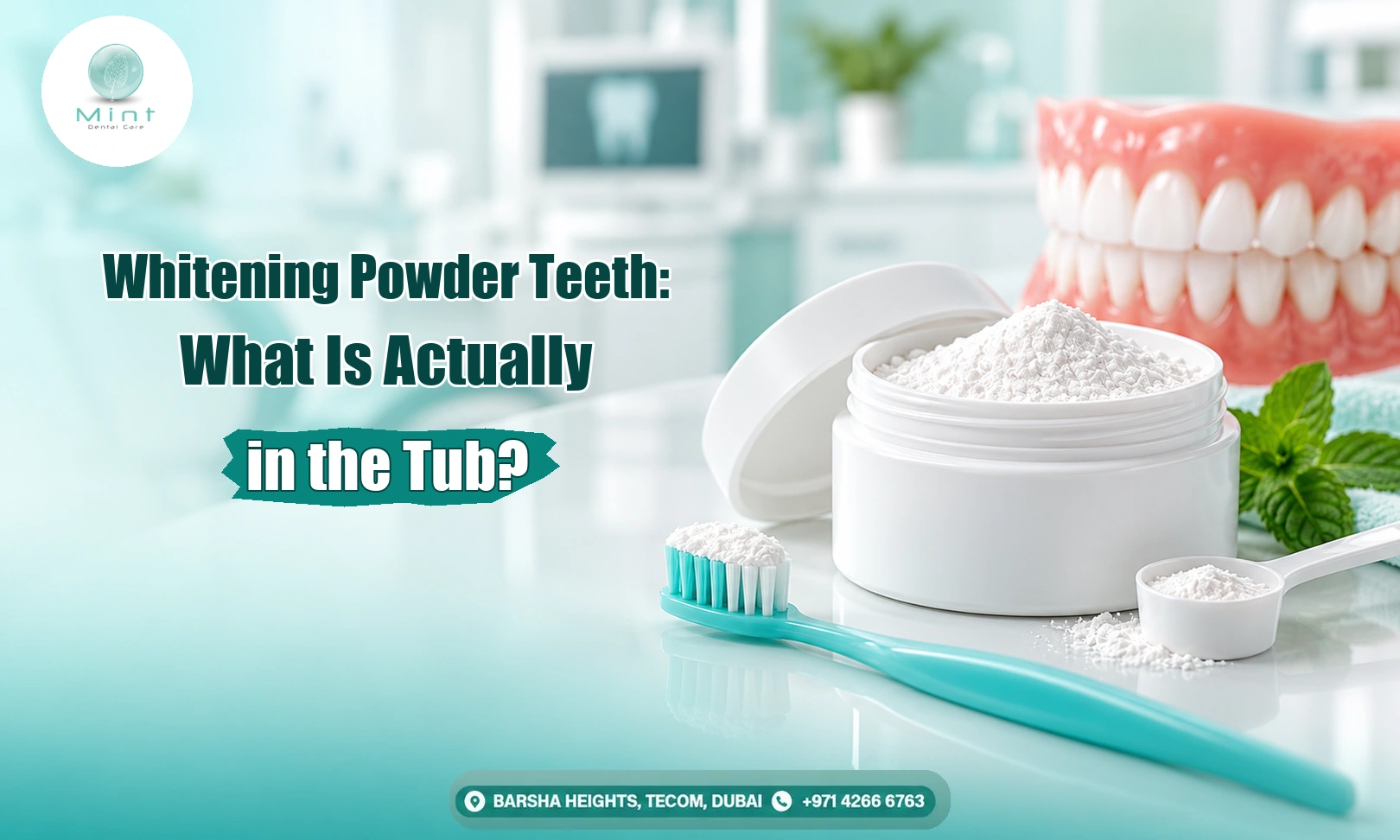
Whitening powder teeth products are mostly abrasive. A tub holds calcium carbonate, hydrated silica, charcoal or clay, a flavour, and sometimes a blue pigment, with 0% peroxide in any of it. Peroxide is the only ingredient that reaches the colour inside a tooth, so a powder lifts the stained film off the outside in one brushing and goes no further. The shade underneath stays where it was.
That separates two jobs. Taking a brown film off enamel is cleaning. Moving a tooth from a yellow shade to a lighter one is bleaching. A whitening powder teeth tub only does the first, and the ingredient list is where that shows.
Whitening powder teeth ingredients
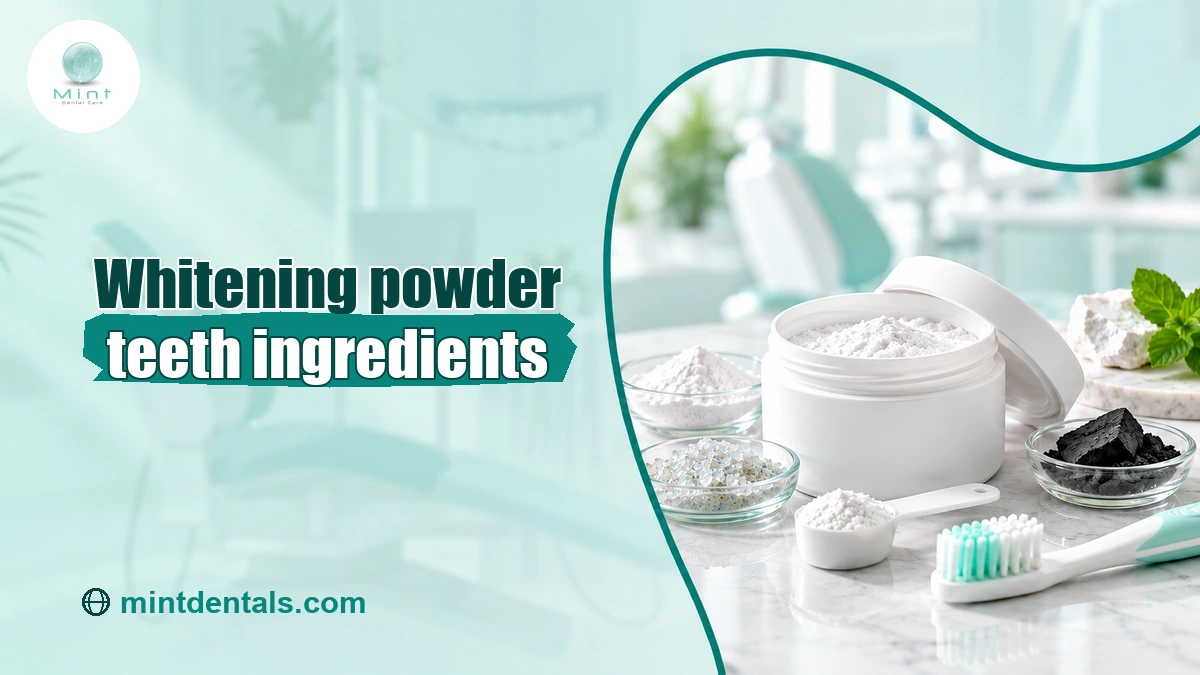
The list on the back of a whitening powder teeth tub is short, and almost all of it does one job. Knowing which ingredient does what explains why the result looks the way it does.
Calcium carbonate and hydrated silica
Every whitening powder teeth tub is built the same way: a hard mineral that does the scrubbing, plus a flavour. Calcium carbonate is chalk, the cheapest base. Hydrated silica is the abrasive in toothpaste, where the grade is controlled. In a loose powder, nothing tells you which grade you bought.
Charcoal, alumina and bentonite clay
Activated charcoal binds molecules on contact, which is why it absorbs odour. Binding is not bleaching: a 2017 review in the Journal of the American Dental Association found insufficient evidence for charcoal dentifrice claims. Most whitening powder teeth tubs carry no fluoride either. Kitchen abrasives are a separate question, answered in whether you can whiten teeth with baking soda.
| Ingredient | What it does on the tooth |
|---|---|
| Calcium carbonate | Scrubs film. Abrasivity follows particle size. |
| Hydrated silica | Polishes when fine, abrades when coarse. |
| Activated charcoal | Absorbs odour, removes film. No bleaching. |
| Alumina | Harder than the rest. An industrial grit. |
| Bentonite clay | Mildly abrasive. No effect on colour. |
| Blue covarine | A blue film that shifts colour. Washes off. |
Reading a tooth powder label
Packaging language is carefully chosen, and two words in particular are doing different work from what most buyers assume.
Brightening is not bleaching
A whitening powder teeth label runs in descending order of concentration, so charcoal or chalk in first place means the tub is mainly abrasive. Then read the verbs. Brightening, polishing and stain removal describe surface cleaning. Shade change and lightening describe something no powder does. Peroxide gels sold in a box are a different product, covered in our guide to diy teeth whitening kits.
RDA abrasivity scale explained
There is a published number that measures how hard a product scrubs, and it is the single most useful figure for judging a whitening powder teeth product. Most tubs do not print it.
What RDA actually measures
RDA is Relative Dentin Abrasivity, the measure of how much tooth structure a cleaning product wears away. ISO 11609 abrades dentine rather than enamel, because dentine is softer and wears measurably in a test. Exposed dentine is also where a harsh powder does damage first. No rule makes a whitening powder teeth tub print the figure, and published charcoal values scatter from mild to above the toothpaste ceiling.
| RDA value | Classification |
|---|---|
| 0 to 70 | Low abrasivity |
| 70 to 100 | Medium abrasivity |
| 100 to 150 | High abrasivity |
| 150 to 250 | At the daily-use ceiling |
| Above 250 | Outside the ISO limit |
Why powder cannot bleach teeth
This is the heart of the matter. Tooth colour has two separate components, and a powder can only reach one of them.
Surface stain versus inner shade
Extrinsic stain is a film of coffee, tea and tobacco pigment sitting in the roughness of enamel. Intrinsic shade is the colour of the dentine core showing through translucent enamel. Peroxide diffuses into dentine and breaks that pigment apart. An abrasive reaches only the outermost micrometres, which is the ceiling on every whitening powder teeth product.
Blue covarine optical whitening
Some powders do make teeth look whiter immediately, without changing the enamel at all. The mechanism is a trick of perception, and it washes off.
How a blue pigment shifts colour
Some whitening powder teeth brands add blue covarine, a pigment that lays a thin blue layer on enamel. Blue over yellow shifts the colour your eye reads toward white, the same trick as a blue rinse on grey hair. Teeth do measure lighter straight after brushing. The layer washes off with the next meal.
Powder on dentine and restorations
Enamel tolerates abrasion reasonably well. The surfaces that do not are the ones many adults already have exposed.
Exposed root surfaces and recession
Where gum has receded, the exposed surface is cementum and dentine, not enamel, and it wears many times faster. Abrasive brushing there cuts a smooth notch at the gum line that traps plaque, shows as a dark line and turns sensitive to cold air.
Composite, veneers and crowns
Composite is softer than enamel, so an abrasive dulls its polish and the rough surface then picks up stain faster. Porcelain veneers and crowns carry a fired glaze that scratches. None of these materials bleach, so natural teeth and restorations drift apart in colour.
Why worn enamel looks yellower
This is the part that undoes the exercise. Enamel is translucent and the dentine beneath is yellow, so thinning the enamel lets more yellow show through. Long-term whitening powder teeth users often end up darker than they started. Brushing harder makes the same mistake.
Tooth powders sold in the UAE
Shelves here carry the same claims as anywhere else, with shade promises that nobody is required to prove. A few things are worth checking before buying.
Shade claims nobody verifies
A whitening powder teeth tub sold in a UAE pharmacy is notified to the authorities on the safety of its ingredients. Nothing in that process audits the sentence on the front. Three questions decide the purchase. Does the label state an RDA figure? Does it contain fluoride? Does it claim a shade change without naming a bleaching agent? A no, a no and a yes describe a tub that costs enamel.
Who should avoid whitening powder teeth
For some mouths a whitening powder teeth product is a bad idea regardless of brand, and the reasons have nothing to do with its quality.
Recession, children and pregnancy
If your gums have receded, if cold makes a tooth jump, or if you can feel a groove at the neck of a tooth, dentine is exposed and an abrasive is the wrong product. Children should not use one either, because enamel on a newly erupted tooth is still maturing. In pregnancy gums bleed more readily, so scrubbing the gum line is unhelpful and changes no shade.
Sensitivity after using a powder
A twinge after brushing with a powder is a signal rather than a side effect to push through, because it usually points at what the abrasive has already uncovered.
Dentine sensitivity and sore gums
A sharp response to cold water or air that stops when the stimulus goes is classic dentine sensitivity, and abrasion causes it. A damp finger or a hard brush concentrates the grit where enamel is thinnest, so sore gum margins days into a new whitening powder teeth routine are abrasion, not whitening working. A soft brush and fluoride toothpaste usually settle it in a fortnight.
Whitening that changes tooth shade
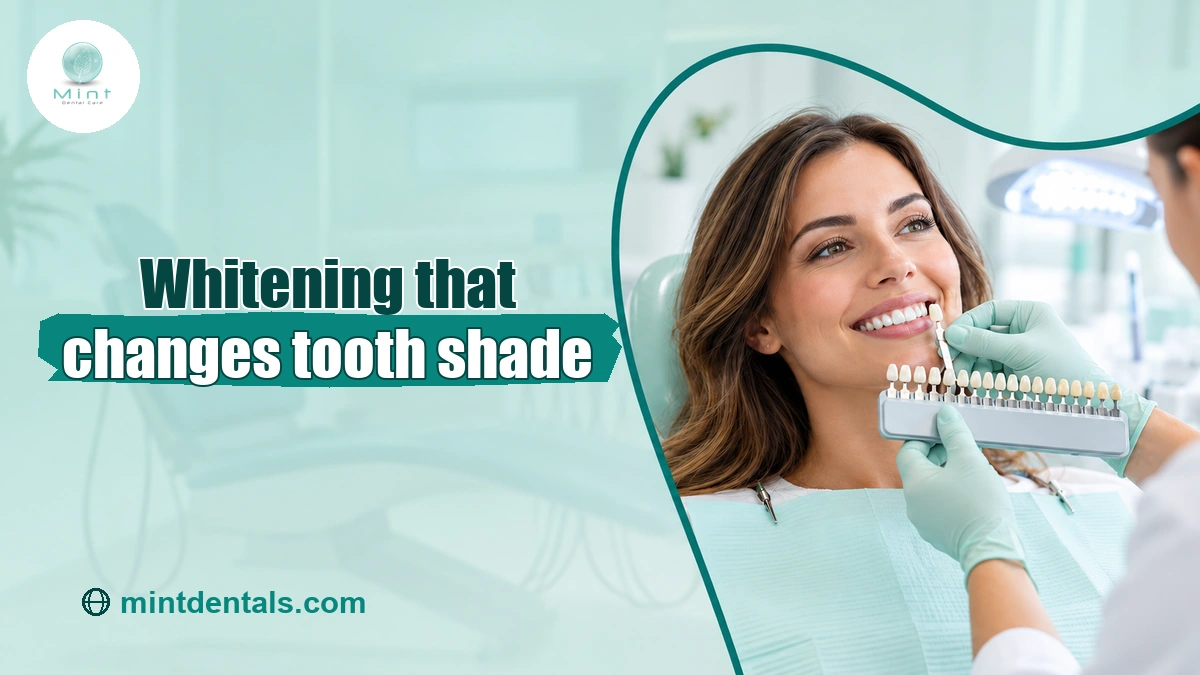
If the goal is a genuinely lighter shade rather than a cleaner surface, only one category of product does it, and the order of steps matters.
Cleaning first, then whitening
A professional clean removes the film a powder chases, and reaches below the gum margin where no brush goes. Many people stop there, because most of the shade was stain. Holding that result is covered in how to keep my teeth white. Scaling and polishing alone is AED 500.
Prices at Mint Dental Care
If the shade itself has to change, no whitening powder teeth tub will do it. That takes a peroxide gel, and our teeth whitening page sets out the options. Nano whitening in the clinic is AED 1,500 plus 5% VAT, including the scaling and polishing. A take-home kit made to fit your teeth is AED 800, both on our dental service prices page.
| What you want changed | What does it |
|---|---|
| Tea, coffee and tobacco film | Scaling and polishing, AED 500 |
| The underlying yellow shade | Nano whitening, AED 1,500 plus 5% VAT |
| A gradual change at home | Take-home kit, AED 800 |
| Nothing, on a tub of powder | No shade change without peroxide |
Read the tub as what it is and the choice gets simple. A whitening powder teeth product is a stain remover with a colour word on the front, and its honest ceiling is a clean tooth. If that is light enough, a soft brush and fluoride toothpaste hold it for nothing. If it is not, scrubbing will not close the gap, and what it spends is enamel.
Frequently asked questions
Most questions about these powders come down to one thing: whether the result people see is a real colour change or a cleaner surface. These answers separate the two.
Does a whitening powder teeth product actually bleach teeth?
No. Bleaching needs hydrogen peroxide or carbamide peroxide to diffuse into dentine and break down the pigment there, and a retail powder holds neither. It abrades the stained film off the enamel surface instead, so the tooth looks cleaner while its underlying shade is unchanged.
What is RDA, and why does it matter for a tooth powder?
RDA is Relative Dentin Abrasivity, the measure of how much tooth structure a cleaning product wears away, capped at 250 for toothpaste under ISO 11609. A powder is almost entirely abrasive, and most tubs never publish the figure, so a mild polish and a harsh grit look alike.
Can a whitening powder damage enamel?
A coarse one used daily can. Enamel does not regenerate, so abrasion adds up, and the loss shows first at the gum line and on exposed roots. Thinner enamel lets more yellow dentine show through, which is why long-term users often report teeth looking darker.
Is a whitening powder safe on veneers and crowns?
We would not use one. Porcelain carries a fired glaze and composite is softer than enamel, so an abrasive scratches both and the roughened surface picks up stain faster. Restorations do not respond to bleaching either, so they stay put while natural teeth change.
Why do my teeth look brighter for only a few hours after a powder?
Two reasons. A freshly cleaned surface reflects more light until the film returns, within hours of eating and drinking. If the tub contains blue covarine, a thin pigment layer has also been laid on the enamel, and that shifts the colour you read until it rinses off.
Why have my teeth become sensitive since I started using a powder?
Abrasion at the gum line exposes dentine, and dentine carries fluid-filled tubules that answer cold and air with a short sharp pain. Stop the powder, move to a soft brush with fluoride toothpaste, and it usually settles within two weeks. If it does not, have the wear examined.
Is a whitening powder safe to use in pregnancy?
An abrasive powder is not toxic, but it is a poor choice in pregnancy. Gums turn more reactive and bleed more easily, so scrubbing the margins makes that worse while doing nothing to the shade of a tooth. A soft brush, fluoride toothpaste and a routine clean are sensible.