 Barsha Heights, Tecom, Dubai
  +971 (4) 266 6763
Calculus Bridge: What It Is and How to Remove It Safely
19/08/2026 · Dental Hygiene in Dubai
 19/08/2026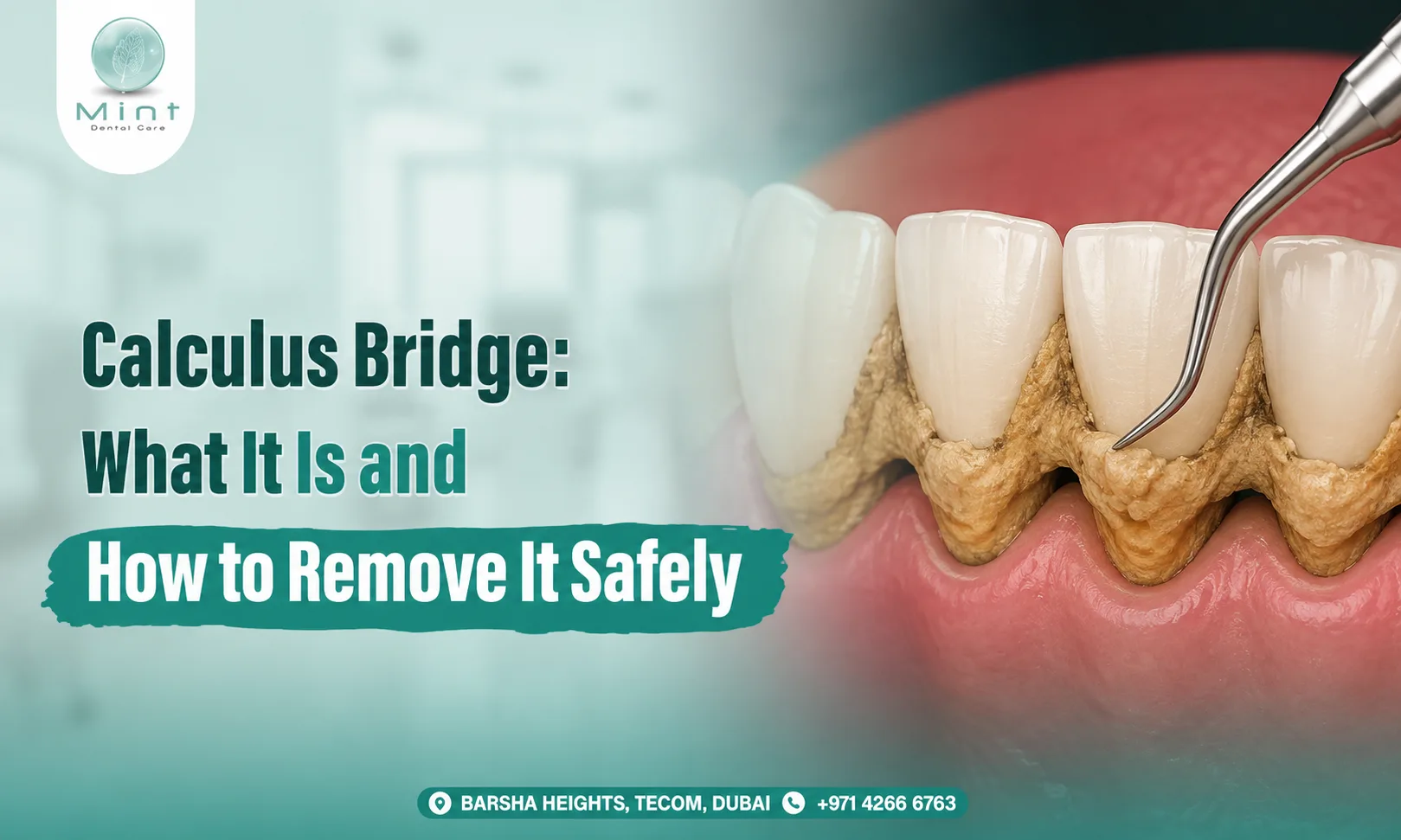
Calculus bridge is the term for a solid band of hardened tartar that spans two or more teeth, fusing them together under a shared crust of mineralised plaque. It usually forms along the gum line behind the lower front teeth, it cannot be brushed away, and it needs professional scaling to remove. Left alone it drives gum inflammation, bad breath and eventually bone loss.
The word calculus here has nothing to do with mathematics. It is the dental term for tartar: plaque that has absorbed minerals from saliva and set hard. When several teeth are covered by one continuous deposit, that is the bridge.
Noticed hard deposits or bleeding gums along your lower front teeth? Book a hygiene visit at Mint Dental Care. Call +971 4 266 6763, WhatsApp us, or see our professional teeth cleaning.
What is a calculus bridge, exactly?
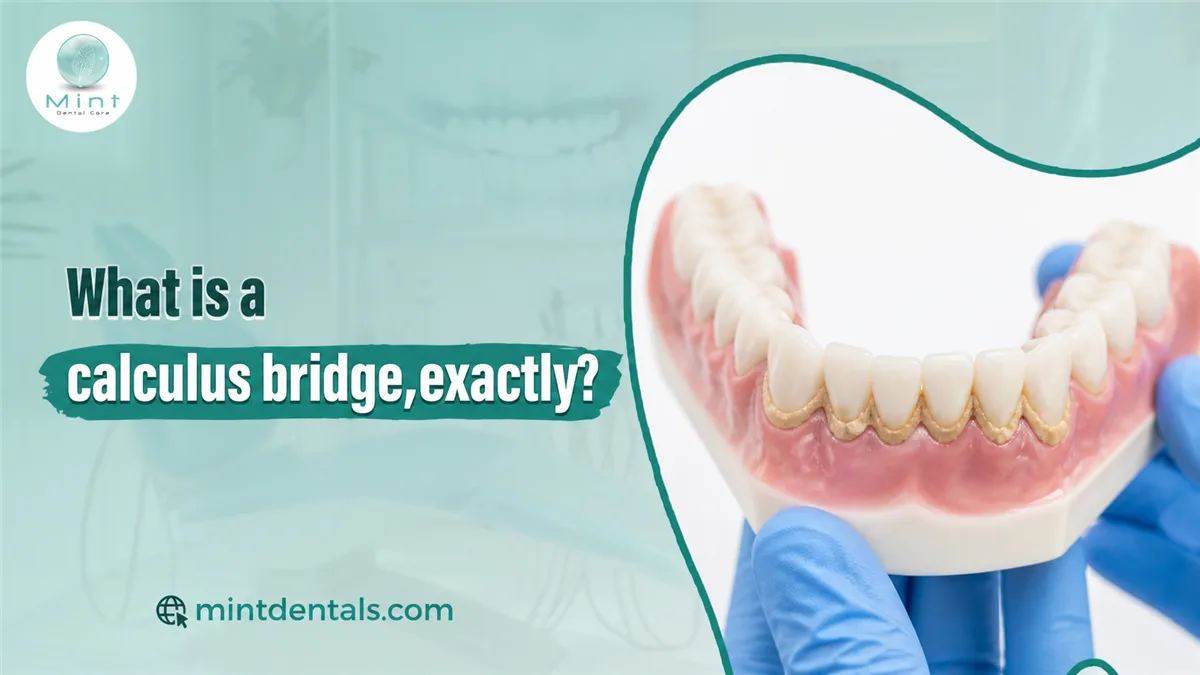
Plaque is a soft film of bacteria that starts reforming on your teeth within hours of brushing. If it is left in one spot, minerals in saliva harden it within 24 to 72 hours into calculus, which is rough, porous and firmly bonded to enamel. New plaque then sticks to that rough surface faster than it would to clean enamel, and the deposit grows outward layer by layer.
A calculus bridge forms when this happens along a whole run of teeth without interruption, most often on the inner surface of the lower front teeth where the salivary glands sit, and on the outer surface of the upper molars near the cheek glands. Those are the two places saliva is richest in minerals, and the two places most people brush least carefully. The deposit can be yellow, brown or almost black in smokers and heavy coffee or tea drinkers.
Is a calculus bridge harmful?
Yes, and not mainly because of how it looks. The problems it causes are cumulative:
- Gum inflammation, since the rough surface holds bacteria hard against the gum, producing the redness, swelling and bleeding of gingivitis.
- Persistent bad breath, because the porous deposit harbours the bacteria that release sulphur compounds.
- Gum recession, as inflamed tissue pulls back from the deposit and exposes sensitive root surfaces.
- Bone loss, once inflammation reaches the bone supporting the teeth, which is periodontitis and is not reversible.
- Decay at the margins, where plaque sits trapped against enamel it is slowly demineralising.
None of this happens overnight, which is precisely why it goes unnoticed. Most people only discover a calculus bridge when a dentist points it out, or when the gums start bleeding enough to be alarming. Our guide to gum disease treatment covers what happens when it has already progressed.
Why you cannot remove a calculus bridge at home
Calculus is mineralised. It is chemically similar to the enamel it is stuck to, which is why brushing, flossing, mouthwash and whitening strips do nothing to it. There is no natural remedy that dissolves it: baking soda, vinegar, oil pulling and hydrogen peroxide all fail against a hardened deposit, and the acidic ones damage enamel and gums while failing.
Do not use metal scrapers bought online either. Every year dentists see gums torn and enamel scratched by patients working blind with a hand scaler, and a scratched surface collects plaque faster than it did before. The one thing home care genuinely does is prevent the next deposit, which is where all the effort belongs.
How a dentist removes a calculus bridge
Removing a calculus bridge is straightforward. An ultrasonic scaler vibrates at high frequency with a water spray, shattering the bond between the deposit and the tooth without cutting enamel. Hand instruments then clean the finer areas, and a polish leaves the surface smooth so plaque takes longer to re-establish.
For a large calculus bridge the appointment takes longer than a routine clean, and the gums underneath will be inflamed and may bleed once the deposit that was covering them is gone. That is expected and settles within one to two weeks with good brushing. If the deposit extends below the gum line and the bone has already been affected, treatment moves to deep cleaning under local anaesthetic, described in our guide to scaling and root planing.
At Mint, scaling and polishing is 500 AED, and a heavier case that needs more time or a full mouth cleaning is quoted after the examination.
Stopping a calculus bridge coming back
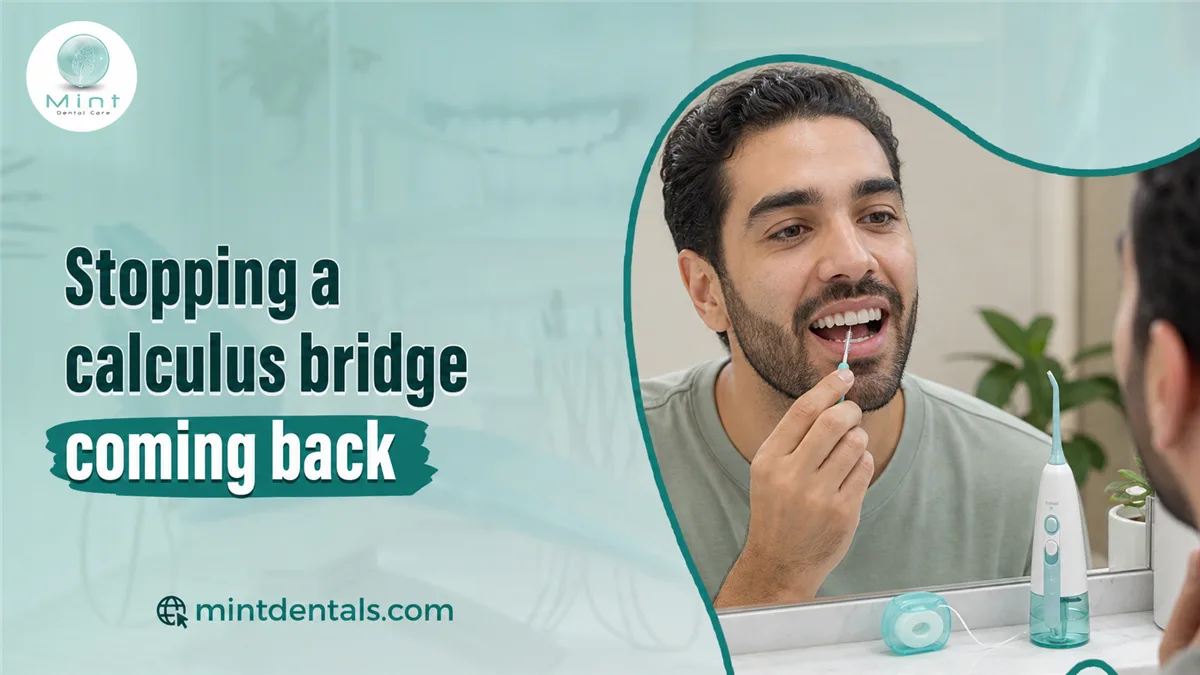
Preventing a calculus bridge is a matter of interrupting plaque before it hardens, which means daily consistency rather than occasional effort:
- Brush twice a day for two minutes, angling the bristles at 45 degrees into the gum line, and give the inner surface of the lower front teeth the attention it never gets.
- Clean between the teeth every day with floss or interdental brushes, since a brush reaches only about 60 per cent of each tooth surface.
- Use a tartar-control toothpaste, which slows mineralisation without removing what has already set.
- Rinse with water after coffee, tea, or anything sugary, and cut back on the constant sipping that keeps bacteria fed all day.
- Book a hygiene visit every six months, or every three to four if you build tartar quickly, which some people simply do because of saliva chemistry rather than poor brushing.
That last point is worth emphasising, because people who form calculus quickly often assume it means they are careless. Saliva composition varies genuinely between individuals, and some patients who brush impeccably still need cleaning three times a year. The practical answer is not guilt, it is a shorter recall interval. If you can already feel a hard ridge behind your lower front teeth with your tongue, that deposit has been building for months, and a single appointment will clear what no amount of brushing will shift.
Book a hygiene appointment at Mint Dental Care, Barsha Heights (TECOM), Dubai. MOHAP-licensed team, 4.8-star patient rating. Call +971 4 266 6763, WhatsApp us, or book online.
Frequently asked questions
What does a calculus bridge look like?
A continuous hard band of yellow, brown or black deposit running across two or more teeth at the gum line, most often on the tongue side of the lower front teeth. It feels rough and rigid to the tongue and does not move when you brush.
Why is it called a bridge?
Because the deposit spans the gaps between teeth and joins them into one unit, in the same way a bridge spans a gap. It has nothing to do with a dental bridge, which is a restoration that replaces missing teeth.
Is a calculus bridge dangerous?
It is not an emergency, but it is harmful over time. It maintains gum inflammation, causes bad breath and recession, and eventually contributes to the bone loss of periodontitis, which cannot be reversed once it has happened.
Can I remove tartar at home?
No. Hardened calculus is mineralised and bonded to enamel, so brushing, flossing and mouthwash cannot lift it, and home remedies such as vinegar or baking soda damage enamel and gums without shifting the deposit. Scraping tools used at home cause more harm than they remove.
Does removing a calculus bridge hurt?
Routine scaling is not painful, though sensitivity is common where deposits have covered exposed root surfaces. If the deposit extends deep below the gum, local anaesthetic is used and the visit is split into sections for comfort.
Will my teeth feel loose or gappy afterwards?
Sometimes, briefly. When a large deposit is removed, spaces it was filling become noticeable and inflamed gums shrink as they heal. The teeth were never being supported by the tartar, and the sensation settles within a couple of weeks.
How often should I have my teeth cleaned?
Every six months for most adults, and every three to four months for heavy tartar formers, smokers, or anyone with a history of gum disease. Your dentist should set the interval on how quickly deposits actually return for you.