 Barsha Heights, Tecom, Dubai
  +971 (4) 266 6763
Dental Bone Graft & Sinus Lift in Dubai Before Implants
18/08/2026 · Dental Implants in Dubai
 18/08/2026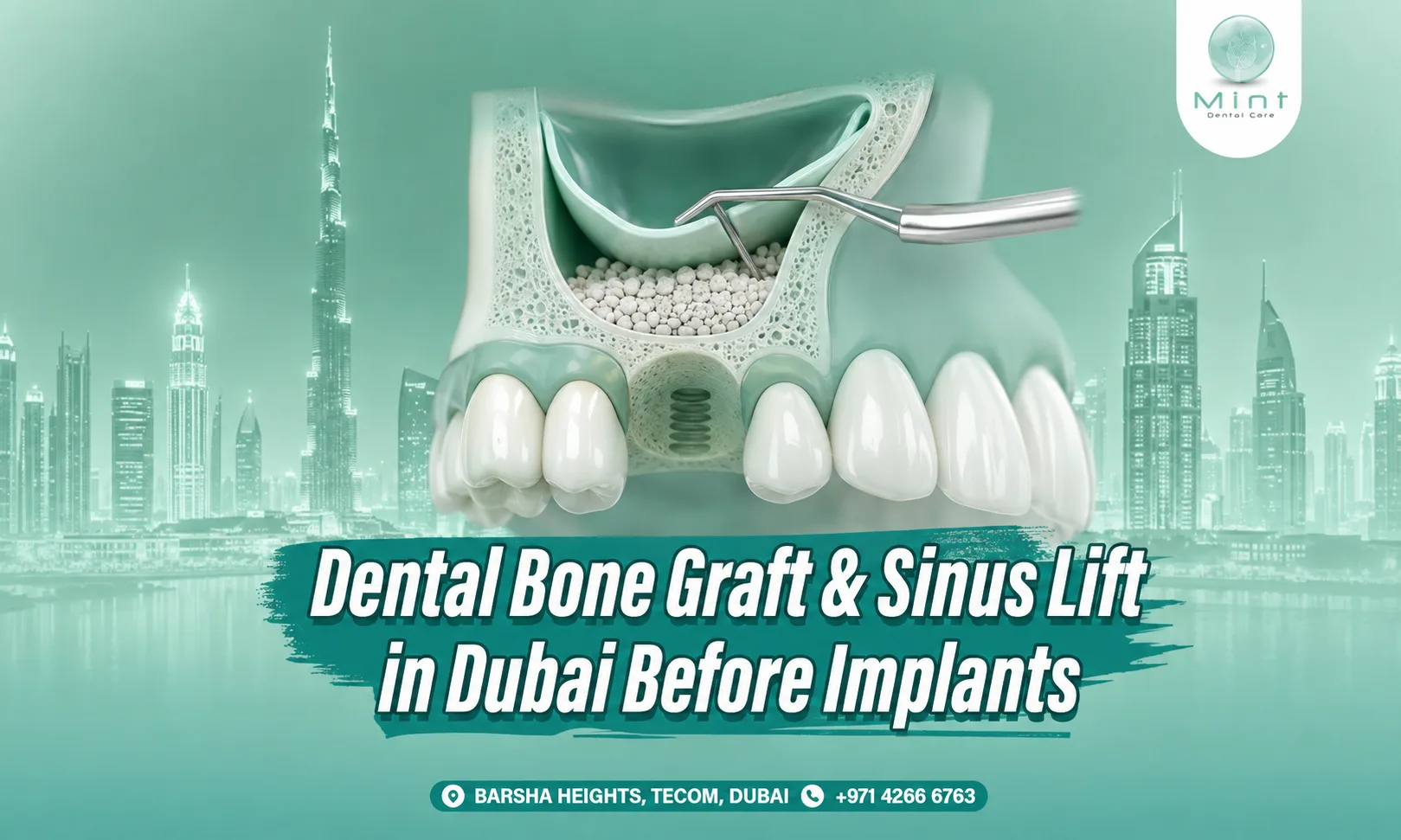
Dental bone graft surgery rebuilds jawbone that has been lost, so there is enough volume to hold a dental implant securely. It is needed when a tooth has been missing long enough for the ridge to shrink, when an infection has eaten into the bone, or when the sinus sits too low over the upper back teeth. Healing takes three to six months before the implant goes in, and for most patients the procedure itself is no more uncomfortable than an extraction.
Being told you need grafting before implants can feel like a setback and an extra bill. It is neither. A dental bone graft is the step that decides whether the implant lasts twenty years or fails in two.
Been told you do not have enough bone for implants? Get a second opinion with a 3D scan at Mint Dental Care. Call +971 4 266 6763, WhatsApp us, or read about dental implants in Dubai.
Why would you need a dental bone graft?
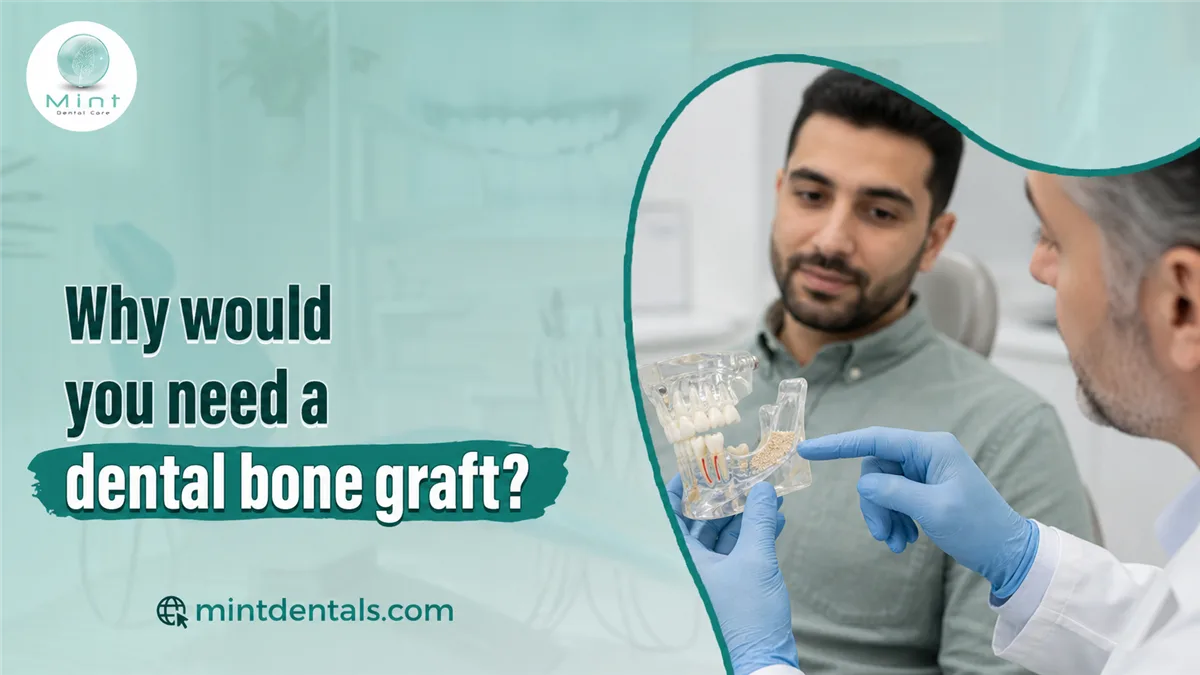
Jawbone exists to hold teeth. Once a tooth is gone the bone that surrounded it loses its job and begins to resorb, most rapidly in the first six months and then steadily for years. An implant needs enough width and height to be fully surrounded by bone, plus a safe distance from the sinus above and the nerve below.
The usual reasons a dental bone graft is recommended are a tooth missing for several years, advanced gum disease that destroyed bone before the tooth was lost, a long-standing infection or cyst, trauma, or a naturally thin ridge. Wearing a full denture for a long period accelerates the same process, which is why long-term denture wearers often need grafting before implants.
Types of dental bone graft, and when each is used
| Procedure | What it does | Typical healing |
|---|---|---|
| Socket preservation | Graft placed straight into the socket at extraction to stop shrinkage | 3 to 4 months |
| Ridge augmentation | Rebuilds width or height of a ridge that has already shrunk | 4 to 6 months |
| Sinus lift | Raises the sinus floor to create height for upper back implants | 6 to 9 months |
| Guided bone regeneration | Graft plus a membrane to keep gum tissue out while bone forms | 4 to 6 months |
The dental bone graft material itself is usually processed bone mineral from a certified tissue bank or a synthetic substitute, both of which act as a scaffold that your own bone grows into and gradually replaces. Your own bone can also be harvested from elsewhere in the jaw for larger defects. All of these are regulated, screened materials, which is the honest answer to the question patients most want to ask and often do not.
What a sinus lift is
The maxillary sinuses are air spaces above the upper back teeth. When those teeth are lost the sinus tends to expand downward while the ridge resorbs upward, leaving too little bone between them for an implant. A sinus lift gently raises the sinus membrane and places graft material underneath it, creating the missing height.
Where only a few millimetres are needed it can be done through the implant site itself at the same appointment as the implant. Larger lifts are done through a small window in the side of the ridge and heal for six to nine months before implants are placed. Planning either one properly needs a 3D scan rather than a flat X-ray, which is why 3D guided implant surgery starts with a CBCT.
Dental bone graft recovery and timeline
The surgery is done under local anaesthetic, with sedation available for anxious patients, and takes 45 to 90 minutes depending on the size. Expect swelling that peaks around day two or three, mild to moderate soreness for three to five days, and a return to normal routine within a week.
The instructions that matter most in the first fortnight are simple. Do not smoke, since it is the single biggest cause of dental bone graft failure. Do not blow your nose forcefully after a sinus lift. Avoid the surgical site when brushing, use the prescribed rinse instead, and eat soft, cool food for a few days. Some small particles of graft material may work loose in the first week, which is normal and not a sign the graft has failed.
Then the waiting begins, and it is genuinely three to six months for most sites, longer for a large sinus lift. That time is not wasted: it is when your own bone replaces the scaffold. A follow-up scan confirms the volume before the implant is placed, and only then does same-day implant treatment become a realistic option for the tooth in question.
Dental bone graft cost and how it fits into implant treatment
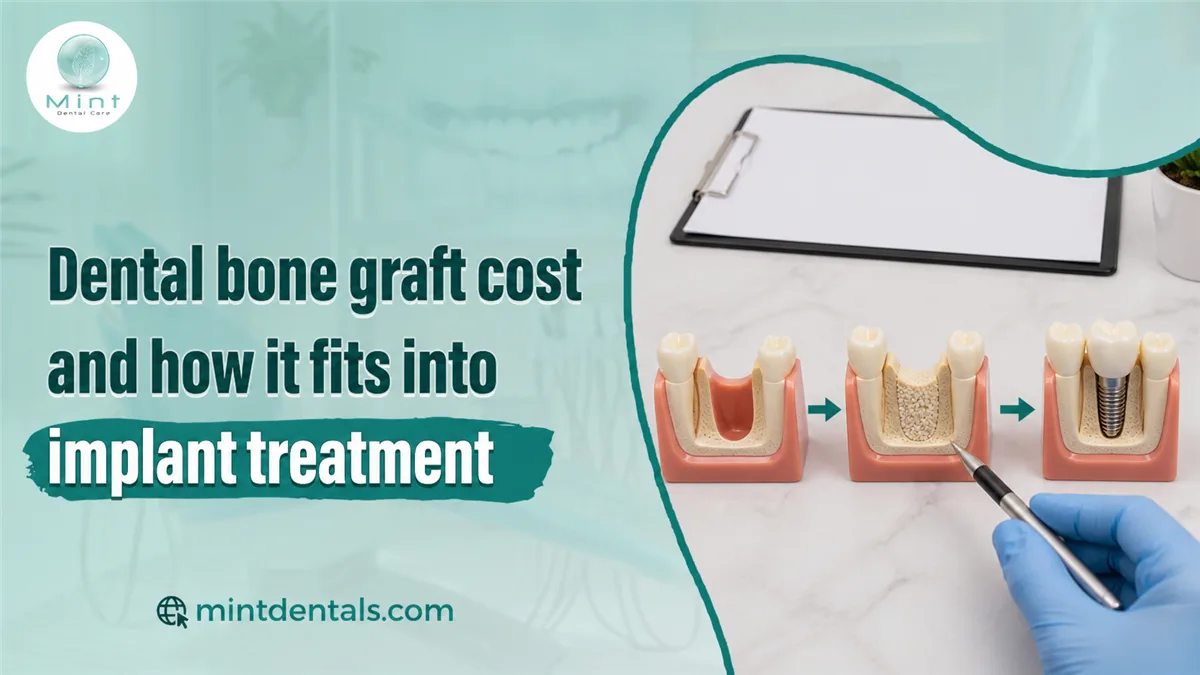
A dental bone graft is quoted separately from the implant because the size and technique vary so widely between a small socket preservation and a full sinus lift. At Mint the CBCT scan that plans it is 800 to 1,200 AED, a dental implant is 6,000 to 9,000 AED, and the graft itself is quoted after the scan. Our page on the cost of dental implants in Dubai breaks down the rest of the treatment.
One thing worth comparing between quotes: whether grafting was even mentioned. A quote that ignores clearly insufficient bone is not cheaper, it is incomplete, and the conversation about it will happen later under worse circumstances.
If you have been told you need a dental bone graft, the useful questions are how much bone is actually missing, which technique is proposed, and whether it can be done at the same time as the implant rather than as a separate stage. All three have real answers once a 3D scan exists, and the answers change the timeline and the cost more than the choice of clinic does. Where bone loss is severe, ask about the alternatives too, since techniques such as zygomatic implants avoid grafting altogether in selected cases.
Book an implant assessment with 3D imaging at Mint Dental Care, Barsha Heights (TECOM), Dubai. MOHAP-licensed implantologists, 4.8-star patient rating. Call +971 4 266 6763, WhatsApp us, or book online.
Frequently asked questions
How painful is a dental bone graft?
Less than most people expect. The procedure is done under local anaesthetic so you feel pressure rather than pain, and afterwards it compares to a routine extraction: soreness and swelling for three to five days, controlled with standard painkillers.
How long does a dental bone graft last?
Once it has integrated it becomes your own bone, so it lasts as long as the bone around it. What preserves it long term is the implant that follows, because bone needs load to maintain itself, and controlling gum disease and smoking.
Is a dental bone graft safe?
Yes. Graft materials from tissue banks are processed and screened to strict standards, and synthetic substitutes carry no biological risk at all. The main complications are infection or partial failure of the graft, both uncommon and both far more likely in smokers.
How long after a dental bone graft can I eat normally?
Soft, cool food for the first three to five days, then gradually back to normal over one to two weeks while avoiding chewing directly on the site. Nothing hard, crunchy or very hot in the first few days.
How long before the implant can be placed?
Three to four months for socket preservation, four to six for ridge augmentation, and six to nine after a large sinus lift. Small grafts are often placed at the same appointment as the implant, which removes the wait entirely.
Can implants be done without grafting?
Sometimes. Narrow implants, tilted placement, All-on-4 designs and zygomatic implants all avoid grafting in selected cases. Whether any of them apply to you depends on where the bone is missing, which a 3D scan answers in a single appointment.
Does insurance cover it in the UAE?
Most plans treat implants and grafting as excluded or capped, since they are classed as a major or elective restoration. Check your policy before starting and ask for pre-approval where the insurer allows it.