 Barsha Heights, Tecom, Dubai
  +971 (4) 266 6763
Dental Implant Aftercare: Healing Timeline & Tips
18/07/2026 · Dental Implants in Dubai
 18/07/2026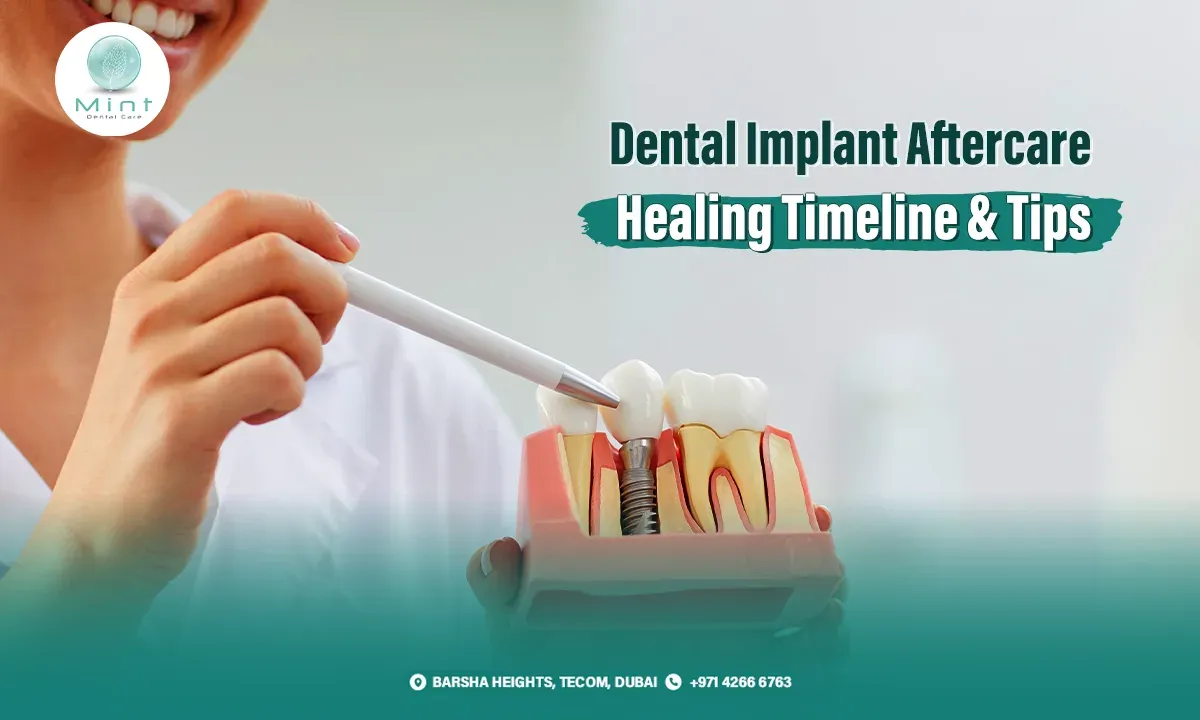
Dental implant aftercare is the routine you follow after surgery to protect the blood clot, keep the site clean, and let the implant fuse to your jaw. Expect soft foods and gentle care for the first week, most soreness settling within 3 to 5 days, and full osseointegration over 3 to 6 months. Good aftercare turns a placed implant into a lasting one.
The surgery itself is usually quick and predictable. What decides long-term success is what happens next, during the weeks of healing, and this is where careful dental implant aftercare matters most: the implant needs a calm, clean, well-supplied site to bond with the bone. This guide covers dental implant aftercare step by step, from day one to full osseointegration.
Had an implant placed, or planning one? Our team guides you through every stage of recovery. Learn more about our dental implant treatment. Call +971 4 266 6763, WhatsApp us, or book online.
Dental implant aftercare: the healing timeline
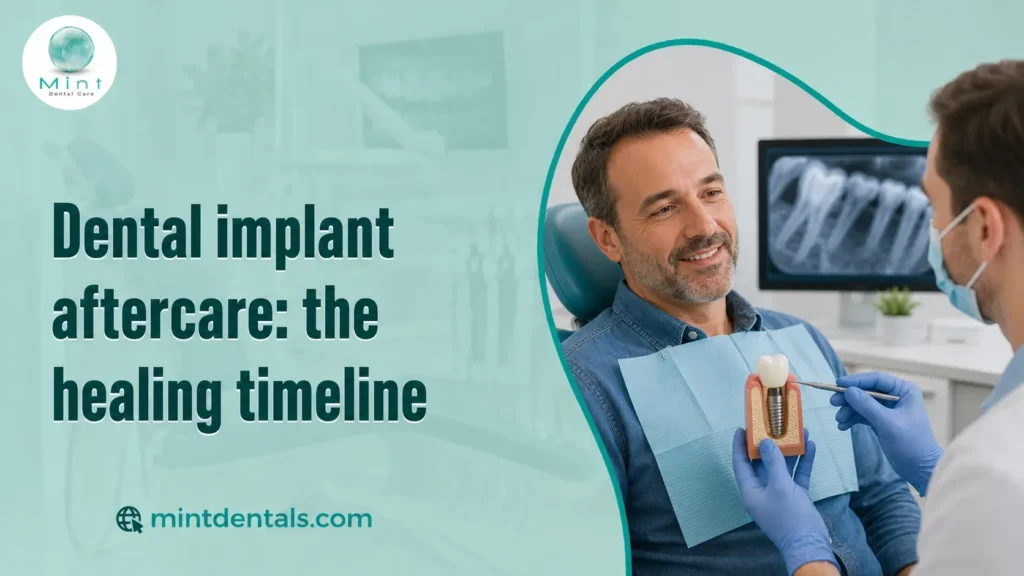
Recovery happens in overlapping stages. The gum heals in a couple of weeks, but implant recovery day by day continues quietly for months as bone grows around the post. Here is the typical timeline.
| Stage | Timeframe | What is happening |
|---|---|---|
| Clot and initial healing | Day 1 to 3 | Blood clot stabilises, swelling and soreness peak around day 2 to 3 |
| Soft-tissue healing | Day 4 to 14 | Discomfort fades, gum seals over, stitches often removed near week 2 |
| Early integration | Week 2 to 6 | Little to no pain, you return to most foods, bone begins fusing |
| Osseointegration | Month 3 to 6 | Bone locks the implant in place, ready for the final crown |
Most people feel normal within a week or two, even though the deeper bonding takes months. Timelines vary with bone quality and health, which is why dental implant aftercare includes review appointments to confirm the implant is stable. Our detailed look at the healing process of a dental implant breaks each phase down further.
The first 24 to 48 hours
The first two days are the most important window in your dental implant aftercare. The goal: protect the clot and control swelling.
- Bite gently on gauze for the first hour or two to settle any oozing. Pink saliva is normal; steady bleeding is not.
- Use ice packs on the cheek in 20-minutes-on, 20-minutes-off cycles on the first day to limit swelling after the implant, which peaks on day 2 to 3.
- Keep your head elevated when sleeping for the first few nights.
- Do not rinse, spit forcefully, or use a straw for at least the first day. Suction can dislodge the clot and cause a dry socket.
- Take pain relief as directed and finish any prescribed antibiotics.
- Rest. Avoid strenuous exercise for 48 to 72 hours, as a raised heart rate restarts bleeding.
Above all, do not smoke. It is the single biggest threat to implant healing time, starving the site of oxygen and raising the risk of failure. Consistent dental implant aftercare here prevents most complications.
What to eat and what to avoid
Knowing what to eat after an implant removes the guesswork. Start cool and soft, then build back up as comfort allows, chewing on the opposite side away from the surgical site.
| Phase | Good choices | Avoid |
|---|---|---|
| Day 1 to 3 | Cool smoothies, yoghurt, chilled soup, protein shakes, mashed potato | Hot drinks, spicy food, anything crunchy, straws, alcohol |
| Day 4 to 10 | Scrambled eggs, oatmeal, soft fish, hummus, well-cooked pasta | Crusty bread, rice grains, seeds, popcorn, sticky sweets |
| Week 2 onward | Soft vegetables, tender meats, most everyday meals | Hard nuts, tough steak, ice, chewing directly on the site |
Stay hydrated and aim for protein-rich foods that support healing. Loose particles like rice, seeds, and nuts lodge in the wound, so avoid them early. This soft-food phase is a core part of dental implant aftercare, and most patients ease back to a normal diet within one to two weeks.
Cleaning around the implant
A clean mouth heals faster, but the site needs a gentle touch. Good oral hygiene is central to dental implant aftercare, as long as you protect the wound while it seals.
- From day 2, begin gentle warm salt-water rinses (a teaspoon of salt in a glass of water) two to three times a day, letting the water fall out rather than spitting.
- Brush the rest of your teeth as normal with a soft brush, keeping the bristles away from the surgical area at first.
- Ease back to the implant site after a few days, brushing very gently, plus any antimicrobial mouthwash we recommend.
- Once healed, keep the area spotless for life with soft brushing, interdental brushes, and a water flosser to prevent peri-implantitis, the infection that loosens implants.
These habits carry from a single implant through to All-on-4 implants or same-day dental implants, where keeping the gum around each post clean is just as vital.
What is normal, and warning signs to call us about
Part of good dental implant aftercare is knowing which sensations are expected. Mild discomfort, minor bruising, and swelling that peaks early then fades are all normal healing.
| Normal (no need to worry) | Call us promptly |
|---|---|
| Soreness easing over 3 to 5 days | Pain that increases after day 3 instead of fading |
| Swelling peaking on day 2 to 3, then settling | Swelling that keeps growing after day 4 |
| Slight pink saliva on the first day | Steady or heavy bleeding that will not stop |
| Mild bruising on the cheek or jaw | Fever, pus, or a bad taste that will not clear |
| A stiff, tender jaw for a few days | An implant that feels loose or wobbly |
As a rule, how long implant pain lasts is short: it should improve day by day. Pain worsening after day 3, a fever, pus, or any movement of the implant are the signs to phone us without delay. Knowing them is a key part of dental implant aftercare, because problems are far easier to fix when caught quickly.
Helping osseointegration succeed
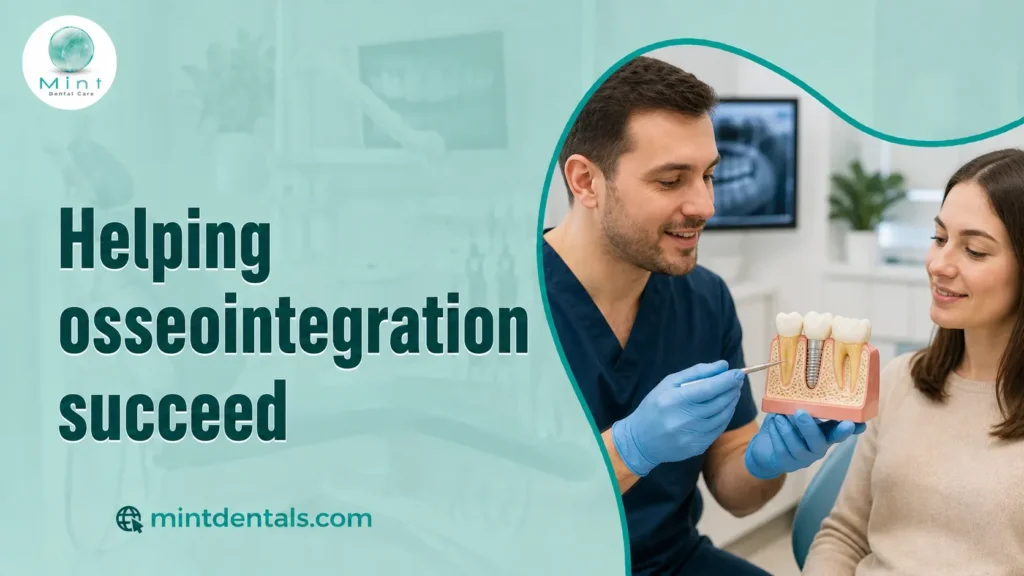
Osseointegration is where jawbone grows onto the implant surface and holds it like a natural root. You cannot feel it, but your daily choices strongly influence it. The best dental implant aftercare instructions for this phase are steady:
- Do not smoke or vape. Nicotine is the most common reason implants fail to integrate.
- Keep the site clean every day to prevent infection around the healing bone.
- Manage conditions such as diabetes, which slows bone healing.
- Do not test the implant. Avoid poking it with your tongue and hold off hard chewing until we clear you.
- Keep every review appointment, so we can check stability and fit the final crown only once the bone has fused.
Follow these and the odds are firmly in your favour: implants have success rates above 95 percent when placed well and cared for properly.
In short, dental implant aftercare is not complicated, but it does reward patience. Protect the clot in the first days, eat soft, stay clean, skip smoking, and watch for the warning signs above. Do that, and you give your implant the calm, healthy conditions it needs to fuse and serve you for decades. If anything feels off, a quick call always beats a wait-and-see.
Recovering from an implant, or ready to start? Our MOHAP-licensed specialist team supports you through every stage of healing, with a 4.8-star patient rating. Explore our dental implant care, WhatsApp us, or call +971 4 266 6763. Mint Dental Care, Barsha Heights (TECOM), Dubai.
Frequently asked questions
How long does dental implant aftercare take?
The intensive part lasts about one to two weeks, when you stick to soft foods and gentle cleaning. Full osseointegration, where bone fuses to the implant, takes 3 to 6 months, after which the permanent crown is fitted. Careful hygiene then continues for life.
How long does implant pain last?
Most soreness is worst in the first 48 to 72 hours and then eases steadily, with many people comfortable on over-the-counter pain relief within 3 to 5 days. Pain that increases after day 3 is not normal and is worth a call to the clinic.
What can I eat after a dental implant?
Start with cool, soft foods such as smoothies, yoghurt, soup, mashed potato, and scrambled eggs. Avoid hot, spicy, crunchy, or sticky foods and skip straws at first. Most people return to a normal diet within one to two weeks.
When can I brush around the implant?
Brush the rest of your teeth normally straight away with a soft brush, keeping clear of the surgical area at first. Begin gentle salt-water rinses from day 2, then ease back to brushing the implant site itself after a few days as it seals.
Why is not smoking so important for implant healing?
Smoking reduces blood flow and oxygen to the wound, which slows healing and greatly raises the risk that the implant does not integrate. It is the single most important thing to avoid in your dental implant aftercare, so stop for at least the first two weeks.
What are the warning signs of a problem after implant surgery?
Call us if you notice pain increasing after day 3, swelling that grows beyond day 4, fever, pus, a persistent bad taste, or any looseness of the implant. These can signal infection or failed integration.
Does aftercare differ for All-on-4 or same-day implants?
The core principles are the same: protect the site, eat soft, keep clean, and avoid smoking. With full-arch or same-day options you simply follow the soft-food phase a little longer while the implants integrate.