 Barsha Heights, Tecom, Dubai
  +971 (4) 266 6763
Dental Treatment During Pregnancy: Safe? Dubai Guide
13/07/2026 · General Dentistry in Dubai
 13/07/2026
Dental treatment during pregnancy is safe, and in most cases it is actively encouraged rather than avoided. Cleanings, fillings, and necessary care can be carried out at any stage, with the second trimester being the most comfortable window for elective work. Dental emergencies should never be delayed, and both dental and obstetric bodies agree that a healthy mouth supports a healthy pregnancy.
Many expectant mothers in Dubai worry that seeing the dentist could harm the baby, so they postpone check-ups exactly when their gums need the most attention. The truth is the opposite: avoiding dental treatment during pregnancy raises the risk of infection and gum problems that are linked to poorer pregnancy outcomes. This guide explains what is safe, what is best delayed, and how dental treatment during pregnancy is adapted trimester by trimester so you can attend with confidence.
Pregnant and due for a check-up? A gentle visit now protects both you and your baby. Book a routine dental check-up and cleaning at Mint Dental Care, our MOHAP-licensed team looks after expectant mothers every week. Call +971 4 266 6763, WhatsApp us, or book online.
Is dental treatment during pregnancy safe?
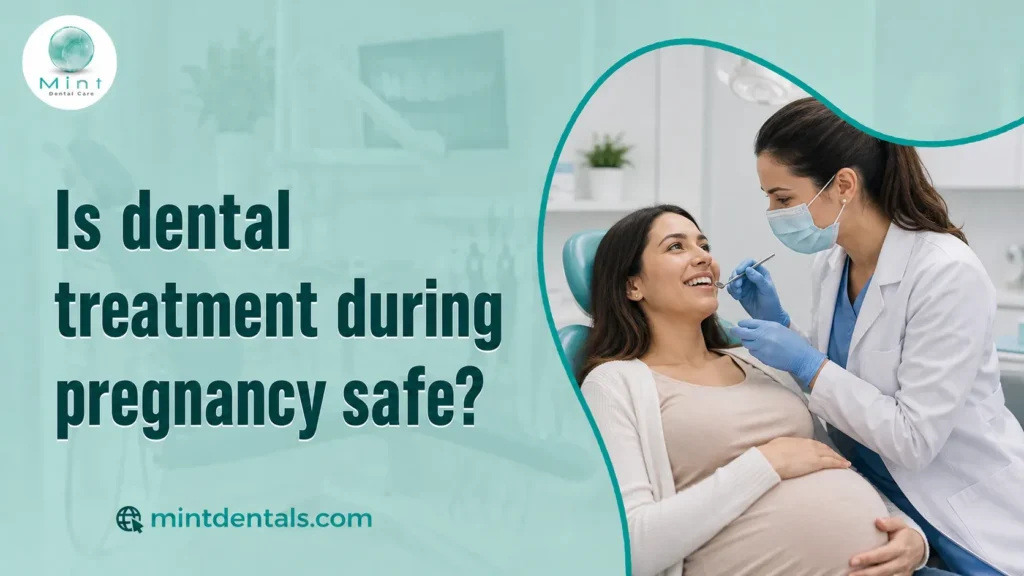
Yes. Routine and emergency dental treatment during pregnancy is safe, and leading dental and obstetric guidance recommends continuing regular care rather than pausing it. Preventive appointments, professional cleanings, fillings, and treatment of infections can all be done while you are expecting. The key is simple: tell your dentist you are pregnant, share how far along you are, and mention any complications or medications so your care can be tailored. When in doubt about a specific procedure, your dentist and your obstetrician can decide together on the safest timing.
Why pregnancy affects your teeth and gums
Pregnancy hormones, mainly rising oestrogen and progesterone, change how your gums respond to the plaque that builds up along the gumline. The result is pregnancy gingivitis: gums that look red and puffy and bleed easily when you brush. It is very common, affecting the majority of pregnant women, and usually appears from around the second month, peaking in the third trimester.
Left unmanaged, this inflammation can progress toward gum disease, and studies link untreated gum infection with a higher chance of premature birth and low birth weight. Some women also develop a small, harmless gum overgrowth known as a pregnancy tumour, or epulis, which typically settles after delivery. Frequent morning sickness adds another risk, as stomach acid can soften enamel. None of this means trouble is inevitable, but it does explain why dental treatment during pregnancy matters more, not less, during these nine months. Our related read on keeping your gums healthy during pregnancy covers the day-to-day habits that help.
Safe treatments by trimester
With dental treatment during pregnancy, timing is about comfort and convenience rather than safety, since urgent problems are treated whenever they arise. Below is how planned dental treatment during pregnancy is usually scheduled across the three trimesters.
| Trimester | What is typically done | Notes |
|---|---|---|
| First (weeks 1 to 13) | Check-ups, cleanings, urgent and emergency care | Organs are forming, so non-urgent elective work is often deferred to the second trimester |
| Second (weeks 14 to 27) | Cleanings, fillings, needed extractions, treating infections | The most comfortable window for elective treatment while pregnant |
| Third (weeks 28 to 40) | Check-ups, cleanings, urgent care | Safe, but long appointments and lying flat can be uncomfortable, so visits are kept short |
A professional scale and polish is safe and encouraged in every trimester, and controlling plaque is the single best way to keep pregnancy gingivitis in check. If you need a filling or a necessary extraction, the second trimester is generally the ideal time, though dental work in the first trimester is still done when a problem cannot wait.
What to postpone during pregnancy
When it comes to dental treatment during pregnancy, very little is truly off-limits, but some non-essential procedures are simply better delayed until after the birth. These are cosmetic and elective treatments where waiting carries no health cost:
- Teeth whitening. Elective and not urgent, so it is routinely postponed until after pregnancy and breastfeeding.
- Cosmetic veneers and smile makeovers. Best planned once your pregnancy is behind you.
- Elective, non-symptomatic procedures that can safely wait without risking infection or pain.
Anything involving infection, swelling, or ongoing pain is a different matter and should be treated promptly. A tooth extraction during pregnancy, for example, is postponed if it is elective but carried out when an infected or badly broken tooth is causing harm, most comfortably in the second trimester.
X-rays and anaesthesia safety
Two questions about dental treatment during pregnancy come up more than any other. On imaging, a dental X-ray during pregnancy is considered safe when clinically needed, because the dose is extremely low and aimed at the jaw, far from the abdomen, with a lead apron and thyroid collar for shielding. In practice, routine screening X-rays are often deferred until after delivery, while a necessary diagnostic image to manage pain or infection is taken with full protection.
On numbing, local anaesthesia used in dental treatment during pregnancy is regarded as safe, so you should not endure a painful procedure to avoid it. Dentists select pregnancy-appropriate anaesthetic and use only what is needed. Many common antibiotics and pain relievers are also compatible with pregnancy, though some, such as certain painkillers, are avoided, which is exactly why your dentist and obstetrician should know you are expecting before anything is prescribed.
Home oral care during pregnancy
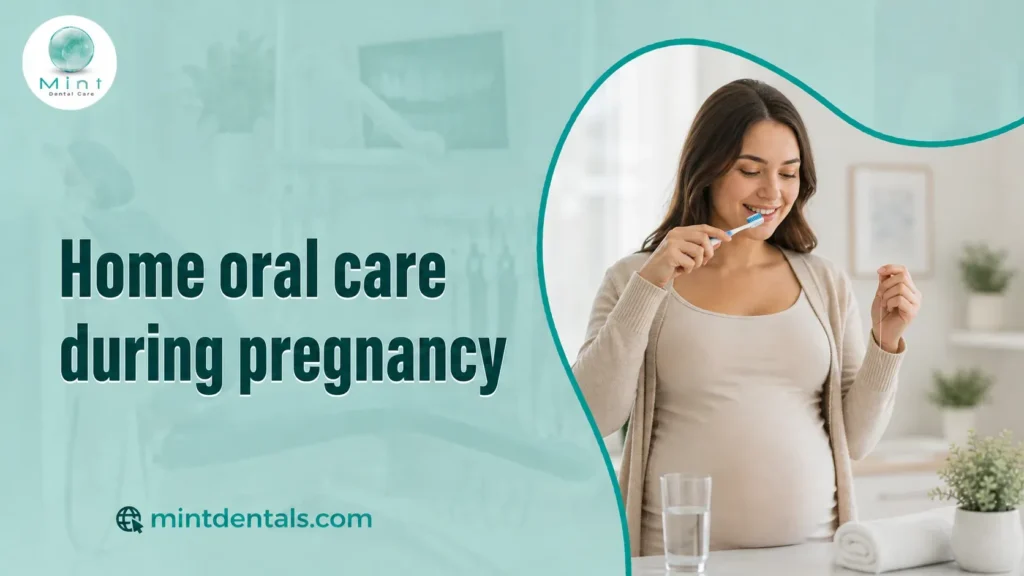
What you do between visits makes the biggest difference to how your gums cope. A steady home routine keeps pregnancy gingivitis mild and reduces the treatment you may need later:
- Brush twice a day for two minutes with a fluoride toothpaste and a soft brush.
- Clean between your teeth daily with floss or interdental brushes to remove plaque along the gumline.
- If morning sickness strikes, rinse with water or a little fluoride mouthwash rather than brushing straight away, so you do not scrub softened enamel.
- Choose water over sugary or acidic drinks, and be mindful of frequent snacking on cravings.
- Keep your regular dental appointments and report any bleeding, swelling, or pain early.
These habits, paired with a professional cleaning, are the core of good dental care during pregnancy and the best defence against problems that would otherwise need more involved dental treatment during pregnancy.
Far from being something to avoid, dental treatment during pregnancy is a normal, protective part of looking after yourself and your baby. Keep up your check-ups, treat urgent issues without delay, save purely cosmetic work for later, and lean on your dentist to time everything around your trimester. With a good home routine and an honest conversation about your pregnancy at every visit, you can keep your mouth healthy from the first trimester right through to delivery.
Expecting and want peace of mind? The simplest step is a gentle assessment and clean tailored to your stage of pregnancy. Book a pregnancy-safe dental check-up with our specialist team, rated 4.8-star by patients, WhatsApp us, or call +971 4 266 6763. Mint Dental Care, Barsha Heights (TECOM), Dubai.
Frequently asked questions
Is dental treatment during pregnancy safe in every trimester?
Yes. Check-ups, cleanings, and urgent care are safe in all three trimesters. Elective work is usually planned for the second trimester because it is the most comfortable time, but nothing needed should ever be delayed.
Is it safe to get my teeth cleaned while pregnant?
Absolutely. A professional cleaning is safe and encouraged at every stage, and it is the best way to control pregnancy gingivitis. Many women benefit from an extra cleaning during pregnancy because their gums are more reactive.
Is a dental X-ray during pregnancy dangerous?
A single dental X-ray uses a very low dose aimed at the jaw, with a lead apron and thyroid collar for protection, and is considered safe when needed. Routine screening images are often deferred, while a necessary diagnostic X-ray is taken with full shielding.
Can I have a tooth extraction during pregnancy?
Yes, when it is necessary. An infected or severely damaged tooth is best treated rather than left, ideally in the second trimester. A purely elective extraction can wait until after delivery.
Is local anaesthesia safe for dental work while pregnant?
Yes. Pregnancy-appropriate local anaesthesia is safe, so there is no need to suffer through a procedure without it. Always tell your dentist you are pregnant so the right anaesthetic and any medication are chosen.
What if I have a dental emergency while pregnant?
Never wait. Severe pain, swelling, or infection needs prompt treatment because delaying it poses a greater risk to you and your baby than the care itself. Contact your dentist straight away and mention your pregnancy.
Why do my gums bleed more now that I am pregnant?
Hormonal changes make your gums react more strongly to plaque, causing pregnancy gingivitis with redness and bleeding. Careful brushing, daily cleaning between teeth, and a professional cleaning usually bring it under control.