 Barsha Heights, Tecom, Dubai
  +971 (4) 266 6763
Dry Mouth (Xerostomia): Causes, Risks & How to Fix It
23/07/2026 · General Dentistry in Dubai
 23/07/2026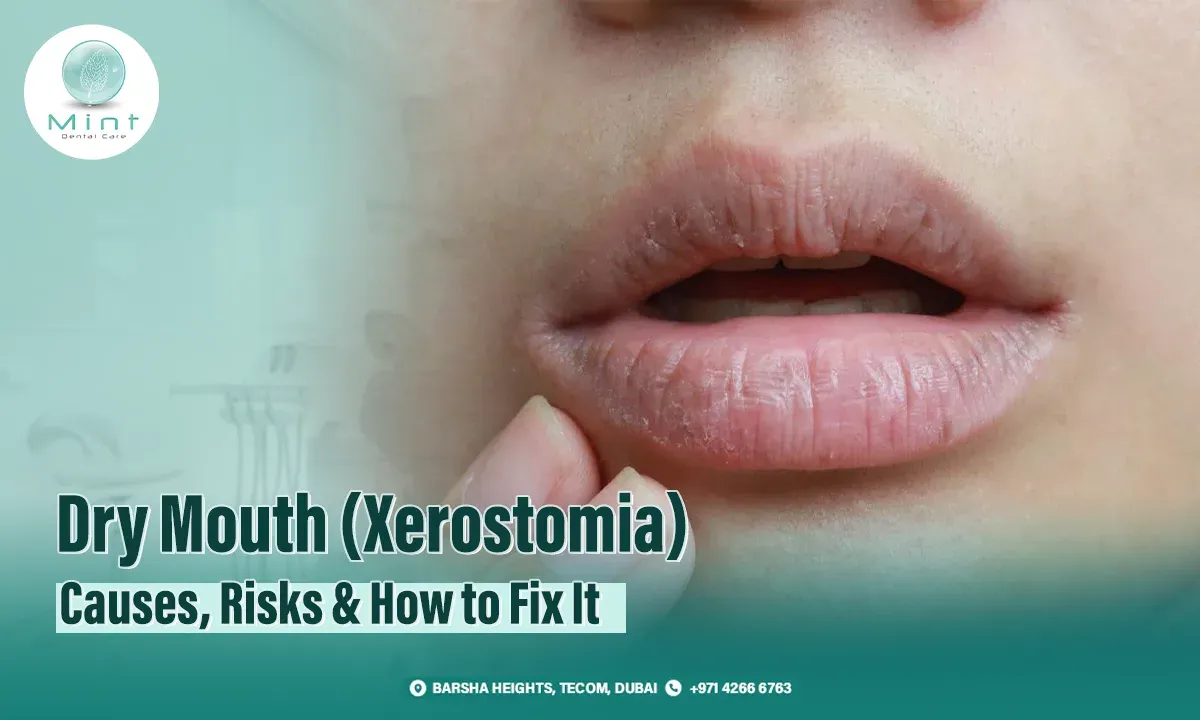
Dry mouth (medically called xerostomia) happens when your salivary glands do not make enough saliva to keep your mouth comfortably wet. Healthy glands produce around 0.5 to 1.5 litres of saliva a day, and when that flow drops you get a sticky, parched feeling, bad breath, and a much higher risk of cavities and gum disease. It is very common, affecting roughly one in five adults and more than half of people over 65.
Saliva does far more than keep you comfortable: it washes away food, neutralises acid, delivers minerals that repair enamel, and controls the bacteria behind decay and gum problems. So chronic dryness is not just annoying, it quietly puts your teeth and gums at risk. This guide covers what causes it, why it matters, how to get relief at home, and when to see a dentist.
Worried your dry mouth is harming your gums? Persistent dryness is a leading cause of gum inflammation and decay. Book a gum disease assessment at Mint Dental Care to check your gums and get a tailored plan. Call +971 4 266 6763, WhatsApp us, or book online.
What causes dry mouth?
In most cases, it is caused by something that reduces how much saliva your glands make, rather than a problem with the mouth itself. The single most common trigger is medication side effects, followed by dehydration, certain health conditions, and breathing through your mouth. Ageing, smoking, alcohol, caffeine, and Dubai’s hot, air-conditioned climate all make it worse. Finding the underlying reason is the key to lasting relief, because the fix is usually to treat the cause, not chase the symptom.
Common causes of dry mouth
Understanding what is behind it helps you and your dentist find the right solution. These are the four you are most likely to encounter.
Medications
More than 500 medicines list it as a side effect, making prescriptions the number one cause. Common culprits include antihistamines and decongestants, antidepressants and anti-anxiety drugs, blood pressure tablets, muscle relaxants, and some pain relievers, and taking several together adds up. Never stop a prescribed medicine on your own, but ask your doctor whether the dose, timing, or the drug itself can be changed.
Dehydration
Your body needs water to make saliva. Not drinking enough, heavy sweating in the Dubai heat, fever, vomiting, or too much coffee and alcohol can leave you dehydrated and dry out your mouth. This type is the easiest to fix: rehydrate steadily and the dryness often eases within hours.
Health conditions
Several medical conditions reduce saliva flow directly. Diabetes, Sjogren’s syndrome, and other autoimmune diseases such as lupus and rheumatoid arthritis are common examples, along with thyroid disorders and menopause. Cancer treatment matters too: radiation to the head and neck and some chemotherapy drugs can damage the salivary glands. If it appears with other symptoms, flag it to both your doctor and dentist.
Mouth breathing
Breathing through your mouth while you sleep dries out the oral tissues overnight. This is why so many people notice dry mouth at night or first thing in the morning. It is often linked to a blocked nose, allergies, or snoring. A bedroom humidifier and treating nasal congestion help, and if snoring is the trigger, a dental or medical assessment can too.
Why dry mouth harms your teeth and gums
Saliva is your mouth’s natural defence, so when it runs low the protection disappears. That is what makes the problem genuinely risky, not just uncomfortable:
- More cavities. Without saliva to rinse away sugar and neutralise acid, enamel demineralises faster. People with chronic dryness can have several times the cavity risk of others, often in unusual places like the roots and gumline.
- Gum disease. Reduced saliva lets plaque build up along the gums, driving inflammation, bleeding, and eventually gum recession if it is left untreated.
- Oral thrush and sores. A dry environment encourages fungal infections such as candidiasis, plus cracked lips and mouth ulcers.
- Bad breath and taste changes. Bacteria multiply without saliva to control them, causing persistent halitosis and a dulled sense of taste.
Because the damage builds slowly and silently, many people only discover it during a routine dental check-up, when new cavities or early gum problems appear.
At-home relief for dry mouth
Simple daily habits can ease the dryness and protect your teeth between dental visits. The goal is to stimulate saliva, add moisture, and cut out anything drying.
| Do this | Why it helps |
|---|---|
| Sip water often through the day | Keeps tissues moist and supports saliva production |
| Chew sugar-free gum or xylitol lozenges | Stimulates natural saliva flow and helps fight decay |
| Use a saliva substitute (spray, gel, or rinse) | Adds lasting moisture, useful at night and before meals |
| Run a humidifier in the bedroom | Reduces overnight dryness from mouth breathing |
| Switch to an alcohol-free, dry-mouth mouthwash | Cleans without the sting or drying of alcohol rinses |
| Cut back on caffeine, alcohol, and smoking | Removes common triggers that worsen dryness |
These remedies work best alongside good daily brushing and flossing. A high-fluoride toothpaste, which your dentist can recommend, gives extra protection against the added cavity risk.
When to see a dentist
Occasional dryness after exercise or a salty meal is normal. Book a dental visit if your dry mouth is persistent, wakes you at night, comes with a burning tongue or lingering bad breath, or if you notice new cavities, bleeding gums, or mouth sores. These are signs it is already affecting your oral health. A dentist can pinpoint the cause, check for early decay and gum disease, and set up a protection plan before problems get expensive. If dryness comes with bleeding or swollen gums, do not wait, as it may signal gum disease that needs prompt professional gum treatment.
Professional treatment options for dry mouth
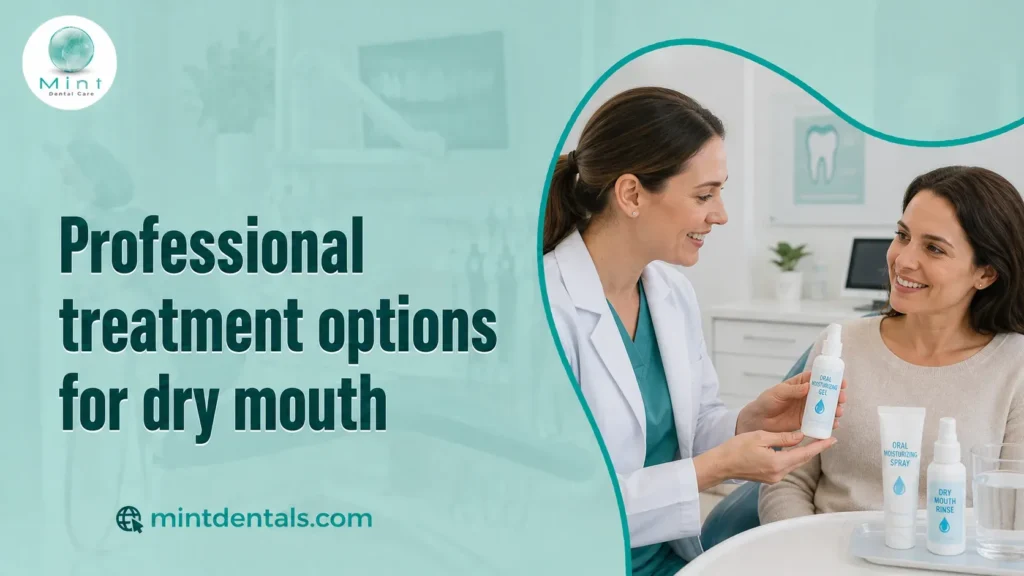
At the clinic, managing xerostomia focuses on both relief and preventing damage. Depending on your case, treatment may include:
- Finding and treating the cause. Reviewing your medications with your doctor, managing a health condition, or improving hydration and nasal breathing.
- Prescription saliva substitutes and stimulants. Medicated gels, rinses, and, in select cases, medicines such as pilocarpine that prompt the glands to make more saliva.
- Extra cavity protection. High-fluoride toothpaste and in-clinic fluoride varnish, applied more often than usual to shield vulnerable enamel.
- More frequent cleanings. Professional teeth cleaning every three to four months instead of six removes the plaque that builds up faster when saliva is low.
- Gum monitoring and care. Close checks of your gums so any inflammation is caught and treated early.
Together these steps break the cycle where low saliva quietly feeds decay and gum disease, keeping your mouth healthier while the cause is sorted out.
In short, dry mouth is common and usually manageable, but never something to ignore, because saliva is the main thing protecting your teeth and gums every day. Find the cause, adopt a few daily habits, and let a dentist put a protection plan in place. With the right care you can stay comfortable and keep your smile healthy.
Do not let dry mouth damage your smile. A quick check can catch decay and gum problems early and get you lasting relief. Book a gum health and dryness assessment with our MOHAP-licensed specialist team, WhatsApp us, or call +971 4 266 6763. Mint Dental Care, Barsha Heights (TECOM), Dubai.
Frequently asked questions
What is the main cause of dry mouth?
Medication side effects are the most common cause, with more than 500 drugs linked to reduced saliva. Dehydration, certain health conditions, and mouth breathing are the other frequent triggers.
Why is my mouth so dry at night?
Night-time dryness usually comes from breathing through your mouth while you sleep, which dries the tissues, and from taking drying medicines in the evening. A bedroom humidifier, treating a blocked nose, and a saliva gel before bed all help.
Can dry mouth cause cavities?
Yes. Saliva rinses away sugar and neutralises acid, so when it is low, enamel breaks down faster. People with chronic dryness can have several times the cavity risk, often at the gumline and tooth roots.
What are the best dry mouth remedies at home?
Sip water often, chew sugar-free or xylitol gum, use a saliva substitute spray or gel, run a humidifier at night, and switch to an alcohol-free mouthwash. Cutting back on caffeine, alcohol, and smoking also helps.
Is dry mouth a sign of a serious health problem?
It can be. Persistent dryness is sometimes linked to diabetes, Sjogren’s syndrome, or thyroid issues. If it lasts, comes with other symptoms, or does not improve with hydration, see your doctor and dentist.
What is a saliva substitute and does it work?
A saliva substitute is an over-the-counter spray, gel, or rinse that mimics natural saliva to moisten the mouth. It gives temporary relief, especially at night and before meals, though it does not fix the underlying cause.
How can a dentist help with dry mouth?
A dentist can find the cause, prescribe stronger saliva substitutes or stimulants, apply extra fluoride, arrange more frequent cleanings, and watch your gums closely to prevent the decay and gum disease that dryness encourages.