 Barsha Heights, Tecom, Dubai
  +971 (4) 266 6763
Jaw Pain When Chewing? TMJ Causes & Treatment
12/07/2026 · General Dentistry in Dubai
 12/07/2026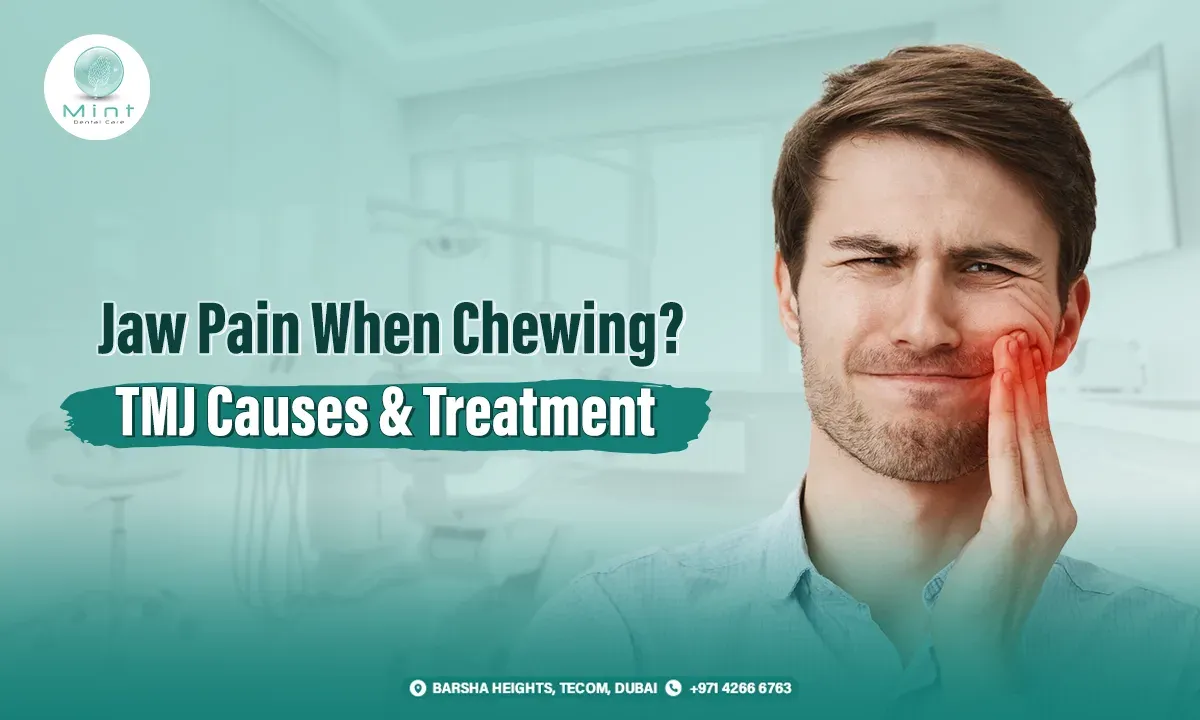
Jaw pain when chewing is most often a sign of a temporomandibular joint (TMJ) problem, usually caused by muscle strain from teeth grinding or clenching, a bite issue, stress, or a past jaw injury. In most people it is mild and settles with soft foods, rest, and self-care within a few weeks, but pain that lingers, clicks, or locks the jaw needs a proper assessment.
The temporomandibular joint sits just in front of each ear and works hard every day, so it is no surprise that jaw pain when chewing is one of the most common complaints dentists see. The cause is usually manageable once you understand the trigger, and this guide covers why the pain happens, what you can do at home, and when to see a specialist.
Struggling to eat comfortably? If jaw pain when chewing has lasted more than a couple of weeks, book a TMJ assessment at Mint Dental Care. Our MOHAP-licensed team will find the cause and build a plan around it. Call +971 4 266 6763, WhatsApp us, or book online.
Why you get jaw pain when chewing
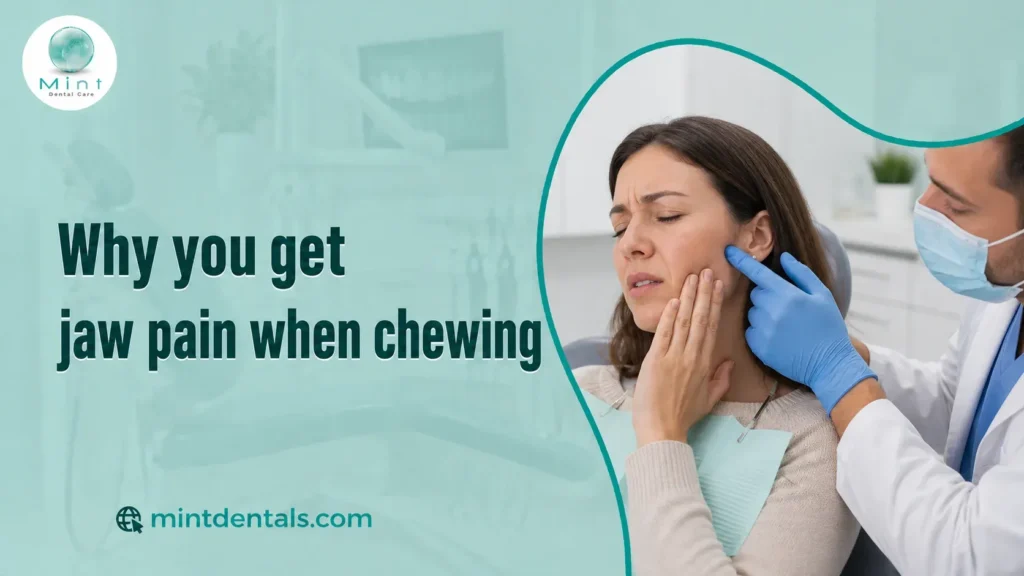
Jaw pain when chewing usually comes down to the muscles and the joint working harder than they should. Every bite loads the temporomandibular joint and the muscles around it. If those muscles are already tense from clenching, or the joint is inflamed or slightly out of position, that extra load turns into pain. The discomfort often eases when you rest the jaw and flares again the moment you bite into something firm. Jaw pain on one side is especially common, because most people chew more on their dominant side, so that joint takes the heavier load.
What is TMJ and TMD?
The temporomandibular joint (TMJ) is the hinge that connects your lower jaw to your skull, one on each side, letting you open, close, and slide your jaw to talk and eat. When something goes wrong with this system, the muscles, the joint, or both, it is called a temporomandibular disorder, or TMD. People often use “TMJ” for the problem itself, so if a dentist mentions TMJ disorder, they mean a fault in how that joint and its muscles work.
Most cases of jaw pain when chewing fall under this umbrella. TMD is common, affects adults more than children, and in most people it is a temporary, treatable condition rather than lasting joint damage.
Common causes of jaw pain when chewing
There is rarely a single cause; more often, several factors stack up until chewing tips into pain. The usual culprits are:
- Bruxism (grinding and clenching). The biggest cause. Grinding at night or clenching under stress overworks the jaw muscles, leaving them tender by the time you chew. Our guide on treating night-time teeth grinding covers it in depth.
- Bite problems. If your upper and lower teeth do not meet evenly, the joint compensates on every bite, and that uneven load causes strain.
- Stress and posture. Stress makes you clench without realising it, and poor head or neck posture pulls the jaw out of its resting position.
- Injury. A knock to the jaw, whiplash, or even a long appointment with the mouth held wide open can inflame the joint.
- Joint changes. Arthritis or a slipped disc inside the joint can cause both pain and clicking.
Sleep-related clenching often overlaps with breathing problems, so if you also snore or wake unrefreshed, mention it at your visit so the dentist can check for a link between the two.
Warning signs to watch for
Occasional soreness after a chewy meal is normal. These signs, however, suggest a TMJ disorder that deserves attention, especially alongside jaw pain when chewing:
| Sign | What it may mean |
|---|---|
| Jaw clicking or popping | The disc inside the joint is moving abnormally |
| Jaw locking | The jaw briefly catches open or shut; a red flag to get seen |
| Pain in front of the ear | Classic TMJ pain, often mistaken for an ear problem |
| Headaches or facial ache | Referred pain from overworked jaw muscles |
| Worn or sensitive teeth | A sign of grinding driving the problem |
| Limited mouth opening | Muscle tightness or joint restriction |
Any of these alongside ongoing jaw pain is a reason to get assessed, especially jaw locking, which should never be ignored.
Home care and relief
For mild TMJ symptoms, simple self-care resolves most jaw pain within two to four weeks. Try these first:
- Rest the jaw. Switch to softer foods, cut food into small pieces, and avoid gum, tough meat, and hard bread while things settle.
- Warm and cold packs. A warm compress relaxes tight muscles; a cold pack calms sharp inflammation. Use whichever helps for ten to fifteen minutes.
- Gentle jaw exercises. Slow, controlled opening and side-to-side movements keep the joint mobile without straining it.
- Notice your clenching. Keep your teeth slightly apart during the day, with your tongue resting on the roof of your mouth: lips together, teeth apart.
- Manage stress. Since stress feeds clenching, anything that lowers it, such as walking, sleep, or breathing exercises, helps the jaw. An over-the-counter anti-inflammatory can ease a flare, but it treats the symptom, not the cause.
If night-time grinding is behind your pain, a custom night guard for jaw pain is one of the most effective home measures. Our article on the five signs you need a night guard helps you decide whether one is right for you.
Professional TMJ treatment
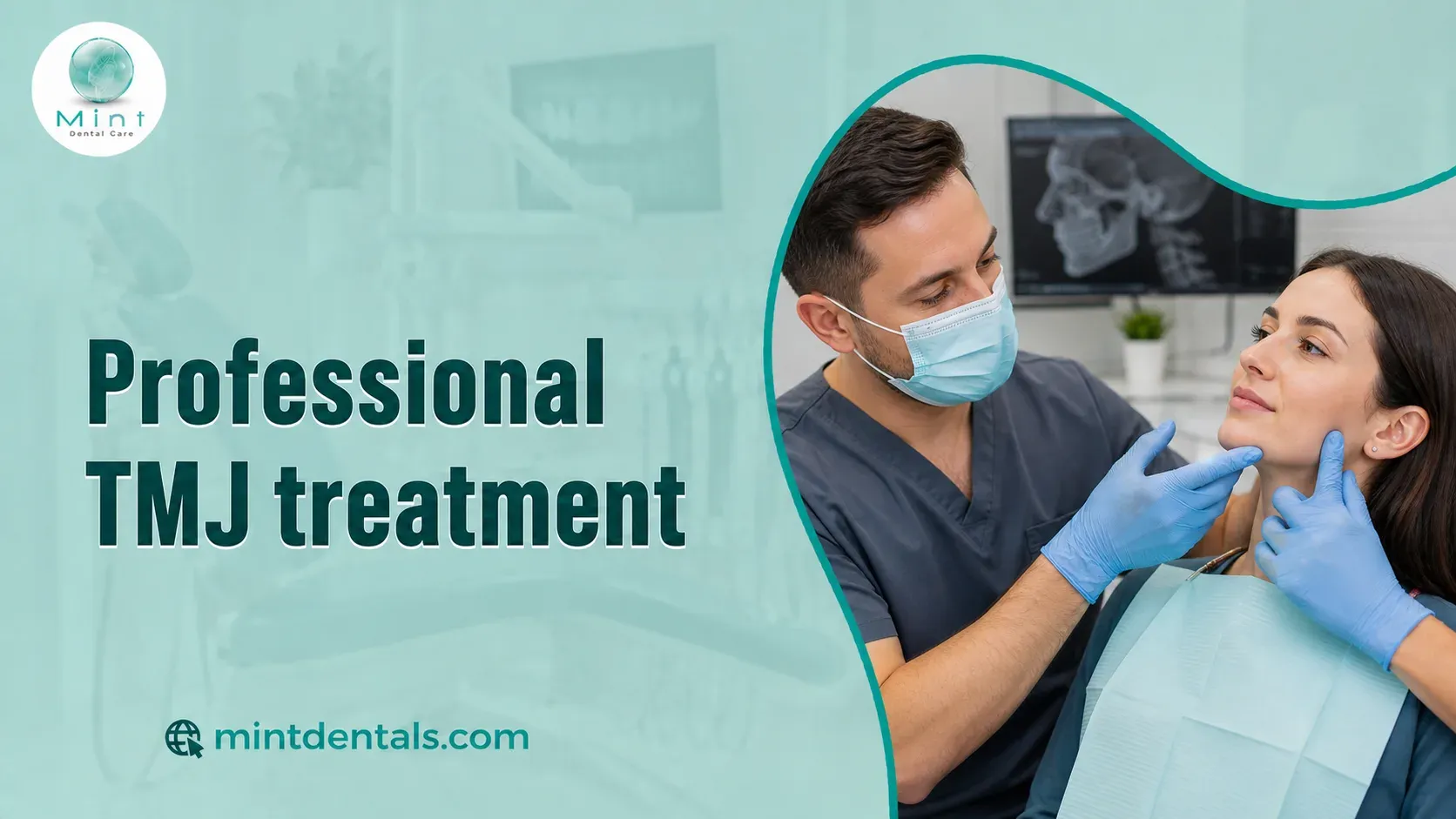
When jaw pain when chewing lasts beyond a few weeks, keeps returning, or comes with locking, it is time for professional care. A dentist finds the true cause, then matches treatment to it. Typical options are listed below, and the cost of each is confirmed at your consultation:
| Treatment | What it does | Price at Mint Dental Care |
|---|---|---|
| Custom night guard or splint | Protects teeth and eases muscle and joint load from grinding | Quoted at consultation |
| Bite adjustment | Corrects an uneven bite that overloads the joint | Quoted at consultation |
| Physiotherapy | Guided exercises and manual therapy to relax and retrain the jaw | Quoted at consultation |
| Arthrocentesis | Flushes the joint to reduce inflammation in stubborn cases | Quoted at consultation |
Surgery is rare and only considered after conservative options fail. For most patients, a night guard, a few adjustments, and some targeted exercises bring lasting relief without any invasive step.
The bottom line is that jaw pain when chewing is a signal worth listening to, not something to push through. Most cases are mild and respond well to rest, softer foods, and stress control, but persistent pain, clicking, or locking points to a TMJ disorder a dentist should assess. Tackling the real cause early keeps a small problem from becoming a chronic one.
Ready to chew without pain? Our specialist team will pinpoint what is driving your jaw pain and design the right TMJ treatment plan for you, backed by a 4.8-star patient rating. WhatsApp us, book online, or call +971 4 266 6763. Mint Dental Care, Barsha Heights (TECOM), Dubai.
Frequently asked questions
Why do I get jaw pain when chewing on one side?
Most people favour one side when they chew, so that joint carries more load and tires first. Jaw pain on one side is usually muscle strain or mild TMJ, but an ache that keeps coming back should be checked for a bite or joint problem.
Is jaw pain when chewing a sign of TMJ?
Very often, yes. Pain that appears or worsens as you chew, especially with clicking, ear tenderness, or headaches, is a classic sign of a TMJ disorder rather than a tooth problem.
How can I tell TMJ pain from a toothache?
A toothache is usually sharp, fixed to one tooth, and reacts to hot, cold, or sweet foods. TMJ pain is a duller ache across the jaw, temple, or ear that worsens with movement. A dentist can distinguish the two quickly.
Will jaw pain when chewing go away on its own?
Mild cases often settle within two to four weeks with soft foods, rest, warm or cold packs, and less clenching. If it persists, keeps returning, or the jaw locks, book a professional assessment.
Does a night guard help jaw pain?
If grinding or clenching is the cause, a custom night guard for jaw pain is one of the most effective treatments, cushioning the teeth and reducing strain on your jaw muscles and joint overnight.
When should I see a dentist about jaw pain?
See a dentist if the pain lasts more than two weeks, keeps returning, comes with jaw locking or loud clicking, or stops you opening your mouth fully. Early care usually means simpler treatment.
Can stress cause jaw pain when chewing?
Yes. Stress leads to daytime clenching and night-time grinding, both of which overwork the jaw muscles and leave them sore when you chew. Managing stress helps relieve and prevent the pain.