 Barsha Heights, Tecom, Dubai
  +971 (4) 266 6763
White Spots on Teeth: Causes, Treatment & Cosmetic Fixes
20/08/2026 · Cosmetic Dentistry in Dubai
 20/08/2026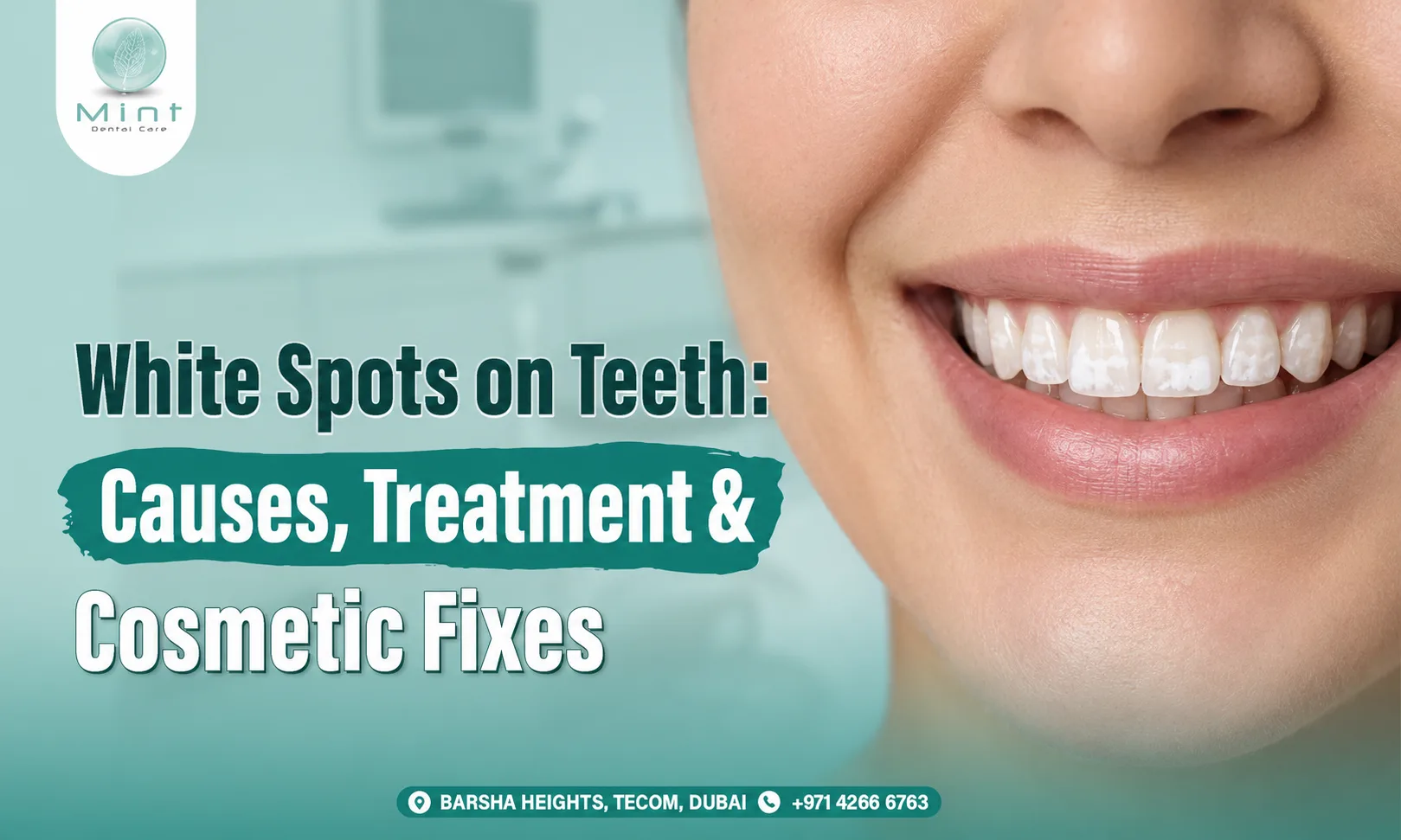
White spots on teeth are patches of enamel that have lost mineral content or formed differently while the tooth was developing, which changes how they reflect light. The three common causes are decalcification after braces, dental fluorosis from too much fluoride in childhood, and enamel hypoplasia. Treatment ranges from remineralising toothpaste to resin infiltration, microabrasion or veneers, depending on how deep the spot goes.
White spots on teeth are almost always harmless. They are also the complaint that makes people stop smiling in photographs, so the practical question is which treatment matches which cause, because using the wrong one wastes months.
Want your white spots assessed properly before spending on treatment? Book a cosmetic consultation at Mint Dental Care. Call +971 4 266 6763, WhatsApp us, or explore dental veneers in Dubai.
What causes white spots on teeth?
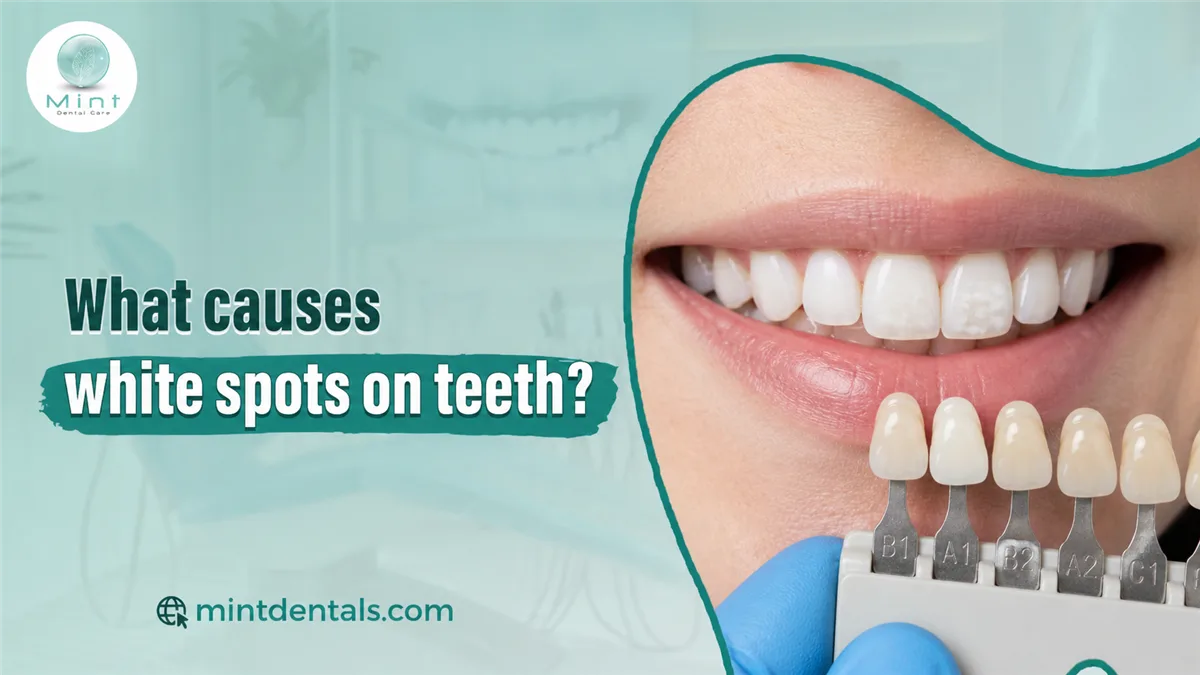
White spots on teeth start inside the enamel. Enamel looks uniform but is built from tightly packed mineral crystals. Anything that disturbs the packing, either while the tooth is forming or later through acid attack, changes how light passes through and leaves an area looking chalky or opaque.
- Decalcification is the commonest source of white spots on teeth, where plaque sitting in one place produces acid that pulls minerals out of the surface. This is the classic cause of white spots on teeth after braces, appearing as squares around where the brackets were.
- Dental fluorosis, from swallowing too much fluoride while adult teeth were developing, usually before age eight. It produces faint symmetrical flecks or streaks rather than isolated patches.
- Enamel hypoplasia, where enamel formed thinner or less mineralised because of childhood illness, a high fever, antibiotics or nutritional deficiency at the wrong moment.
- Trauma to a baby tooth that disturbed the adult tooth developing above it, which typically affects a single upper front tooth.
- Dry mouth and prolonged plaque, since saliva is what normally rebuilds mineral and neutralises acid.
Telling the types of white spots on teeth apart matters. Symmetrical faint flecks across several teeth suggest fluorosis. Sharp-edged squares on the front teeth of someone who has worn braces are decalcification. A single opaque patch on one tooth points to trauma or hypoplasia.
The white spots on teeth that need urgent attention
Not all white spots on teeth are cosmetic. A dull, chalky white patch at the gum line, especially if it feels slightly rough, is often an early cavity: enamel that has demineralised but not yet collapsed into a hole. Caught at this stage it can be reversed with fluoride and better plaque control. Left alone it becomes a filling.
That is the single most useful reason to have white spots on teeth looked at rather than photographed and worried about. A dentist can tell in seconds whether a patch is active decay, old fluorosis or a scar from braces, and the answer changes everything that follows.
White spots on teeth: treatment from least to most invasive
| Treatment | How it works | Best for |
|---|---|---|
| Remineralisation | High-fluoride or calcium phosphate paste rebuilds surface mineral | Early decalcification, active white spot lesions |
| Professional whitening | Lightens the surrounding enamel so contrast drops | Mild spots on otherwise darker teeth |
| Microabrasion | Removes a very thin surface layer with acid and abrasive | Shallow fluorosis and superficial marks |
| Resin infiltration | A low-viscosity resin fills the porous enamel and restores translucency | Post-braces spots and moderate fluorosis |
| Composite bonding | Tooth-coloured resin masks the area | Isolated deeper defects |
| Veneers | Covers the whole front surface | Extensive hypoplasia or several affected teeth |
The order of treatment for white spots on teeth matters, so start conservatively, because the enamel you remove never comes back. Resin infiltration in particular has changed what is possible: it treats spots in a single visit without drilling and often makes them disappear rather than merely fade. Where the defect is deeper, composite bonding masks it, and only extensive cases justify veneers.
What whitening does and does not do
Whitening is the most misunderstood option here. Bleaching lightens the whole tooth, including the spot, so the difference between them often remains and can look temporarily more obvious in the first days after treatment. As the enamel rehydrates over two weeks the contrast usually settles, and for mild cases the overall result is an improvement because the background is now closer to the spot’s brightness.
What it will not do is remove the spot. If the goal is to make a specific patch vanish, infiltration or bonding is the treatment, and whitening is planned first only so the shade can be matched afterwards. Our page on professional teeth whitening covers the sequencing, and our guide to veneers for stained teeth covers what happens when discolouration is beyond bleaching.
Can you prevent white spots on teeth?
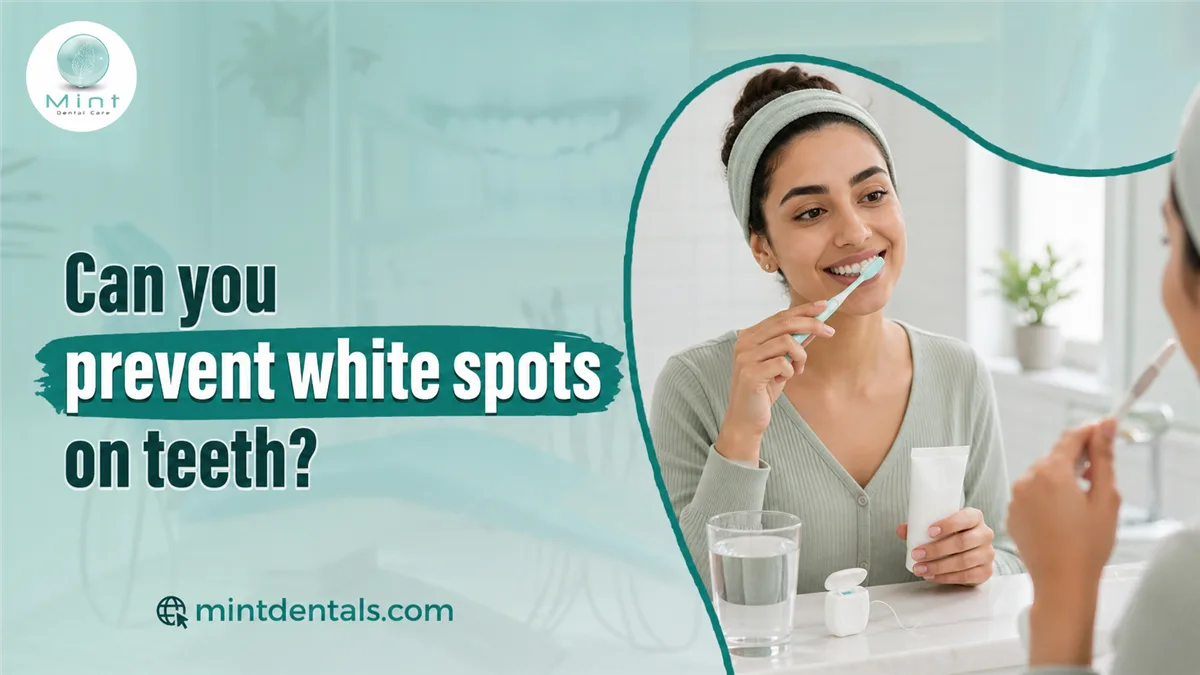
Most white spots on teeth are preventable, and prevention is where the effort pays. Two groups are worth singling out. Anyone in orthodontic treatment is at the highest risk of all, because brackets create dozens of plaque traps that were not there before, and the damage is done quietly under a fixed appliance nobody can see behind.
The routine that prevents it is unglamorous but effective. If you wear braces or aligners, brush after every meal, use interdental brushes around the brackets and ask about a fluoride varnish at each adjustment, since decalcification is entirely a plaque problem. For children, supervise brushing so toothpaste is spat out rather than swallowed, use an age-appropriate amount, and keep fluoride supplements to what a dentist actually recommends.
For everyone, the same basics apply: clean between the teeth daily, keep sugary drinks to mealtimes, and treat dry mouth rather than living with it, because saliva does the remineralising.
If white spots on teeth have been bothering you for years, the encouraging part is how much has changed in what is available. Treatments that once meant drilling and crowning a healthy tooth now often mean a single appointment with no anaesthetic and no enamel removed. The first step is not choosing a treatment, it is finding out what caused the patches, since the same white mark can need a fluoride varnish, a resin, or nothing at all. Bring old photographs if you have them, because knowing whether a spot appeared in childhood or after orthodontics narrows the answer immediately.
Book a cosmetic assessment at Mint Dental Care, Barsha Heights (TECOM), Dubai. MOHAP-licensed team, 4.8-star patient rating. Call +971 4 266 6763, WhatsApp us, or book online.
Frequently asked questions
Will white spots on teeth go away on their own?
Some white spots on teeth fade and some do not. Early decalcification can partly reverse with fluoride, better plaque control and time, sometimes over several months. Fluorosis and enamel hypoplasia are permanent structural changes and will not fade without treatment.
How do I get rid of white spots on my teeth?
Removing white spots on teeth depends on the cause and depth. Options run from remineralising paste and fluoride varnish through microabrasion and resin infiltration to bonding or veneers. A dentist should identify the cause first, because the least invasive effective option is usually two or three steps down that list.
Can brushing remove them?
No. They are inside the enamel, not on it, so no amount of brushing lifts them. What brushing does is stop new ones forming and help early lesions remineralise, which is the more valuable job.
What toothpaste is best for white spots?
A high-fluoride paste prescribed by a dentist, or one containing calcium phosphate technology, used consistently for several months. Whitening and charcoal toothpastes do nothing for the spots and the abrasive ones can make the surface rougher.
Can white spots on teeth be a sign of decay?
Yes. A chalky patch at the gum line is often an early cavity that has not yet formed a hole, and at that stage it is reversible. This is why a patch that is new, dull or rough should be examined rather than treated cosmetically.
Does whitening make white spots on teeth worse?
Temporarily they can look more obvious for the first week or two after treatment while the enamel rehydrates, then the contrast settles. Whitening lightens spot and tooth together, so it reduces the difference in mild cases but never removes the spot.
How much does treatment cost in Dubai?
It varies with the method, so it is quoted after the examination. A general dentist consultation at Mint is 200 AED, whitening is 1,500 AED including scaling and polishing, and veneers or crowns range from 1,500 to 3,000 AED per tooth.