 Barsha Heights, Tecom, Dubai
 +971 (4) 266 6763
Dental Fluorosis: What Causes White and Brown Marks on Teeth?
20/10/2026 · Cosmetic Dentistry in Dubai
 20/10/2026
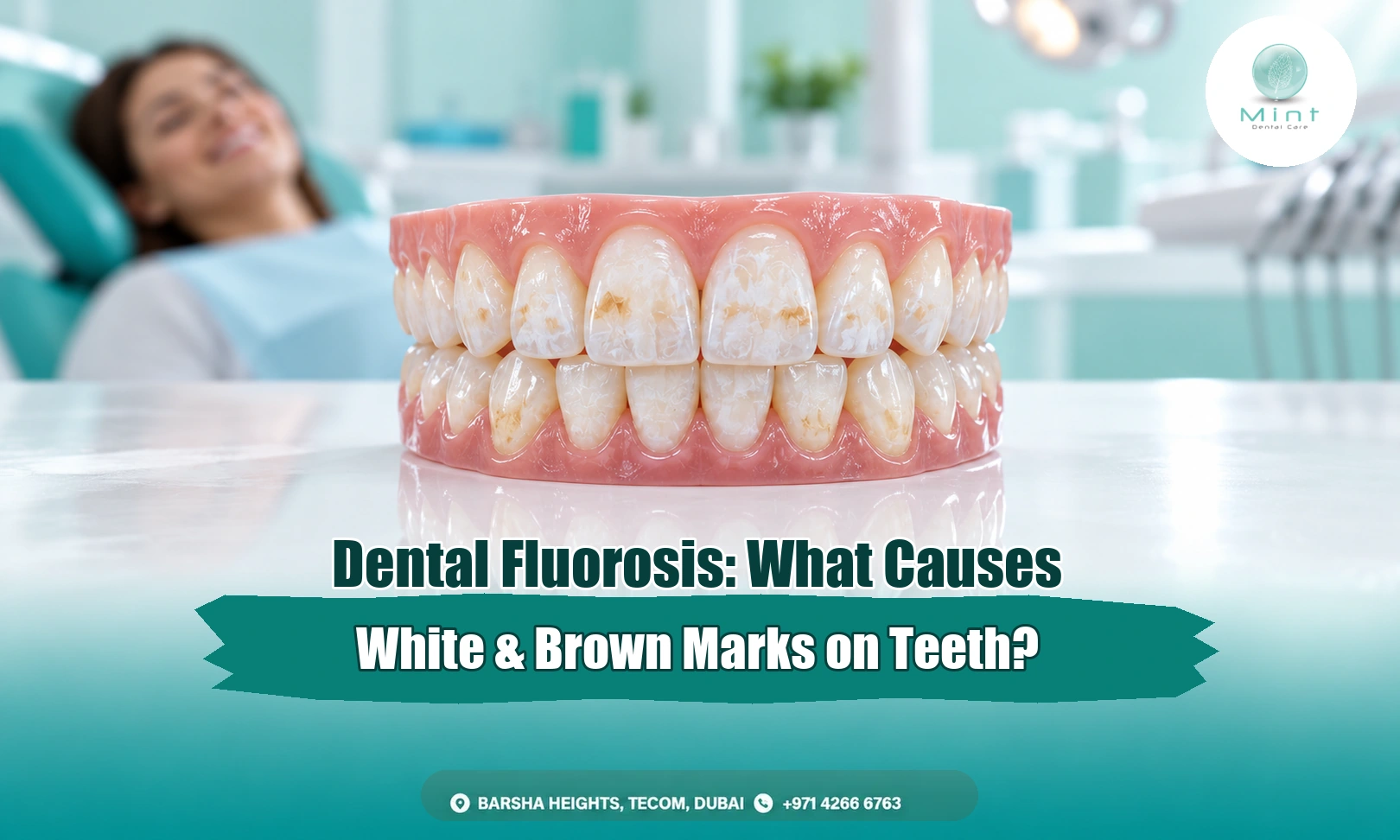
Dental fluorosis is a change in the enamel that forms while a tooth is still developing under the gum, when the body takes in more fluoride than it needs. It shows as faint white lines in mild cases and brown patches with pitting in severe ones. It cannot begin in an adult tooth, and cosmetic fixes run from AED 400 to 800 up to AED 1,500 to 3,000 a tooth.
The marks are usually symmetrical, because the upper front teeth and first molars mineralise at the same age. Most cases in Dubai sit at the mild end and need no treatment.
What is dental fluorosis?
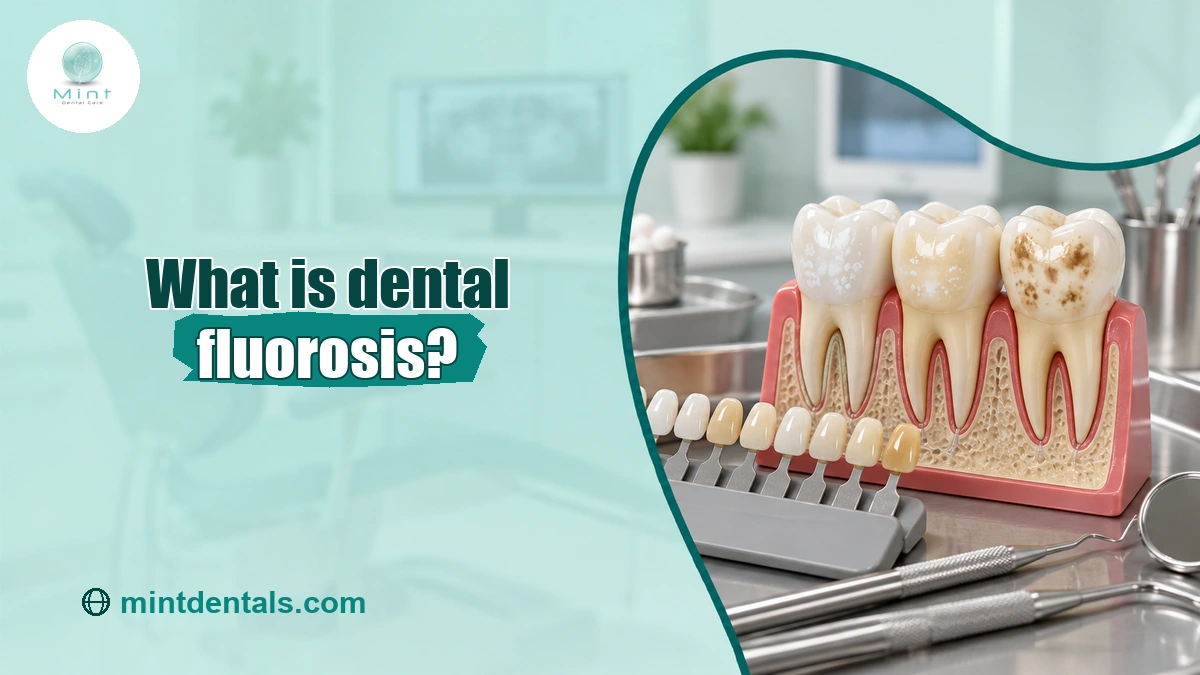
Dental fluorosis is hypomineralised enamel. The crystals form in a looser, more porous pattern, so the surface scatters light and reads as chalky white instead of translucent. In heavier cases that porous enamel absorbs stain after the tooth erupts, which gives the brown colour.
Fluorosis is not decay
It is not an infection and it does not progress. Enamel affected this way does not soften the way a cavity does, and mild grades resist decay as well as normal enamel. Severe grades are the exception, as a pitted surface holds plaque.
How dental fluorosis forms
Dental fluorosis is decided before the tooth is ever visible. While enamel is laid down inside the jaw, the cells doing that work are sensitive to fluoride in the bloodstream, and too much at that stage changes the crystal structure permanently.
The window while enamel forms
For the permanent front teeth that window runs from roughly birth to about age six, and for the first molars it closes earlier. Once a tooth has come through its enamel is finished, and fluoride from then on only hardens the surface.
Why adults cannot develop it
This is the point the whole topic turns on. An adult who switches to a high-fluoride toothpaste or has a varnish applied will not develop dental fluorosis, because there is no forming enamel left to affect. A new white mark on an adult tooth has another cause.
Dental fluorosis severity grades
Dentists grade the condition by how much of the surface is involved and whether the enamel is intact, on the Dean index. The grade decides the treatment: mild cases are left alone, while moderate and severe grades involve the tooth shape as well as its colour.
| Grade | What you see on the tooth |
|---|---|
| Questionable | A few faint white flecks, visible only on a dried tooth |
| Very mild | Opaque white patches over under a quarter of the surface |
| Mild | White patches over up to half the surface |
| Moderate | All surfaces involved, worn edges, brown staining common |
| Severe | Pitting and merged brown areas, enamel shape changed |
Mild grades need no treatment
The marks do not spread, and a hygiene visit sometimes blends them enough. Cutting into enamel that is still doing its job is a poor trade, so the mild end is left alone unless the patient asks.
Where the extra fluoride comes from
Dental fluorosis is a dose question from early childhood rather than a single culprit. Several modest sources add up across the years enamel is forming, and swallowed toothpaste is usually the largest.
Toothpaste, water and supplements
| Source | What actually matters |
|---|---|
| Children’s toothpaste | How much goes on the brush, and how much is swallowed |
| Drinking water | The fluoride level of the supply, bottled water included |
| Fluoride drops or tablets | Suitable only where intake is low; doubling up is the risk |
| Formula with fluoridated water | A steady daily amount through the first year |
| Varnish at the clinic | A measured dose, wiped away, so little is swallowed |
Swallowing toothpaste and the amount
A young child has little swallow control and likes the taste. A brush loaded end to end holds several times the paste a toddler needs, and most of it goes down rather than into the sink. Over a few years that leaves marks.
Why fluoride still matters
None of this is an argument against fluoride. It remains the most effective thing available for lowering decay risk in children, and a supervised fluoride treatment uses a measured amount that is wiped off rather than swallowed.
Children’s toothpaste amount by age
The amount on the brush is the part parents control, so it is worth getting right. Supervise brushing until the child spits reliably, and keep the tube out of reach in between.
| Age | Amount on the brush | What to do |
|---|---|---|
| Under 3 | A smear, about the size of a grain of rice | Brush for them, wipe the excess away, do not rinse |
| 3 to 6 | A pea size | Stay with them, teach spitting out, no swallowing |
| 6 and over | A pea size of full-strength paste | Supervise until the routine is reliable |
Fluorosis vs other white marks
Fluorosis is only one reason enamel looks patchy, and the others are treated completely differently. Early decay needs its cause removed before any cosmetic work; fluorosis does not. The fuller list of causes sits in our guide to white spots on teeth.
Fluorosis compared with early decay
| Feature | Dental fluorosis | Early decay | Enamel hypoplasia |
|---|---|---|---|
| When it starts | Before the tooth erupts | After the tooth erupts | Before the tooth erupts |
| Pattern | Symmetrical, both sides | Gum line or around brackets | Often one tooth or a band |
| Surface | Smooth unless severe | Chalky and can soften | Thin, grooved or missing |
| Over time | Stable | Spreads while plaque stays | Stable |
| Treatment | Cosmetic only, if wanted | Cleaning, fluoride, filling if needed | Rebuild the enamel |
Decalcification after braces
White patches in the outline of a bracket are decalcification, not dental fluorosis. They are early decay from plaque sitting against enamel for months, and the first response is cleaning, fluoride and time, not a veneer.
Dental fluorosis treatment options
Treatment for dental fluorosis is cosmetic and optional, working upward from the least invasive step. Mint Dental Care handles these cases through cosmetic dentistry in Dubai, starting with a consultation at AED 200, or AED 300 with a specialist.
Microabrasion for faint marks
Microabrasion takes off a very thin layer of outer enamel using a mild acid with an abrasive paste, which can even out faint white patches in one visit. It is not on the published price list, so it is quoted at consultation.
Whitening and fluorosis marks
Whitening lightens the enamel around the patches, so the contrast drops and the marks read as less obvious. It does not remove them, and on moderate cases they can look sharper at first. Nano whitening is AED 1,500 plus 5% VAT, including scaling and polishing.
Composite bonding for moderate marks
A thin layer of composite bonding covers the mark and rebuilds a worn edge in one appointment, with no enamel removed beyond a light preparation. Bonding is AED 1,500 to 3,000 per tooth, and a small filling where enamel is missing is AED 400 to 800.
When veneers are considered
Severe dental fluorosis with pitting and merged brown areas is where veneers for stained teeth earn their place, because the shape needs rebuilding along with the colour. Veneers are AED 1,500 to 3,000 per tooth; the full list is on the dental service prices page.
Preventing fluorosis in siblings
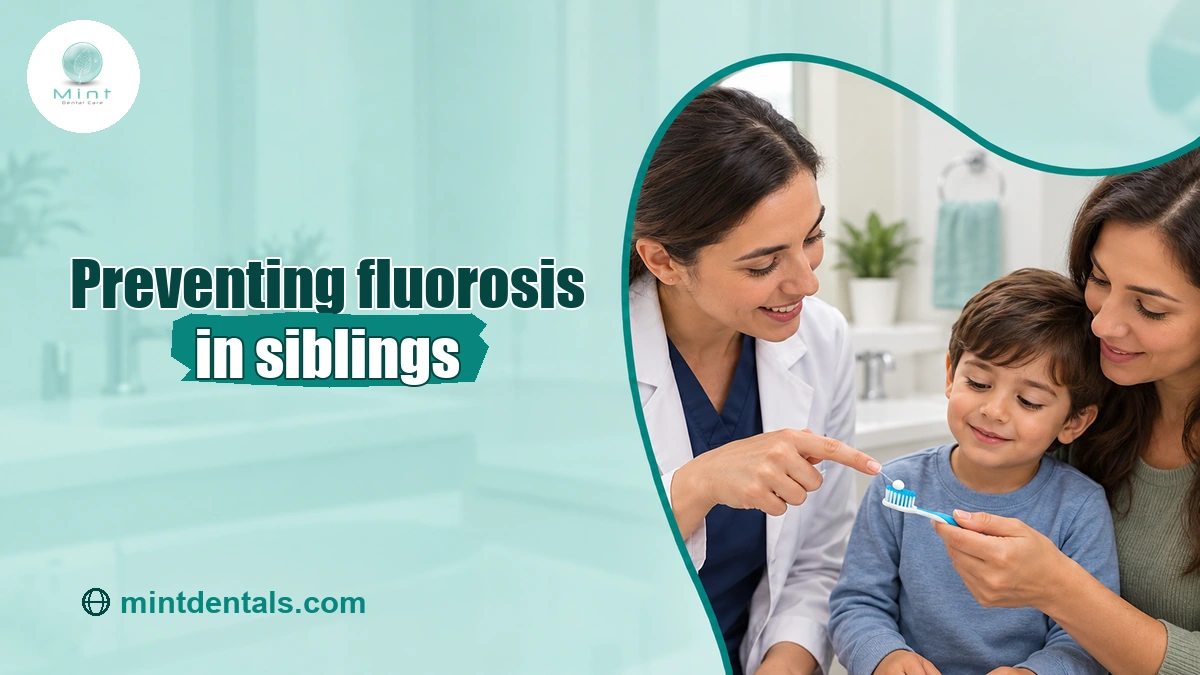
If one child has dental fluorosis, the younger ones are worth watching: they share the same water, toothpaste tube and bathroom routine. The answer is controlling the dose, not removing fluoride.
Supervise until they can spit
Load the brush yourself for a child under six, keep to a smear under three and a pea size after, and stay in the room. Know the fluoride level of the water the family drinks before any supplement.
Dental fluorosis is a record of what happened while the teeth were forming, which is why it is permanent and cannot start later in life. Mild grades are usually left alone, moderate ones respond to microabrasion, whitening or bonding, and only the severe end calls for veneers.
Mint Dental Care, Barsha Heights (TECOM), Dubai. MOHAP-licensed dentists with a 4.9-star patient rating. Call +971 4 266 6763, WhatsApp us or book online to have the marks assessed.
Frequently asked questions
Fluorosis is widely confused with decay and with ordinary staining, so most questions come back to telling them apart and to what can still be done once the enamel has formed. Those are answered here.
What causes dental fluorosis?
More fluoride than the body needs during the years enamel is forming, usually from several small sources at once. Swallowed children’s toothpaste is normally the biggest contributor, with drinking water, formula mixed with fluoridated water and unnecessary fluoride drops making up the rest.
Is dental fluorosis harmful to the teeth?
Mild grades are not harmful. The enamel is intact and resists decay at least as well as normal enamel, so the issue is how the tooth looks. Severe grades differ: pitted surfaces hold plaque, chip at the edges and wear faster, which is why they are usually restored.
Can dental fluorosis be removed?
The change in the enamel is permanent, because it happened while the tooth was forming. What can change is the appearance: microabrasion evens out faint marks, whitening reduces the contrast, and bonding or veneers at AED 1,500 to 3,000 per tooth cover heavier cases.
Does whitening help fluorosis marks?
Sometimes. Whitening lightens the enamel surrounding the white patches, which narrows the difference and makes the marks less noticeable. It never removes them, and on moderate cases they can stand out more for a few days first. Nano whitening is AED 1,500 plus 5% VAT.
How much toothpaste should a child use?
A smear the size of a grain of rice under the age of three, and a pea size from three onwards. Put the paste on the brush yourself, teach them to spit instead of rinsing, and keep the tube where they cannot reach it.
Can fluoride in tap water cause fluorosis?
Water adds to total intake, so a high-fluoride supply during the enamel-forming years can play a part, usually alongside toothpaste. It only matters for children under about six. For adults the question does not arise, since finished enamel cannot develop fluorosis.
Does fluorosis affect baby teeth as well as adult teeth?
It can, but far less often in baby teeth. Most of their enamel forms before birth, and the placenta limits how much fluoride reaches the tooth. Permanent teeth are more often involved, particularly the upper incisors and first molars, which mineralise in the toddler years.