 Barsha Heights, Tecom, Dubai
 +971 (4) 266 6763
Abrasion Teeth, Attrition or Abfraction: Which Wear Is It?
21/10/2026 · Dental Restorations in Dubai
 21/10/2026
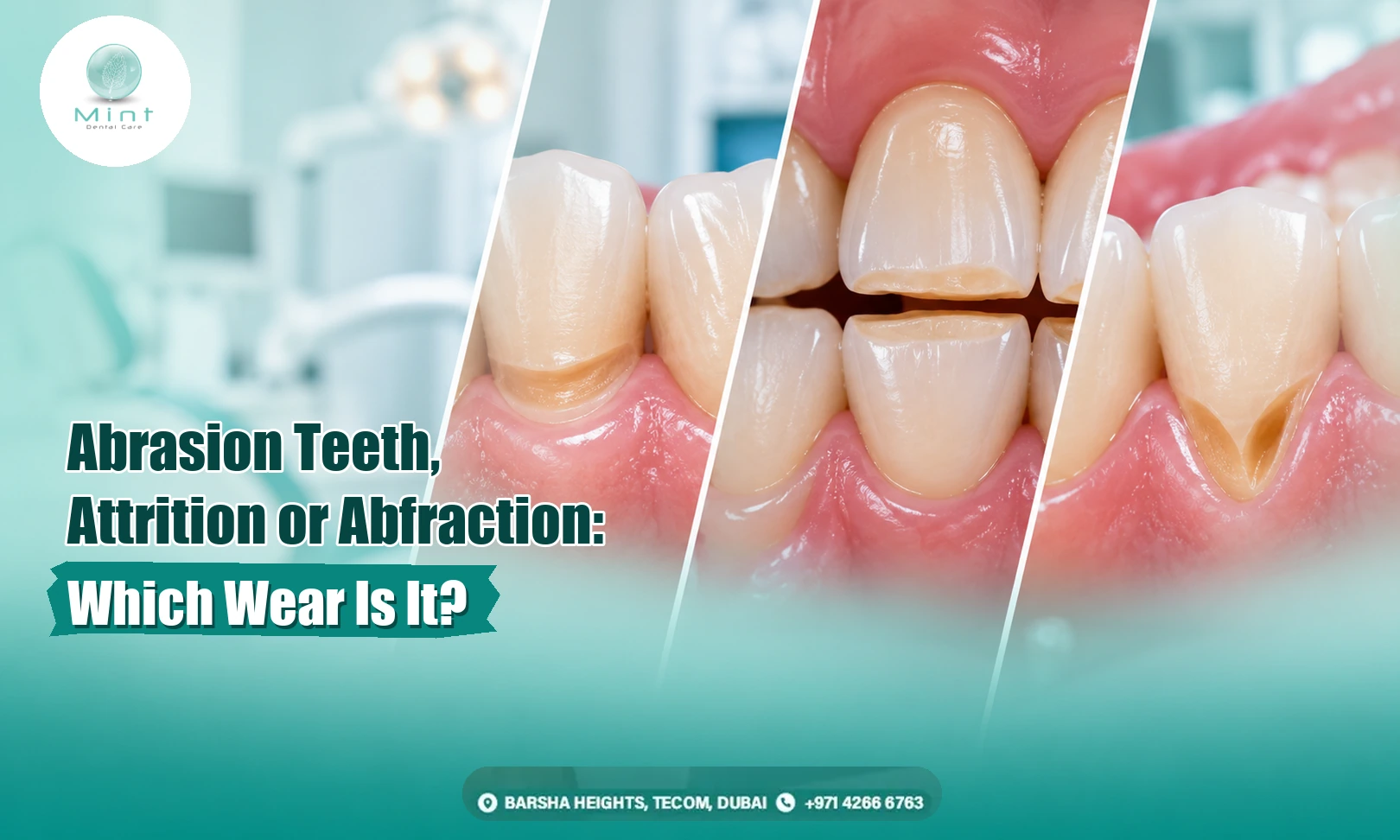
Abrasion teeth wear is the loss of tooth surface caused by something rubbing against it, most often a hard toothbrush, an abrasive toothpaste or a habit such as chewing pens. It is one of four types of tooth wear, alongside attrition (tooth grinding on tooth), abfraction (flexing that cracks enamel at the gum line) and erosion (acid). Each leaves a different pattern, and each needs a different fix, so naming the right one comes first.
Most people who notice abrasion teeth changes have more than one type of wear at once. The sections below explain how a dentist reads the pattern, which repair suits each type, and how to stop the wear from returning after treatment.
Abrasion teeth vs other wear
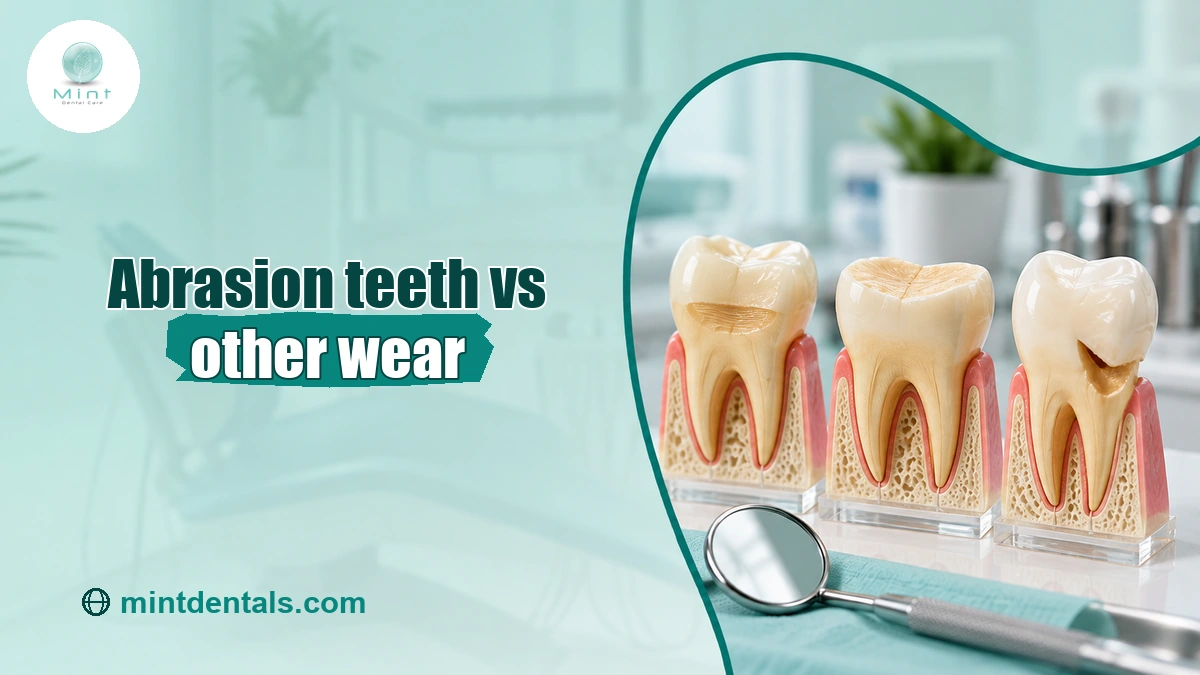
Enamel is the hardest tissue in the body, but it does not regrow. Once it thins, the softer, yellower dentine underneath shows through and wears faster. The four mechanisms are:
| Type | Cause | Where it shows | What it looks like |
|---|---|---|---|
| Abrasion | Brushing, toothpaste, objects | Outer surface at the gum line, often canines and premolars | Broad, smooth, rounded grooves |
| Attrition | Tooth against tooth, grinding | Biting edges and chewing surfaces | Flat, shiny facets that match the opposite tooth |
| Abfraction | Flexing under heavy bite forces | Neck of the tooth, sometimes below the gum | Sharp, deep, wedge-shaped notches |
| Erosion | Acid from diet or the stomach | Inner surfaces of upper teeth, chewing surfaces of molars | Smooth, glassy, cupped or translucent areas |
What causes tooth abrasion
Abrasion teeth damage comes from a foreign object rubbing the tooth repeatedly. The common culprit is horizontal scrubbing with a medium or hard brush, which grinds broad grooves into the exposed root just above the gum. Abrasion teeth grooves are often worse on the side opposite your brushing hand, because that is where you press hardest. Our guide on brushing too hard covers the technique in detail.
Toothpaste abrasivity
Every toothpaste contains a mild abrasive, and its strength is rated on a scale called RDA. Many whitening and charcoal pastes sit at the top of that scale. On healthy enamel the effect is small, but on exposed root surfaces a high-RDA paste combined with firm pressure speeds up abrasion teeth wear noticeably.
Pens, nails and ice habits
Chewing pens, biting nails, opening packets, holding hair grips or pipes between the teeth, and crunching ice all wear small, specific areas. The giveaway of this kind of abrasion teeth damage is a notch or chip exactly where the object sits, often on one or two front teeth.
What is dental attrition?
Attrition is the slow grinding away of the biting surfaces as upper and lower teeth meet. Some is normal with age, but clenching and night-time grinding speed it up dramatically. The edges of the front teeth become straight and short, and canines lose their points.
Flat shiny wear facets
The classic sign is a flat, polished facet on one tooth that lines up exactly with a matching facet on the opposite tooth when you slide your jaw sideways. Many grinders are unaware they do it; a partner hearing it at night or jaw stiffness on waking is often the first clue.
What is abfraction?
Abfraction is the least intuitive type. When a tooth takes heavy or off-centre bite forces, it flexes very slightly at its neck. Over years, that flexing makes tiny cracks in the thin enamel at the gum line, and pieces break away.
Wedge notches at the gum line
The result is a sharp, V-shaped notch, sometimes on only one tooth, and sometimes below the gum where no brush reaches. That location is how a dentist separates it from abrasion teeth grooves, which are broader and rounder. In practice the two often combine: bite stress starts the notch and brushing widens it.
What is tooth erosion?
Erosion is chemical rather than mechanical. Acid from soft drinks, citrus, sports drinks or stomach reflux softens enamel, which then wears faster under brushing or chewing. Typical signs include cupped hollows on molars and thin, see-through edges on front teeth. We cover causes and diet changes in our guide to tooth erosion, so here it matters mainly because acid makes every other type of wear worse.
How a dentist tells them apart
Telling abrasion teeth wear from the other types comes down to where the wear sits, its shape, and whether opposing teeth match. The dentist also asks about brushing habits, diet, reflux, sport drinks and grinding, and checks the jaw muscles for signs of clenching.
Tracking wear over time
Because wear is slow, a single visit can understate it. Clinical photographs and digital scans of the teeth give a baseline, so the next check-up can show whether the wear is still active or has stopped. That decides whether repair is needed now or whether a change of habit is enough.
Treatment for worn teeth
Treatment follows the cause, whether that is abrasion teeth wear, grinding, bite stress or acid. Worn surfaces are rebuilt with composite fillings, but repairing a tooth without removing the cause only means the repair wears too.
- Abrasion: a softer brush, a low-abrasive paste and a gentler technique. Grooves that are deep or sensitive are filled with tooth-coloured composite.
- Attrition: a night guard to take the grinding forces, then rebuilding of edges that have lost height.
- Abfraction: a bite check, sometimes small adjustments to high spots, then a composite restoration of the notch.
- Erosion: diet changes and fluoride first, then repair once the acid source is controlled.
Bonding for gum-line notches
Notches from abrasion teeth wear or abfraction are usually restored with composite filling material bonded to the tooth, which seals exposed dentine and stops food catching. At Mint Dental Care, composite fillings are listed at AED 400 to 800 per tooth.
Night guards for grinding
A guard made from a scan of your teeth absorbs the grinding forces so the enamel no longer takes them. Types and fit are explained in our custom night guard guide; the cost is quoted at consultation.
When a crown is needed
When wear has removed a large share of the tooth, a filling is not strong enough. An onlay covers the biting surface and is quoted at consultation; a full crown is listed at AED 1,500 to 3,000 per tooth.
Sensitivity from worn teeth
Exposed dentine from abrasion teeth wear contains tiny tubes that lead to the nerve, so cold drinks, sweet food or brushing can trigger a sharp twinge. Sensitivity toothpaste helps mild cases; bonding over the exposed area often settles it fully. Persistent sensitivity has other possible causes too, explained in our guide to tooth sensitivity.
How to stop tooth wear
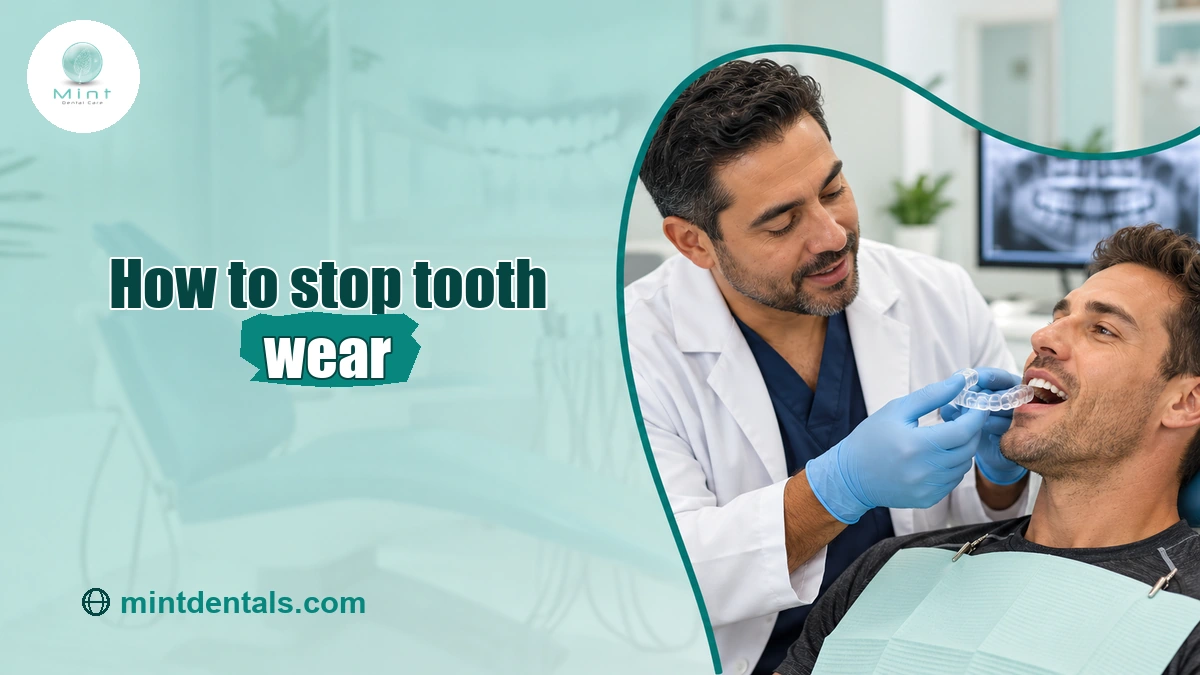
Preventing abrasion teeth wear and the other three types comes down to one idea: remove the force or the acid, then protect what is left.
- Use a soft brush and gentle circular strokes, or an electric brush with a pressure sensor.
- Choose a low-abrasive paste if your roots are exposed, and keep whitening pastes occasional.
- Wait about 30 minutes after acidic food or drinks before brushing.
- Wear your night guard every night if you grind.
- Drop the pen, nail and ice habits.
Abrasion teeth wear, attrition, abfraction and erosion often look alike to the patient but very different to a dentist, and the right treatment depends on telling them apart. Spot the change early, deal with the cause, and most worn teeth can be protected with small repairs instead of large ones later.
Frequently asked questions
Worn teeth raise the same worries in a predictable order: which kind of wear this is, whether it can be undone, what repairing it costs, and whether a night guard will stop it. The short answers are below, with the detail above.
What is the difference between abrasion, attrition and abfraction?
Abrasion is wear from an object such as a toothbrush. Attrition is tooth wearing against tooth, usually from grinding. Abfraction is notching at the gum line caused by the tooth flexing under heavy bite forces.
Can worn teeth be repaired?
Yes. Small grooves and notches are rebuilt with composite, and heavily worn teeth are covered with an onlay or a crown. The cause has to be dealt with first, or the repair will wear as well.
Does brushing too hard really wear teeth away?
It does, especially on root surfaces exposed by gum recession. Firm horizontal scrubbing with a hard brush and an abrasive paste is the main cause of abrasion teeth grooves.
Why are my teeth notched at the gum line?
Broad, rounded notches usually point to brushing abrasion. Sharp, wedge-shaped notches, sometimes on a single tooth, suggest abfraction from bite stress. Many notches are a mix of both.
Is tooth wear reversible?
No. Lost enamel does not grow back, so abrasion teeth grooves remain. Wear can be stopped, and the lost shape can be restored with dental materials.
How much does it cost to repair worn teeth?
At Mint Dental Care, composite fillings are listed at AED 400 to 800 per tooth and crowns at AED 1,500 to 3,000 per tooth. Onlays and night guards are quoted at consultation.
Will a night guard stop tooth wear?
It stops wear from grinding by taking the forces instead of your enamel. It does not affect abrasion from brushing or erosion from acid.