 Barsha Heights, Tecom, Dubai
 +971 (4) 266 6763
Temporary Tooth Filling: How Long Can You Keep It In?
15/10/2026 · Dental Restorations in Dubai
 15/10/2026
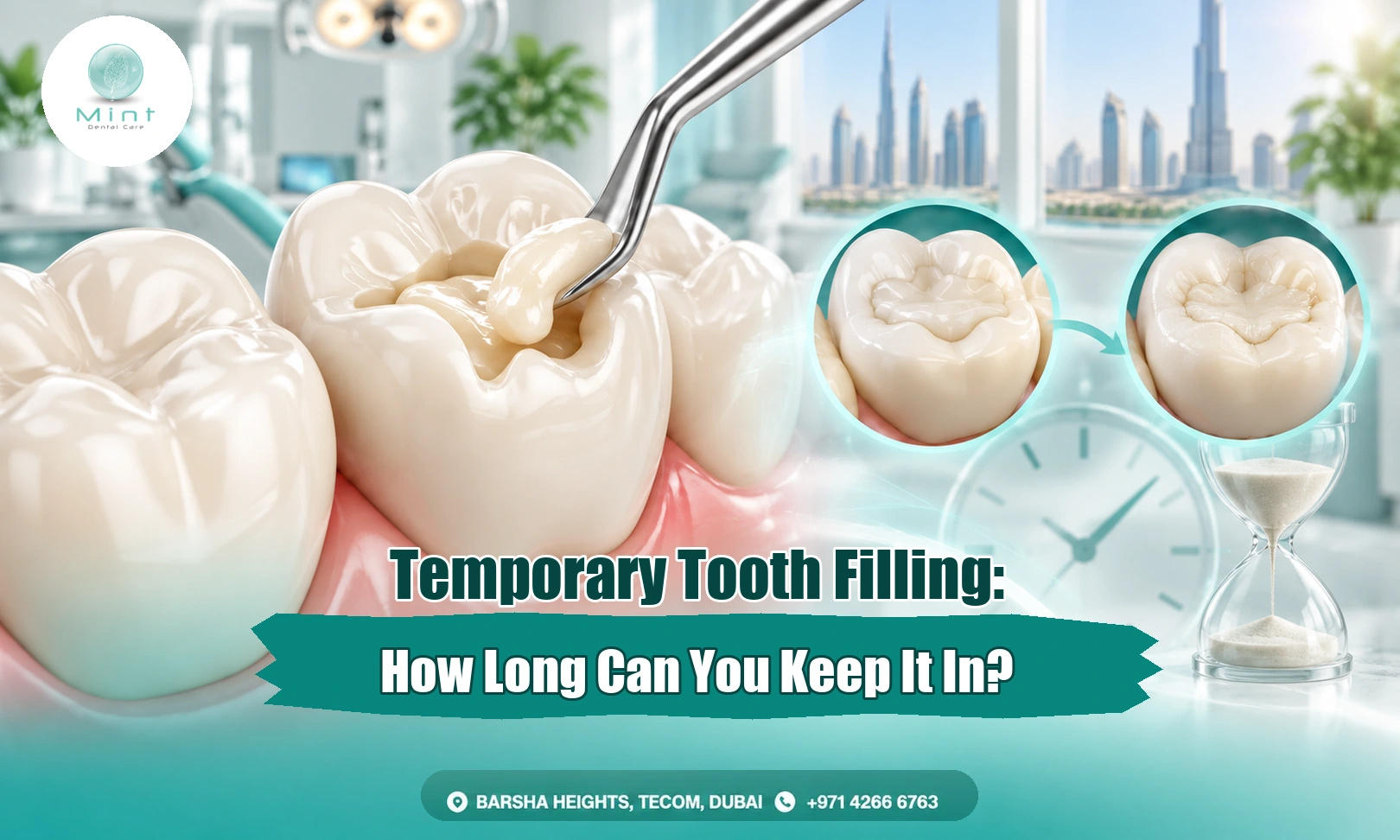
Temporary tooth filling cements are made to be taken out again, so they last days to weeks, not years. A dressing between root canal visits holds 1 to 4 weeks, and glass ionomer on a settling tooth up to about 3 months. Past that date, saliva leaks under the seal.
What nobody explains is what those weeks should feel like. This page is about the wait with a temporary tooth filling: why it was placed, what is normal, and the signs it has stopped sealing.
Why a temporary filling is soft
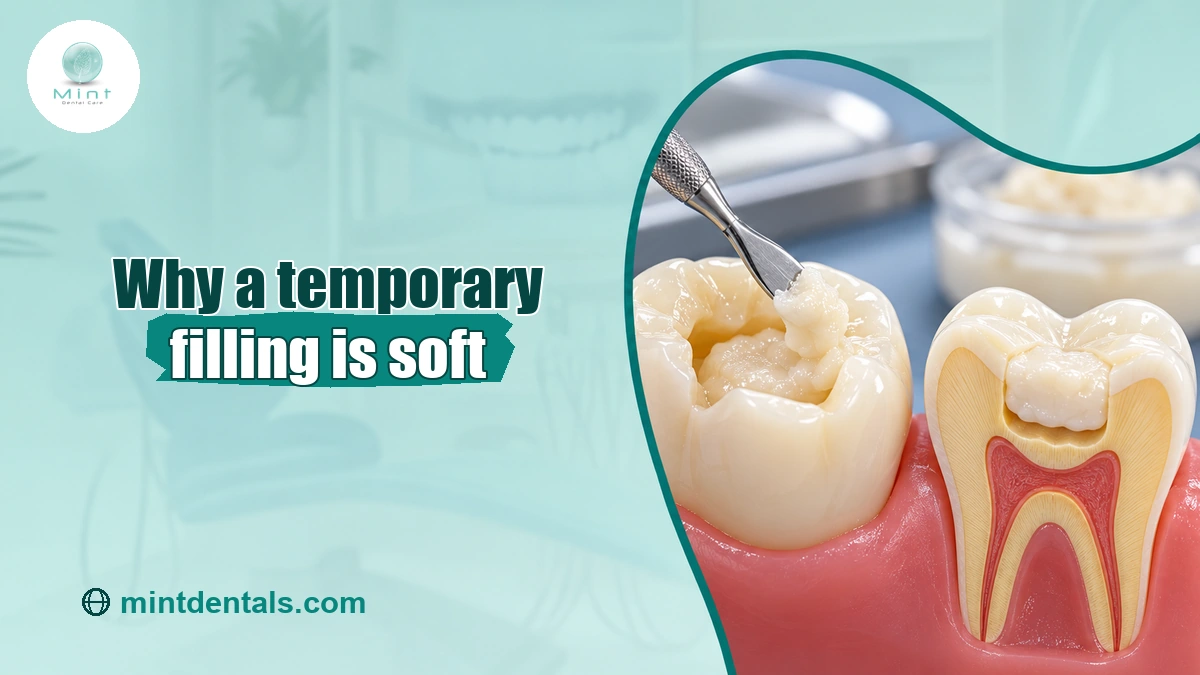
The first surprise is how little it feels like a filling. It gives slightly under a fingernail, and patients often ring to say something has gone wrong. Nothing has: a temporary tooth filling is meant to behave that way, and the softness comes from what the cement was asked to do.
Built to be lifted out again
A permanent filling bonds to enamel for years. A temporary tooth filling does the opposite: hard enough to seal out saliva and bacteria, soft enough to lift out whole next visit with no drilling. Sealing is the only job, which is why a dressing worn thin matters even when nothing hurts.
Temporary filling materials and dressings
Look at the tooth and you may see grey, white or something close to tooth colour, and the shade is a clue to how long yours is expected to hold. Two cements and one medicated dressing cover almost everything placed in practice.
Zinc oxide eugenol dressing
Zinc oxide eugenol is the grey cement most dentists reach for. Eugenol is clove oil, with a sedative effect on an irritated nerve, so a deep cavity often feels calmer a day later.
Glass ionomer for a longer wait
Glass ionomer is harder, bonds chemically and releases fluoride, so it suits a wait of months. Which permanent material follows, and what each costs, sits in our guide to dental filling cost in Dubai.
Dressings between root canal visits
When a root canal runs over two or three visits, a cotton pellet and a dressing close the access hole each time, often over a medicated paste. Our page on what to expect during a root canal has the sequence.
How long a temporary tooth filling lasts
Asking when yours comes out is more useful than asking how long these last in general. The window is set by the reason it went in, and the six common reasons each carry their own number of weeks and their own next step.
Why it was placed
There is no single lifespan, because the reason it went in sets the window. Ask for that date before you leave the chair.
| Why it was placed | Meant to last | What happens next |
|---|---|---|
| Deep cavity, waiting for the tooth to settle | 2 to 8 weeks | Filling, or a root canal if the nerve stays sore |
| Between root canal appointments | 1 to 4 weeks | Canals finished, then a filling or a crown |
| Medicated dressing on an infected nerve | 1 to 2 weeks | Dressing out, canals reassessed |
| Emergency out of hours or away from home | A few days | Examination and X-ray, then the lasting repair |
| Crown being made in the laboratory | 1 to 3 weeks | Temporary out, crown cemented |
| Large cavity stabilised before a plan | Up to 3 months | Filling, onlay or crown agreed at review |
Days and weeks, not months
Nothing in that table runs past about three months. A temporary tooth filling left for six months or a year is not a stage in treatment; it is an unfinished tooth with a worn lid.
Normal taste, smell and seepage
Plenty of what the first week throws at you is harmless and sounds alarming, which is why people wait on the things that are not. Separating the expected from the reportable saves an unnecessary phone call and catches the necessary one early.
Clove taste after a dressing
The strong clove taste in the first hours is eugenol leaching out, and it fades within two or three days. A sour or salty taste a week later is something else entirely.
A chalky, grey surface
Temporaries are not polished. A temporary tooth filling looks chalky or grey beside your enamel, feels rough to the tongue and stains from coffee. Sitting lower than it did is the change to report.
Eating with a temporary filling
Meals are where most dressings are lost, and almost always to something sticky rather than something hard. A few days of small adjustments at the table will carry a temporary tooth filling to its appointment in one piece.
Chewing on the other side
Give the cement an hour to set, and keep food on the other side for the first day. After that a temporary tooth filling handles normal meals, if you leave four things alone.
| Leave alone | Why |
|---|---|
| Gum, toffee, caramel | Sticky enough to lift the dressing out whole |
| Nuts, ice, hard crusts | One hard bite cracks a soft cement |
| Dates and sticky rice | Pull at the margin and open a gap |
| Hot drinks then cold water | Expansion and contraction loosens the edge |
Flossing near a temporary tooth filling
Giving up on cleaning between the teeth for a few weeks does more harm than losing the dressing would. The technique changes in one small way at the end of the stroke, and that single change is what keeps a dressing seated.
Pull the floss through sideways
Floss the contact as usual, then let go of one end and draw the floss out sideways through the gap instead of lifting it back up. Lifting is what hooks a dressing out.
Brushing the edge gently
Brush as normal, over the dressing included, with a soft brush and no scrubbing at the margin. Plaque at that edge is where leakage begins. If the tooth is sore to brush, our notes on tooth sensitivity help.
Temporary filling chipped or fallen out
How quickly you need to be seen depends entirely on whether the cavity is still covered. A worn corner on a temporary tooth filling and a hole you can feel with your tongue are two different situations, and so is losing one on a Friday evening abroad.
A chipped edge that still seals
A small chip at the outer edge, with the cavity floor still covered, is not an emergency. Ring the clinic, describe it, and keep the appointment you have. A temporary tooth filling often ends its window with a worn corner.
When it has gone completely
If the cavity is open, cold air stings or your tongue finds a hole, it needs replacing within a day or two. Sooner part way through a root canal, because an open canal lets bacteria down.
A weekend or a trip away
Out of hours, rinse with warm salt water, stop chewing on that side and take your usual painkiller. Sugar-free gum pressed into the cavity holds for an evening. For same-week help, see dental emergency in Dubai.
Pharmacy temporary filling kits
A small tin of repair cement is easy to buy, and it has a narrow but genuine use. It also has a way of turning a two week gap into six months, so be clear about what it covers and what it hides.
What the cement buys you
Pharmacy repair cement is zinc oxide based and works for a few days. It covers an exposed cavity and dulls cold sensitivity. Over a weekend, before an appointment already booked, that is sensible.
The leak it can hide
The risk is the comfort. Cement over a cavity that is quietly decaying, or a canal with infection inside, removes the symptom and not the cause. Repacking a temporary tooth filling every few weeks stores up work.
Pain that means the seal failed
Discomfort is the one symptom that should not be given time. A tooth under a sound dressing settles down over days; a tooth under a failing temporary tooth filling gets worse, and the type of pain tells you which of the two you have.
Pressure, throbbing or a bad taste
Dull pressure, a throb that wakes you, a sour taste seeping out or a tender gum all point one way. A temporary tooth filling has lost its seal, and none of that settles alone.
| What you notice | What it means | What to do |
|---|---|---|
| Sharp pain to cold air | The dressing has worn through | Replaced this week |
| Throbbing that wakes you | Nerve inflamed, or a canal infected | Same or next day |
| Sour taste or bad smell | Leakage under the seal | Phone, do not wait |
| Swollen, tender gum | Infection spreading from the tooth | Treated as urgent |
What the dentist checks
A general consultation is AED 200, a specialist AED 300, and a periapical X-ray at AED 150 shows whether decay has moved under the dressing. A temporary tooth filling is not a separate line on the published price list: it is quoted at consultation, or forms part of the staged treatment.
Leaving a temporary in too long
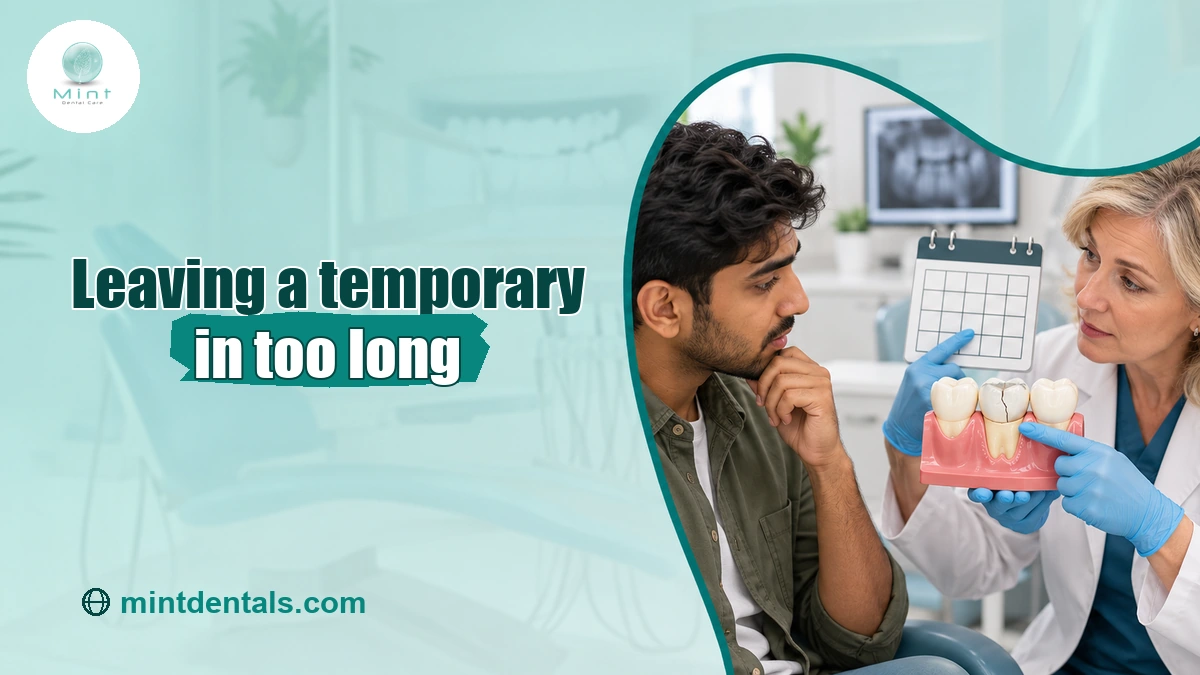
Most of the damage done to these teeth happens after the pain has gone and the appointment has been postponed twice. Nothing hurts, nothing looks different from outside, and that is exactly the condition under which a temporary tooth filling does its quiet harm.
Leakage and decay underneath
This is the real risk, and it is silent. Under a worn temporary tooth filling, saliva and bacteria track past the margin, so decay carries on inside a tooth that looks sealed from outside.
When waiting means a root canal
The delay buys a bigger procedure. A composite filling is AED 400 to 800. Once the nerve is involved, root canal treatment is AED 1,500 to 3,500, and a back tooth usually needs a dental crown after a root canal at AED 1,500 to 3,000.
Finishing the tooth properly
Book the review before you leave, then keep it. The dressing comes out and the tooth is restored for good, usually with composite fillings, or an onlay or crown when little tooth is left.
A temporary tooth filling is a short chapter with a date written on it. Know why yours was placed, how long it should hold, treat it gently and go back on time. The trouble rarely comes from the dressing; it comes from the months that pass afterwards.
Frequently asked questions
These are the questions that come in by phone during the wait, usually in the evening: how long the dressing has left, whether a taste or a chip is expected, whether to floss at all, and whether a pharmacy tin will do until the appointment.
How long can a temporary tooth filling stay in?
Only as long as your dentist planned. Between root canal visits that is 1 to 4 weeks, a medicated dressing 1 to 2 weeks, and glass ionomer on a settling tooth about 3 months. No temporary tooth filling is meant to sit there for a year.
Why does my temporary filling taste strange?
The clove or medicinal taste in the first hours and days is eugenol leaching from zinc oxide cement, which is expected. A sour, salty or foul taste appearing a week later is not eugenol, and usually means bacteria are getting under the dressing.
Can I floss next to a temporary filling?
Yes, and you should. Floss down through the contact as usual, then release one end and draw the floss out sideways rather than pulling it back up past the dressing. Lifting is what unseats a temporary. A water flosser works too.
Is it normal for a temporary filling to feel soft or chip?
Yes. The cement is deliberately softer than enamel so it can be removed cleanly, and a worn or chipped outer edge late in its life is common. What is not normal is an open cavity, or sharp pain to cold air.
Can I use a pharmacy filling kit on a temporary that came out?
For a few days before an appointment you have already booked, yes. Dry the tooth, press the cement in and do not dig inside the cavity. What it cannot do is treat anything. Repacking it every fortnight means the tooth needs finishing.
What does pressure under a temporary filling mean?
Steady pressure or throbbing usually means the nerve is inflamed or infection is active in a canal, and it can also mean the dressing sits too high and takes the whole bite. Either way it is assessed, not waited out.
What happens if a temporary filling is left in for months?
The cement wears, the seal breaks and bacteria get under the margin, so decay keeps going in a tooth that looks closed. A cavity that needed a composite filling at AED 400 to 800 can end up needing root canal treatment and a crown.