 Barsha Heights, Tecom, Dubai
  +971 (4) 266 6763
Dead Tooth: Signs, and Root Canal or Extraction?
22/08/2026 · Root Canal Treatment in Dubai
 22/08/2026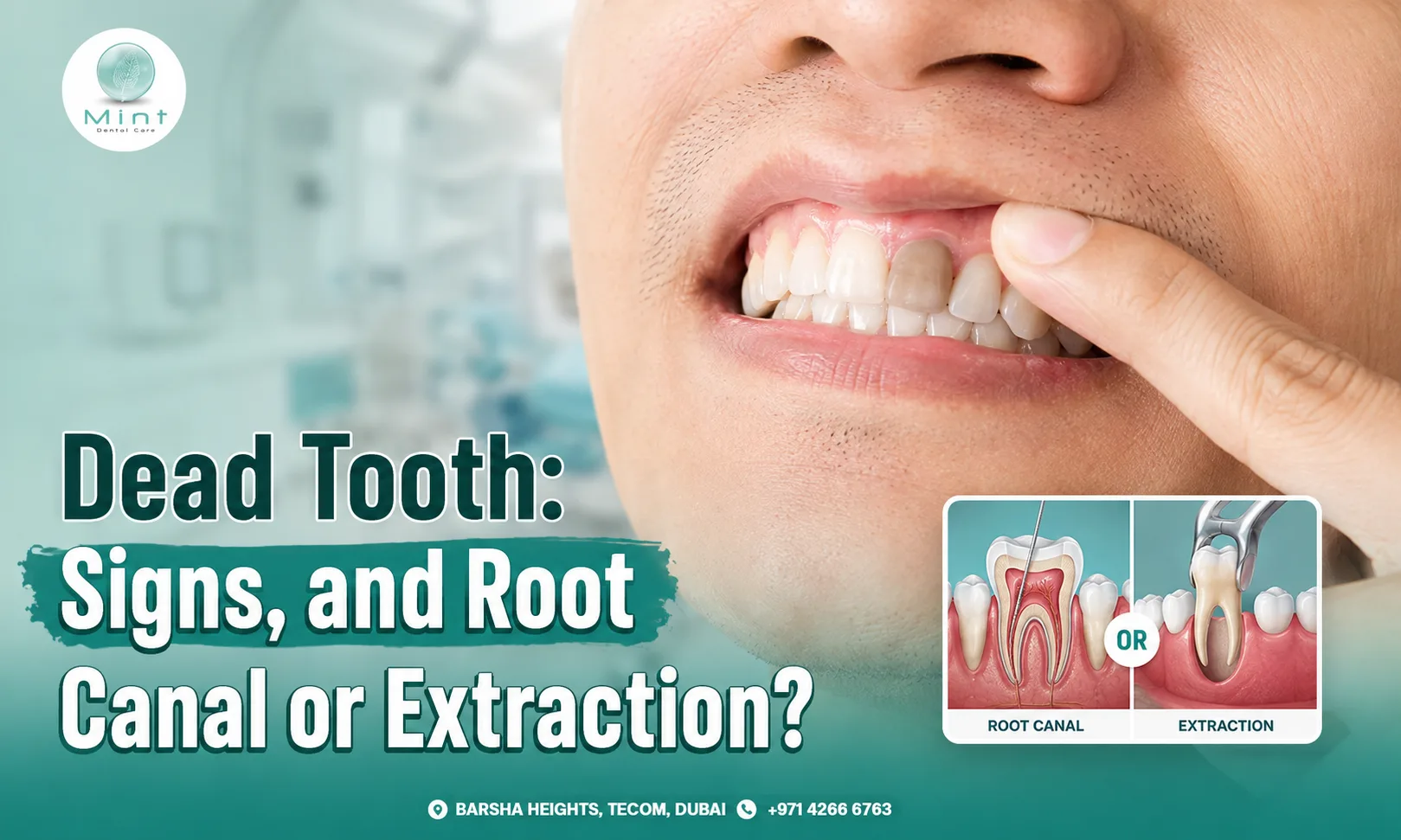
Dead tooth is the term for a tooth whose nerve and blood supply have died, usually after deep decay or an injury, leaving the tooth non-vital. It often stops hurting, which is why people ignore it, and it commonly darkens to grey or brown over months. There are two treatments and only two: root canal treatment to keep the tooth, or extraction to remove it. Doing nothing is not a third option, because the dead tissue inside eventually becomes infected.
The confusing part is the silence. Pain that finally disappears feels like recovery, and it is precisely the opposite: the nerve has stopped signalling because it is no longer alive.
Tooth turned grey or stopped hurting after an injury? Get it assessed at Mint Dental Care before infection sets in. Call +971 4 266 6763, WhatsApp us, or read about painless root canal treatment in Dubai.
How is a dead tooth treated?
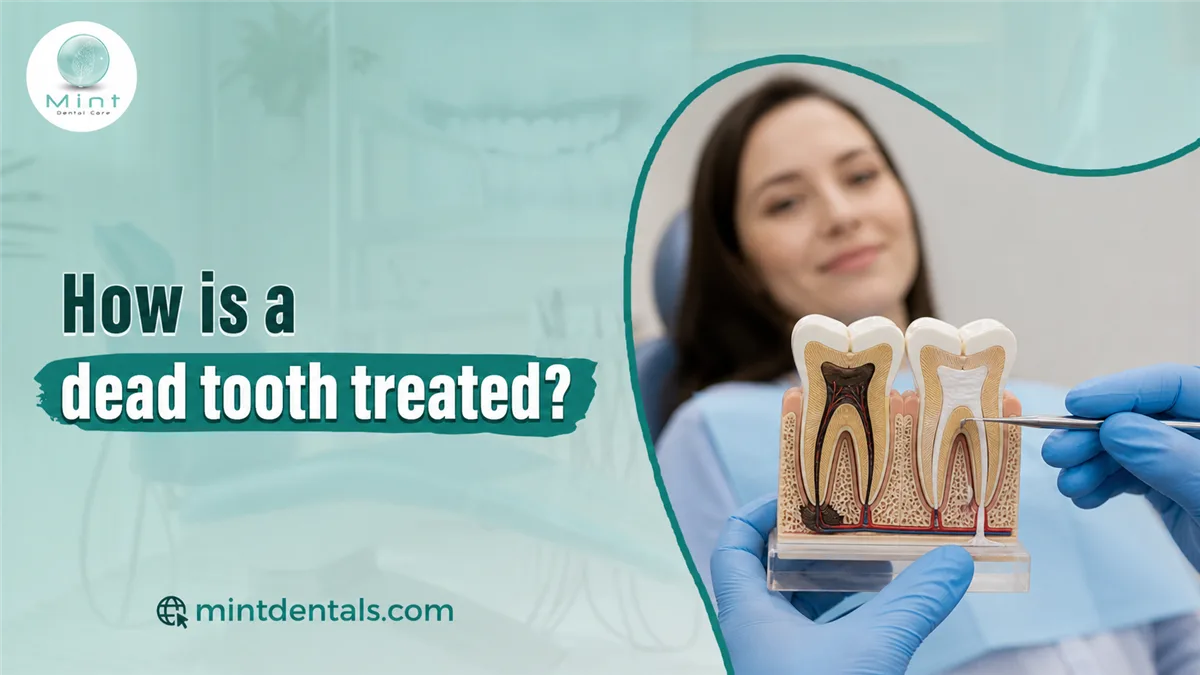
Once the pulp inside a tooth has died, it cannot regenerate. The choice is between cleaning the dead tissue out and sealing the space, or removing the tooth altogether.
Root canal treatment is the option that saves the tooth. The dentist opens the crown, removes the necrotic pulp, disinfects and shapes the canals, then fills and seals them. The tooth stays in place and keeps functioning, though it becomes more brittle and usually needs a crown afterwards to survive chewing forces.
Extraction is chosen when the tooth is too broken to restore, when the root is fractured, or when infection has destroyed too much surrounding bone. It solves the problem immediately but creates a new one, since the gap then needs an implant or a bridge, and the bone underneath begins to shrink. Our comparison of root canal versus extraction covers how that decision is made case by case.
The signs of a dead tooth
- A change in colour, where the tooth turns grey, brown or yellow compared with its neighbours, usually developing over weeks to months.
- Pain that was severe and then stopped abruptly, which often marks the point the nerve died rather than the point it healed.
- No response to cold, while the teeth either side react normally to the same stimulus.
- Tenderness when biting or tapping the tooth, which suggests inflammation has spread beyond the root tip.
- A small pimple on the gum near the root that drains and refills, which is a sinus tract from a chronic infection.
- A bad taste or smell that comes and goes as an abscess discharges.
Colour is the most reliable early clue on a front tooth, especially after a knock in childhood or sport. A dead tooth can also stay completely symptom-free for years, which is why routine X-rays sometimes find one nobody suspected.
Why leaving it alone does not work
The pulp chamber of a dead tooth is a sealed space with no blood supply, so the immune system cannot reach it and antibiotics cannot clear it. Bacteria multiply there and eventually push out through the root tip into the bone, forming an abscess.
What follows is predictable: bone loss around the root, swelling, and in some cases a spreading facial infection that becomes an emergency. Along the way the tooth becomes harder to save, so a case that needed one root canal appointment ends up needing surgery or extraction. That progression is the entire argument for treating a dead tooth while it is still quiet.
Fixing the colour afterwards
A dead tooth darkens because blood pigments from the dead pulp seep into the dentine, and external whitening barely touches it since the discolouration comes from inside. The options are:
| Option | How it works | Best for |
|---|---|---|
| Internal bleaching | Whitening agent sealed inside the tooth after root canal treatment | Mild to moderate greying, tooth otherwise intact |
| Composite bonding | Tooth-coloured resin layered over the front surface | Small defects alongside discolouration |
| Veneer | Thin ceramic facing on the front | Stubborn shade, front tooth, enough sound structure |
| Crown | Full coverage that also strengthens the tooth | Heavily broken or root-treated back teeth |
Internal bleaching is worth asking about first because it is conservative and often works well. Where the tooth is also weakened, a crown solves strength and colour together, and our page on dental crowns and bridges explains what that involves.
Treatment cost and timeline
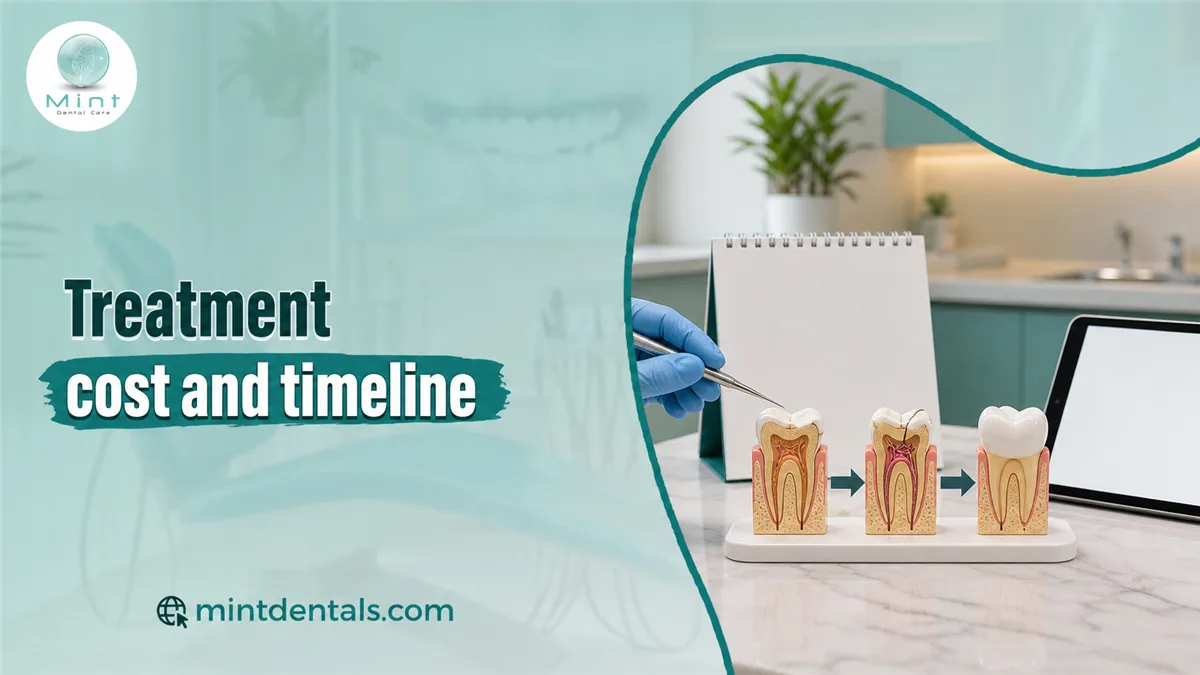
At Mint, root canal treatment is 1,500 to 3,500 AED depending on the tooth and the number of canals, a crown afterwards is 1,500 to 3,000 AED, and a permanent tooth extraction is 600 AED with surgical cases from 1,000 to 3,000 AED.
Treating a dead tooth by root canal takes one or two visits of about 60 to 90 minutes, done under local anaesthetic. The tooth is numbed exactly as it would be for a filling, and most patients describe the appointment as long rather than painful. The reputation it has for pain belongs to an era before modern anaesthesia and rotary instruments: what hurts is the infected tooth beforehand, not the treatment. Extraction is quicker but starts a longer conversation about replacing the tooth.
If a tooth of yours has gone grey, or a pain vanished and you quietly hoped that was the end of it, the sensible move is a check and an X-ray rather than waiting for the swelling that eventually arrives. A dead tooth caught early is usually a routine root canal and a crown; the same tooth two years later can be an extraction, an implant and a bone graft. That gap in cost and complexity is the whole reason dentists push so hard on this one. Bring the history if you can, since knowing when the tooth was knocked or when the pain stopped genuinely helps the diagnosis.
Book an assessment at Mint Dental Care, Barsha Heights (TECOM), Dubai. MOHAP-licensed team including a specialist endodontist, 4.8-star patient rating. Call +971 4 266 6763, WhatsApp us, or book online.
Frequently asked questions
Is it okay to leave a dead tooth untreated?
No. The dead pulp is beyond the reach of your immune system, so bacteria multiply unchallenged and eventually form an abscess in the bone. It may stay painless for a long time, but the direction of travel is only one way.
What are the first signs of a dead tooth?
Usually a colour change to grey or brown, and a tooth that no longer feels cold when the ones beside it do. Pain that was severe and then stopped suddenly is another common early marker, along with tenderness when biting.
Will a dead tooth fall out on its own?
Rarely, and only in the late stages when infection has destroyed the supporting bone. Waiting for that means losing bone you will need for an implant later, which makes replacement harder and more expensive.
How long can a tooth stay dead before treatment?
There is no safe interval. Some remain quiet for years while others abscess within weeks, and there is no way to predict which. Once it has been diagnosed, treatment should be planned rather than postponed.
Is removing a dead tooth painful?
The extraction itself is done under local anaesthetic and is not painful, though an active infection can make the area harder to numb, which is another argument for treating early. Root canal treatment is equally comfortable and keeps your own tooth.
Can a dead tooth be whitened?
Not with normal whitening, because the discolouration comes from inside the dentine. Internal bleaching after root canal treatment often lightens it well, and where it does not, a veneer or crown covers it.
Does a root-treated tooth always need a crown?
Back teeth almost always do, since they take heavy chewing force and become brittle once the pulp is removed. Front teeth with minimal loss of structure can sometimes be restored with a filling alone.