 Barsha Heights, Tecom, Dubai
  +971 (4) 266 6763
Dental Abscess: Symptoms, Causes & Emergency Care
22/07/2026 · Emergency Dentistry in Dubai
 22/07/2026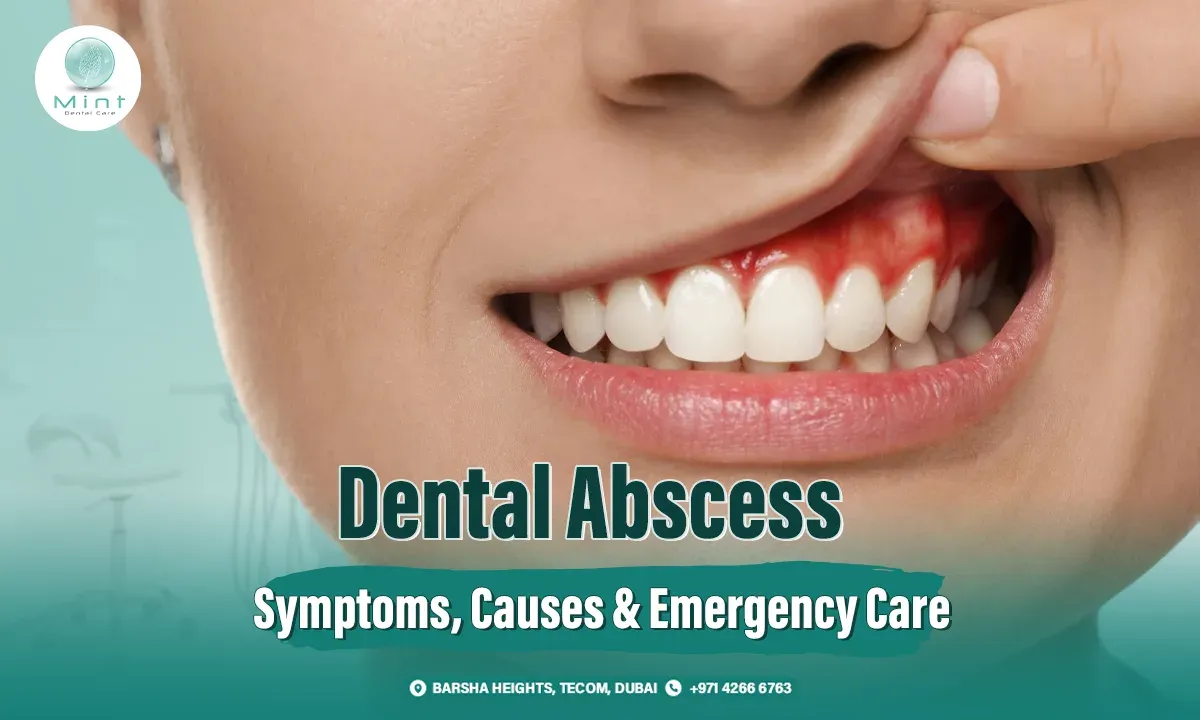
A dental abscess is a pocket of pus caused by a bacterial infection at the root of a tooth or in the gum beside it, and it is a genuine dental emergency. The hallmark signs are a severe, throbbing toothache, sensitivity to hot and cold, a bad taste from draining pus, and swelling of the gum, cheek, or jaw. An abscess will not clear on its own and always needs professional treatment, so see a dentist urgently.
The pain often arrives suddenly and at night. This guide explains what a dental abscess is, how to spot the warning signs early, the two main types, why the infection is dangerous, and the treatments that resolve it. The core message: an abscess is a spreading infection, so prompt care protects your tooth and your health.
In pain right now? Do not wait for it to settle. Our team offers same-day emergency dental care in Dubai to drain the infection and stop the pain fast. Call +971 4 266 6763, WhatsApp us, or book online.
What is a dental abscess?
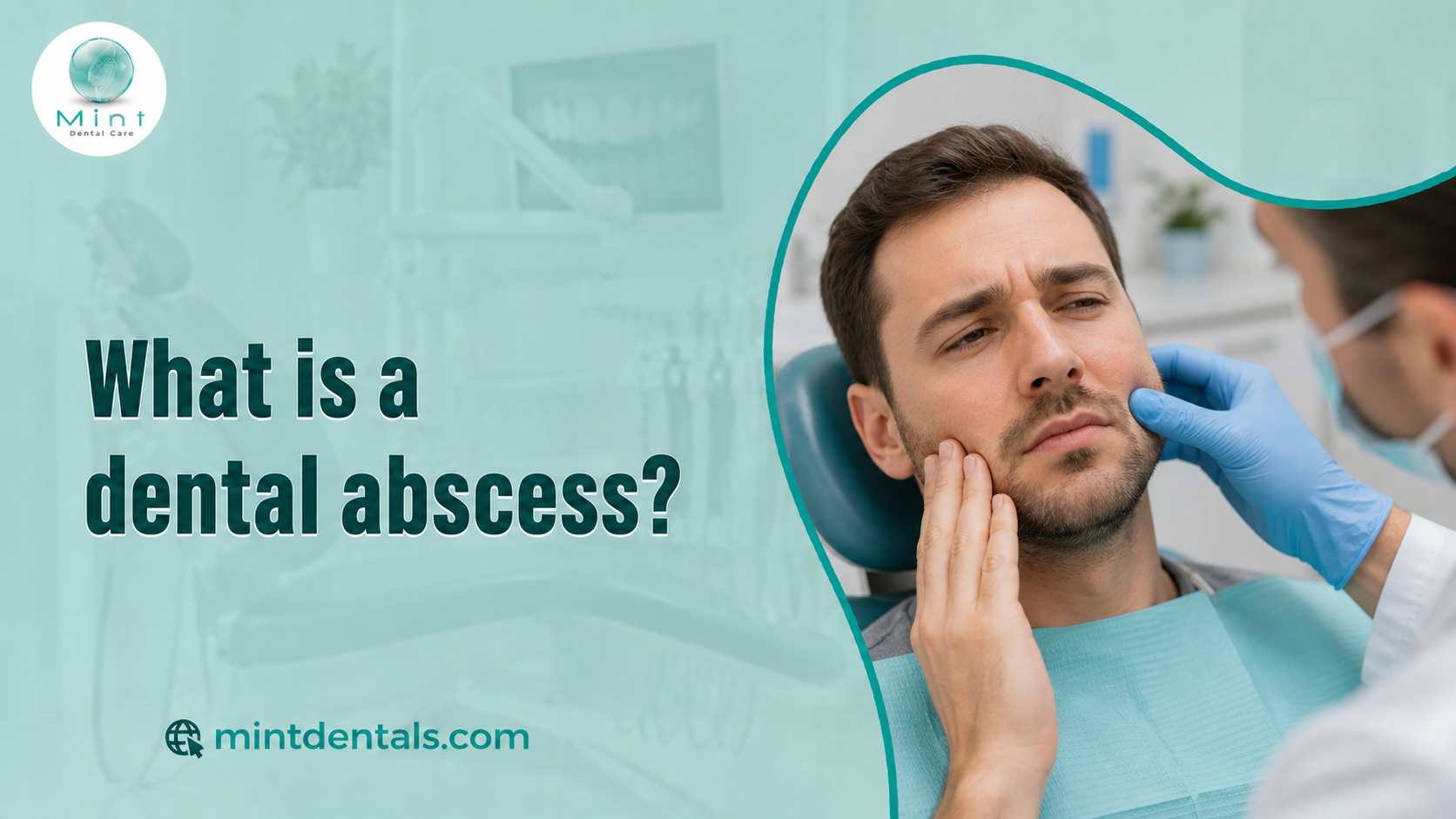
A dental abscess is a collection of pus that forms when bacteria invade the deeper tissues of a tooth or gum. It usually starts with a way in for bacteria: an untreated cavity, a cracked tooth, a leaking filling, a dental injury, or advanced gum disease. Once bacteria reach the soft inner pulp or the space beside the root, the trapped pus builds pressure, producing the classic throbbing pain and growing until the abscess is drained. This is why a dental abscess is urgent, not something to monitor at home.
Warning signs and symptoms
Tooth abscess symptoms build quickly and are hard to ignore. See a dentist as soon as you notice any of the following:
- Intense, throbbing toothache that may spread to the jaw, ear, or neck on the same side.
- Pain when biting or touching the tooth, and lingering sensitivity to hot and cold.
- Swelling of the gum, cheek, or face. Face swelling from a tooth clearly signals the infection is spreading.
- A gum abscess or a tender, pimple-like bump on the gum that may leak pus.
- A sudden foul taste or bad smell, often followed by relief, if the abscess bursts and pus drains.
- Fever, swollen neck glands, and feeling generally unwell.
- Difficulty opening the mouth or trouble swallowing.
One warning worth knowing: if the pain suddenly stops after a rush of foul-tasting fluid, the abscess may have ruptured, but the infection has not gone and the pus source is still there.
Types: periapical versus periodontal
Not every dental abscess starts in the same place, and the type guides the treatment. The two most common forms are periapical and periodontal.
| Type | Where it forms | Usual cause | Typical treatment |
|---|---|---|---|
| Periapical abscess | At the tip of the tooth root, inside the bone | Deep decay, a crack, or trauma that lets bacteria reach the pulp | Root canal or extraction, plus drainage |
| Periodontal abscess | In the gum, alongside the tooth root | Advanced gum disease and deep gum pockets | Drainage and deep cleaning of the pocket |
| Gingival abscess | In the surface gum tissue only | A trapped foreign body, such as a food particle | Simple drainage and cleaning |
A periapical abscess usually means the nerve inside the tooth has died, so saving it relies on root canal treatment. A periodontal abscess is tied to gum disease treatment, where cleaning the infected pocket is central to recovery. Your dentist confirms the type with an examination and an X-ray.
Why a dental abscess is a medical emergency
It is tempting to hope a bad toothache will fade, but a dental abscess should never be waited out. The infection sits close to major blood vessels and airways in the head and neck. Left untreated, it can travel into the jawbone, the soft tissues of the face and neck, and in rare cases the bloodstream, causing sepsis.
Go straight to a hospital emergency department, not just a dental clinic, if you have any of these red flags:
- Rapidly spreading swelling of the face, neck, or around the eye.
- A high fever with facial swelling.
- Difficulty breathing or swallowing.
- Trouble fully opening your mouth, or swelling that grows by the hour.
Short of those emergencies, any suspected abscess still needs same-day or next-day dental care. The sooner the pus is drained and the source treated, the lower the risk of complications and the better the chance of keeping the tooth.
Treatment options that actually work
Curing a dental abscess means two things: draining the pus and removing the source of infection. Painkillers and antibiotics can ease symptoms, but on their own they never cure it. Depending on the cause, your dentist may recommend one or more of these:
- Incision and drainage. A small cut releases the trapped pus, relieving pressure and pain almost immediately. This is often the first step to settle an acute dental abscess.
- Root canal treatment. For a periapical abscess, the dentist cleans the infected pulp from inside the tooth, disinfects the canals, and seals them, usually finishing with a crown, keeping your natural tooth in place.
- Tooth extraction. If the tooth is too damaged to save, removing it drains the infection and prevents it returning. A replacement can be discussed after healing.
- Deep gum cleaning. A periodontal abscess is treated by cleaning the infected pocket through scaling and root planing to clear bacteria below the gumline.
- Antibiotics as support, not a cure. Abscess antibiotics such as amoxicillin are prescribed when the infection has spread beyond the tooth or alongside a fever. They control the spread but do not remove the pus, so drainage or a root canal is still needed.
This is the key point about abscess antibiotics: tablets may calm things for a few days, but if the underlying tooth is not treated, the dental abscess almost always flares up again, often worse.
How to prevent a dental abscess
Most abscesses trace back to decay or gum disease, both of which are largely preventable. To lower your risk:
- Brush twice a day with fluoride toothpaste and clean between your teeth daily with floss or interdental brushes.
- Have a routine check-up and professional clean twice a year so small cavities are caught before they reach the nerve.
- Treat any toothache, sensitivity, or bleeding gums early, and repair cracked teeth and failing fillings promptly, since both are common entry points for bacteria.
- Cut down on frequent sugary snacks and drinks, and stop smoking, which worsens gum disease.
- Wear a mouthguard for contact sports to avoid trauma.
If you are in pain while arranging an appointment, our guide to safe home remedies for toothache covers what genuinely helps, such as a warm saltwater rinse and appropriate pain relief. Treat any abscess home remedy as short-term comfort only, never a replacement for seeing a dentist.
A dental abscess is painful, but very treatable once you act. The infection will not resolve by itself, antibiotics alone will not cure it, and any facial swelling, fever, or difficulty breathing or swallowing is an emergency needing immediate care. The safest path is the fastest one: get the abscess assessed, drained, and the underlying tooth properly treated, so the pain ends and your tooth has the best chance of being saved.
Do not wait out an abscess. Our MOHAP-licensed specialists provide fast, gentle emergency dentist care in Dubai to drain the infection and treat the cause the same day. Book online, WhatsApp us, or call +971 4 266 6763. Mint Dental Care, Barsha Heights (TECOM), Dubai.
Frequently asked questions
Can a dental abscess go away on its own?
No. A dental abscess cannot heal by itself. Even if it bursts and the pain eases for a while, the infection remains and will return, often worse. It needs a dentist to drain the pus and treat the source, whether by root canal or extraction.
Is a dental abscess always an emergency?
Treat it as one. Any abscess needs prompt professional care, ideally the same or next day. It becomes a hospital emergency if you have spreading facial swelling, a high fever, or any difficulty breathing or swallowing.
Will antibiotics cure a tooth abscess?
No. Antibiotics can slow a spreading infection and reduce swelling, but they do not remove the pocket of pus or fix the diseased tooth. The abscess almost always returns unless the tooth is drained and treated.
What are the first tooth abscess symptoms to watch for?
The earliest signs are usually a persistent, throbbing toothache, sharp sensitivity to hot and cold, and pain when biting. Swelling of the gum or cheek, a bad taste from pus around the tooth, and a fever suggest the infection is advancing.
What causes face swelling from a tooth?
Face swelling from a tooth happens when infection from an abscess spreads into the surrounding soft tissue, a sign it is no longer contained. Rapidly spreading swelling, especially near the eye or throat, needs urgent hospital assessment.
Is a gum abscess different from a tooth abscess?
A gum abscess, or periodontal abscess, forms in the gum pocket beside the root and is usually linked to gum disease, while a periapical abscess starts inside the tooth from decay or a crack. Both cause pus and pain, but the cause differs, so the treatment does too.
How quickly should I see a dentist for a suspected abscess?
As soon as possible, ideally within 24 hours. Early treatment relieves pain, limits the infection, and improves the odds of saving the tooth. If breathing or swallowing difficulty appears, go to an emergency department immediately.