 Barsha Heights, Tecom, Dubai
 +971 (4) 266 6763
Which Dental Pain Tablet Actually Reaches a Toothache?
16/10/2026 · Emergency Dentistry in Dubai
 16/10/2026
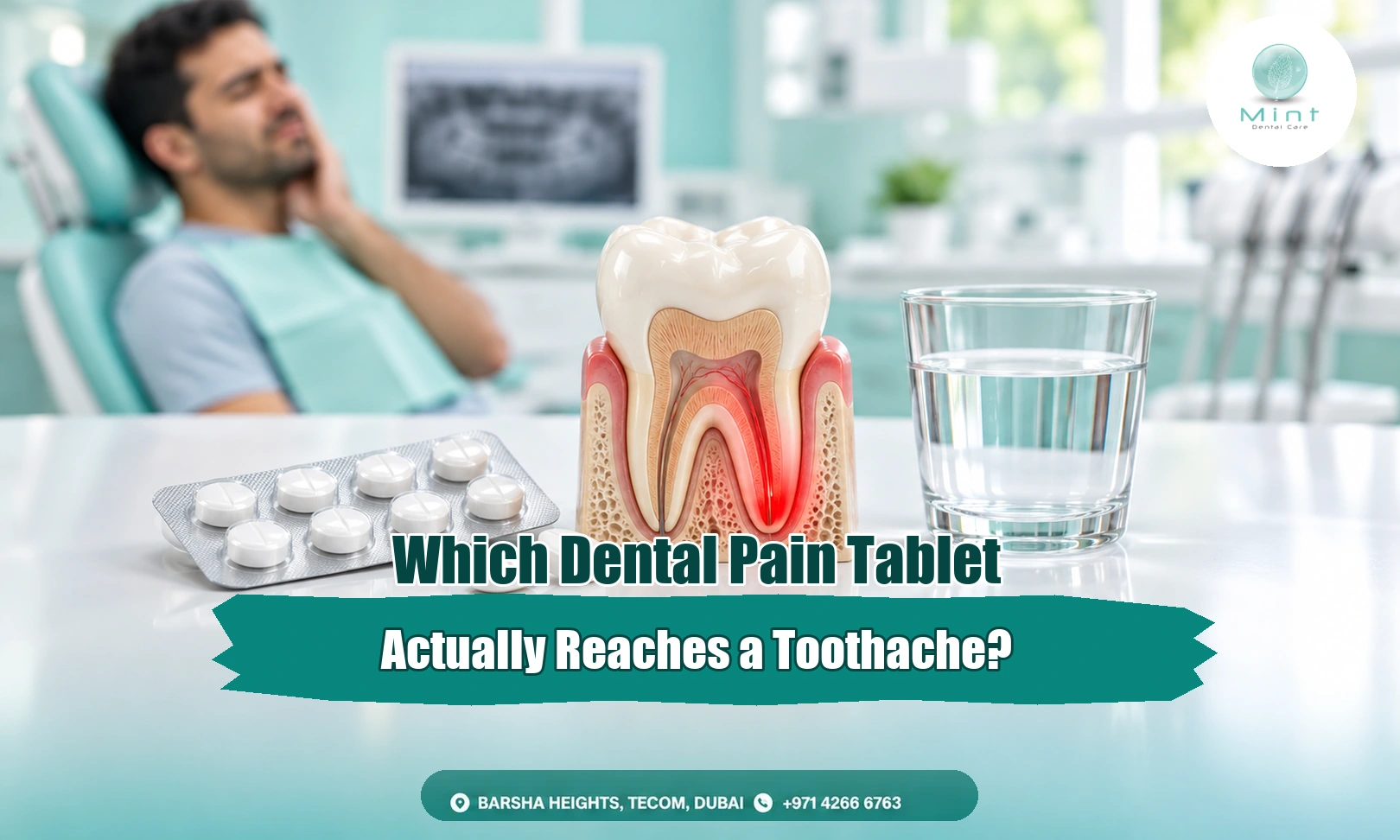
Dental pain tablet choices come down to two drug classes, and only one reaches a toothache properly. Dental pain is inflammatory in origin, so an anti-inflammatory from the NSAID class, usually ibuprofen, gets further than paracetamol alone. Neither treats the tooth. A general dentist consultation is AED 200, and a root canal runs AED 1,500 to 3,500.
Most people judge the drug rather than the fit. A dental pain tablet that seems useless against a throbbing molar is often working as designed, on a pain the tooth is not producing.
This page stays on the pharmacy question: which class reaches the nerve, which shelf products do nothing, when to clear a dental pain tablet with a pharmacist, and when tablets hide an infection.
What a dental pain tablet reaches
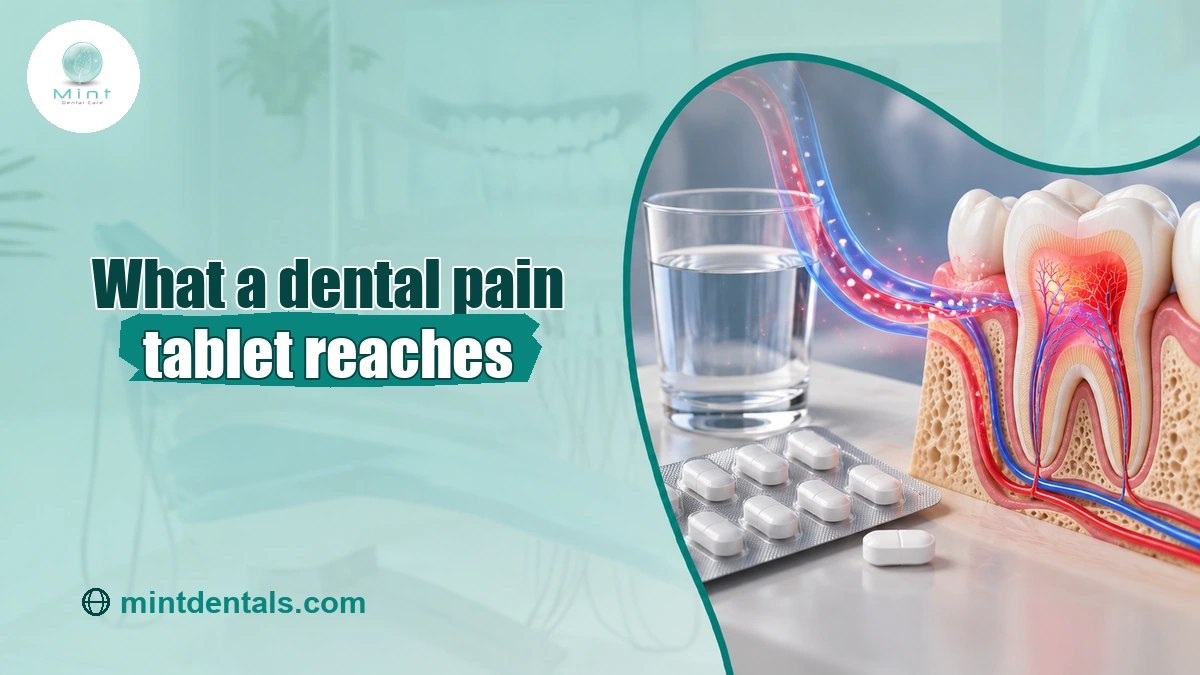
Judging a painkiller fairly means knowing what it is being asked to do. Toothache is not one thing, and a drug circulating in the blood can only act on part of it. Start with where the pain is generated.
Where toothache pain starts
The nerve sits in a sealed chamber walled in by dentine. When bacteria reach it the tissue swells with nowhere to expand, and that pressure is the throbbing. What caused the decay or crack is answered in our guide to tooth pain causes.
What a tablet cannot do
A dental pain tablet lowers the chemical signal from inflamed tissue. It drains no pus, removes no decay and closes no crack. The tooth keeps deteriorating while the pain reading drops. Rinses share that limit, under home remedies for toothache.
| Source of the pain | Does a tablet reach it |
|---|---|
| Inflamed nerve in a tooth | Partly, for a few hours |
| Pus in an abscess | No, it must be drained |
| Decay through enamel | No, it needs a filling |
| A cracked cusp | No, the crack keeps flexing |
| Infected gum on a wisdom tooth | Pain eases, infection stays |
Why NSAIDs work on toothache
The reason one class outperforms the other is chemical, not a matter of strength. Understanding the mechanism also explains why a dental pain tablet from this group has a ceiling, and why doubling it does not raise that ceiling.
Prostaglandins and pulp pressure
Inflamed tissue releases prostaglandins, which sensitise the nerve and drive the swelling. NSAIDs block the enzyme making them, so they act on the cause of the signal rather than the perception. In a sealed pulp chamber, lowering that swelling is what a dental pain tablet usefully does.
Ibuprofen and the NSAID class
Ibuprofen is the familiar name, but the class also holds diclofenac, naproxen and mefenamic acid. Aspirin belongs to it, though rarely the sensible choice for a tooth.
The dose on the packet
Take the dose printed on the packet and no more. Your pharmacist or doctor confirms what suits you and your other medicines, because what is safe for one adult is not automatically safe for the next.
Paracetamol vs ibuprofen for toothache
These two sit side by side on every pharmacy shelf and are often treated as interchangeable. They are not. Each has a different target, a different ceiling and a different reason for being the wrong pick on a given night.
Where paracetamol fits
Paracetamol, sold as acetaminophen in some countries, raises the pain threshold without touching inflammation. For a mild ache, or for anyone who cannot take an NSAID, it is the option available. For a swollen nerve it falls short alone, which is why people decide a dental pain tablet does not work.
Combining the two classes
Because the classes act through different mechanisms, a doctor or pharmacist sometimes advises taking both, or a combination product holding both. That is their call, not the cupboard’s.
The paracetamol liver limit
Paracetamol has a hard ceiling, because above it the drug damages the liver and the damage runs ahead of symptoms. The trap is doubling up unknowingly, since cold remedies and codeine combinations often contain paracetamol already. Read every packet before adding a dental pain tablet.
Antibiotics are not painkillers
Toothache sends plenty of people looking for amoxicillin rather than a dental pain tablet, often from a box left over from last winter. The two do unrelated jobs, and swapping one for the other delays treatment while adding a problem of its own.
What an antibiotic actually does
An antibiotic such as amoxicillin or metronidazole works on bacteria, not pain. It is not a dental pain tablet and no substitute for treating the tooth. Where pus is walled into bone, clearing it means dental abscess treatment.
Resistance and the leftover box
A half finished course taken for a toothache feeds resistance and buys nothing. The pain settles, the tooth is untouched, and the infection returns less willing to respond. If the nerve is dead, the answer is root canal treatment or extraction.
Does a dental pain spray work?
Sprays, gels and oils occupy a whole shelf of their own, and they sell on the promise of acting exactly where it hurts. Whether they can is a question about anatomy rather than about the ingredient, and the answer depends on what lies between them and the nerve.
Benzocaine gels and clove sprays
Benzocaine and lidocaine gels numb the gum surface for a few minutes, which helps an ulcer. Products sold as a dental pain spray are mostly clove preparations built on eugenol, with the same ceiling. Neither crosses enamel to reach a nerve, so they are no dental pain tablet substitute. Undiluted clove oil burns gum and tongue.
Aspirin on the gum
This one is handed down through families as a trick, and it does real damage. The folk logic is that putting the drug on the sore spot must beat swallowing it, which gets the pharmacology backwards and injures the gum in the process.
Aspirin burn, and other harm
An aspirin tablet held against the gum cannot reach the nerve, and the acid dissolving into the tissue burns it, leaving a white ulcerated patch. Painkillers are swallowed. Spirits held in the mouth, heat over a swelling and digging at the tooth all make things worse.
Painkillers to check first
Over the counter does not mean suitable for everyone. Several common conditions and medicines change what a dental pain tablet can safely be, and they are the reason a pharmacist asks questions before handing the box across.
Stomach, kidney, asthma and blood thinners
NSAIDs are not a blanket safe option. They irritate the stomach lining, load the kidneys, set off asthma in some people, and raise bleeding risk alongside warfarin and the newer anticoagulants. These are real contraindications, not small print, and they are why a dental pain tablet gets cleared with a pharmacist first.
| Condition or medicine | What to raise before an NSAID |
|---|---|
| Stomach ulcer or reflux | Whether the class suits you |
| Kidney disease | NSAIDs load the kidneys |
| Asthma reacting to ibuprofen | This can be severe |
| Warfarin or any blood thinner | Bleeding risk rises |
| High blood pressure | NSAIDs push it up |
| Liver disease or alcohol | The paracetamol ceiling matters |
When the tablet stops working
Losing control of a toothache that was manageable the day before is one of the more useful warnings a tooth gives. When a dental pain tablet stops holding, that is information about the tooth rather than about the drug, and reading it correctly changes what you do next.
Pain spreading into the bone
A dental pain tablet that held yesterday and fails today means the problem moved, not that the drug stopped. Inflammation once confined to the nerve has spread past the root tip into bone, and the inflamed volume now exceeds what the dose can quieten.
Stacking tablets to stay ahead
Taking more, or taking it closer together, is where people come unstuck, because this is not a dosing failure. Chasing the pain around the clock is itself the signal to be examined.
Signs of a spreading infection
Some toothaches stop being a pharmacy question altogether. Once infection moves out of the tooth into the face and neck, the clock matters more than the dose, and a handful of specific signs separate that situation from an ordinary bad night.
Swelling, fever and the airway
Visible facial swelling means the infection has left the tooth. Swelling towards the eye or under the jaw, fever, difficulty swallowing, a changed voice, or a jaw that will not open are all seen today, and trouble swallowing belongs in an emergency room. By then a dental pain tablet only hides the distance travelled.
Same day dentist in Dubai
An emergency dentist in Dubai can examine the tooth, x-ray it and release the pressure on the same visit, under local anaesthetic. A general consultation is AED 200, a specialist AED 300, an extraction AED 600 and a root canal AED 1,500 to 3,500, with the rest on our dental service prices list.
| Sign | What it calls for |
|---|---|
| Swelling of cheek, jaw or eye | Be seen today |
| Fever or feeling unwell | The infection is not local |
| Trouble swallowing or opening the mouth | Emergency care, not a tablet |
| Pain that nothing touches | The nerve is likely dying |
| Bad taste, then sudden relief | An abscess burst, still needs treating |
Toothache medicine for children and pregnancy
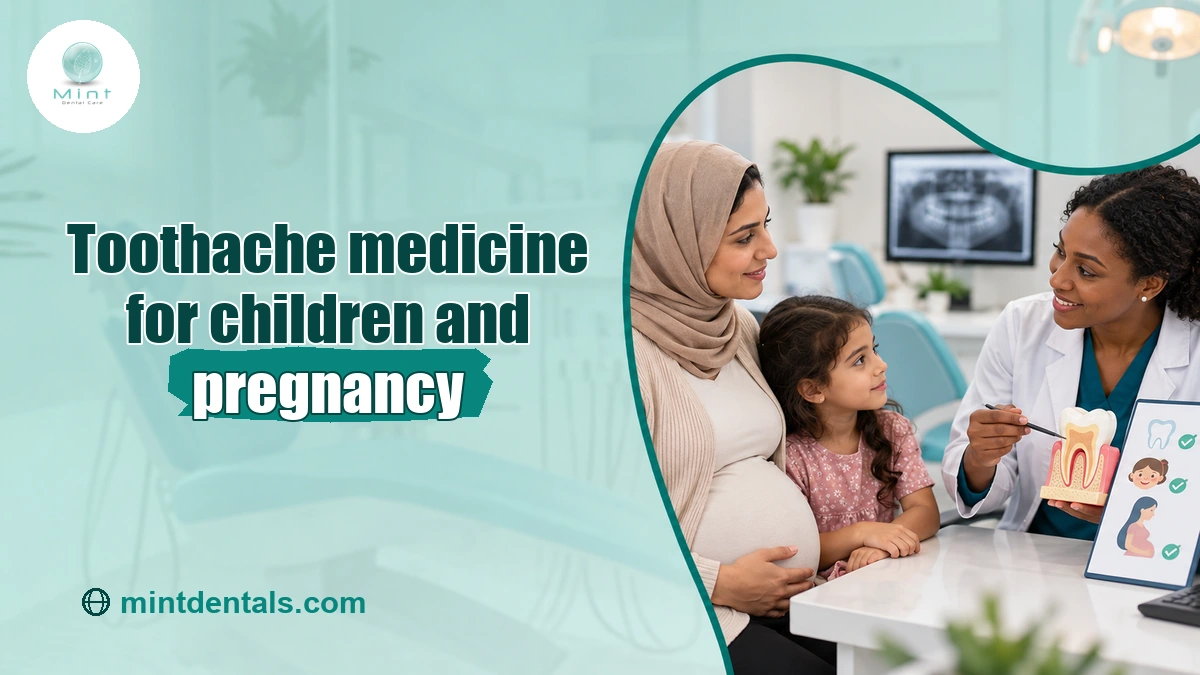
Two groups cannot simply follow the adult advice above. For a child, and for anyone pregnant, both the choice of drug and the amount of it are decided differently, and the margin for working it out at home is far narrower.
Children and adult painkillers
Children are not scaled down adults. Adult tablets, adult strengths and aspirin in particular are not for them, and a paediatric preparation is dosed by weight on the bottle. A child who cannot sleep is past the point a dental pain tablet should be managing.
Painkillers in pregnancy
In pregnancy NSAIDs are avoided at certain stages, and what is appropriate depends on the trimester. Do not work it out from a packet. Dental treatment during pregnancy is routine, not postponed.
Choosing well between the classes buys a comfortable night and nothing beyond it. The tooth is still decaying, cracked or infected the next morning, and no dental pain tablet changes that. Have it examined while the answer is still a filling.
Frequently asked questions
What follows are the questions people bring to a pharmacy counter at nine at night: which class to reach for, whether two can be combined, whether antibiotics belong in the answer, and what to clear with a pharmacist before swallowing anything.
Which class of dental pain tablet suits a toothache?
The NSAID class, ibuprofen being the common example, because dental pain is inflammatory in origin and NSAIDs act on the chemistry producing it. Paracetamol is the fallback when an NSAID does not suit you. Take the dose on the packet and let a pharmacist confirm the fit.
Can I take an anti-inflammatory and paracetamol on the same day?
The classes act differently, and a doctor or pharmacist sometimes advises using both, or a combination product. Get that advice rather than deciding yourself, since it turns on your stomach, kidneys, liver and current medicines. Watch for paracetamol hidden in cold remedies.
Do I need antibiotics for a toothache?
Antibiotics are not painkillers and are no substitute for treating the tooth. They can control an infection that has spread into tissue, which a dentist decides after examining you. Where pus is walled into bone, drainage resolves it. A leftover course feeds resistance.
Is a dental pain spray worth buying?
For a sore gum or an ulcer, a benzocaine gel or a clove based spray numbs the surface for a few minutes. For pain from inside a tooth it never reaches the nerve, because enamel and dentine are in the way. Useful on soft tissue, no help for a toothache.
Why has the tablet that worked yesterday stopped working?
Usually because inflammation spread beyond the root tip into bone, so there is more inflamed tissue than the same dose can quieten. The drug did not weaken, the problem grew. Raising the dose is the wrong response, and constant chasing is a reason to be examined.
Can I put aspirin on my gum?
No. A tablet held against the gum cannot reach the nerve inside the tooth, and the acid dissolving into soft tissue burns it, leaving a white ulcerated patch that hurts on its own. Painkillers work through the bloodstream, so they are swallowed with water.
Which painkillers should I check with a doctor before taking?
Clear NSAIDs first if you have a stomach ulcer or reflux, kidney disease, asthma that reacts to ibuprofen or aspirin, or if you take a blood thinner or blood pressure medication. Clear anything with paracetamol in it if you have liver disease. In pregnancy, check beforehand.