 Barsha Heights, Tecom, Dubai
  +971 (4) 266 6763
Dry Socket After Tooth Extraction: Signs & Relief
12/08/2026 · Tooth Extraction in Dubai
 12/08/2026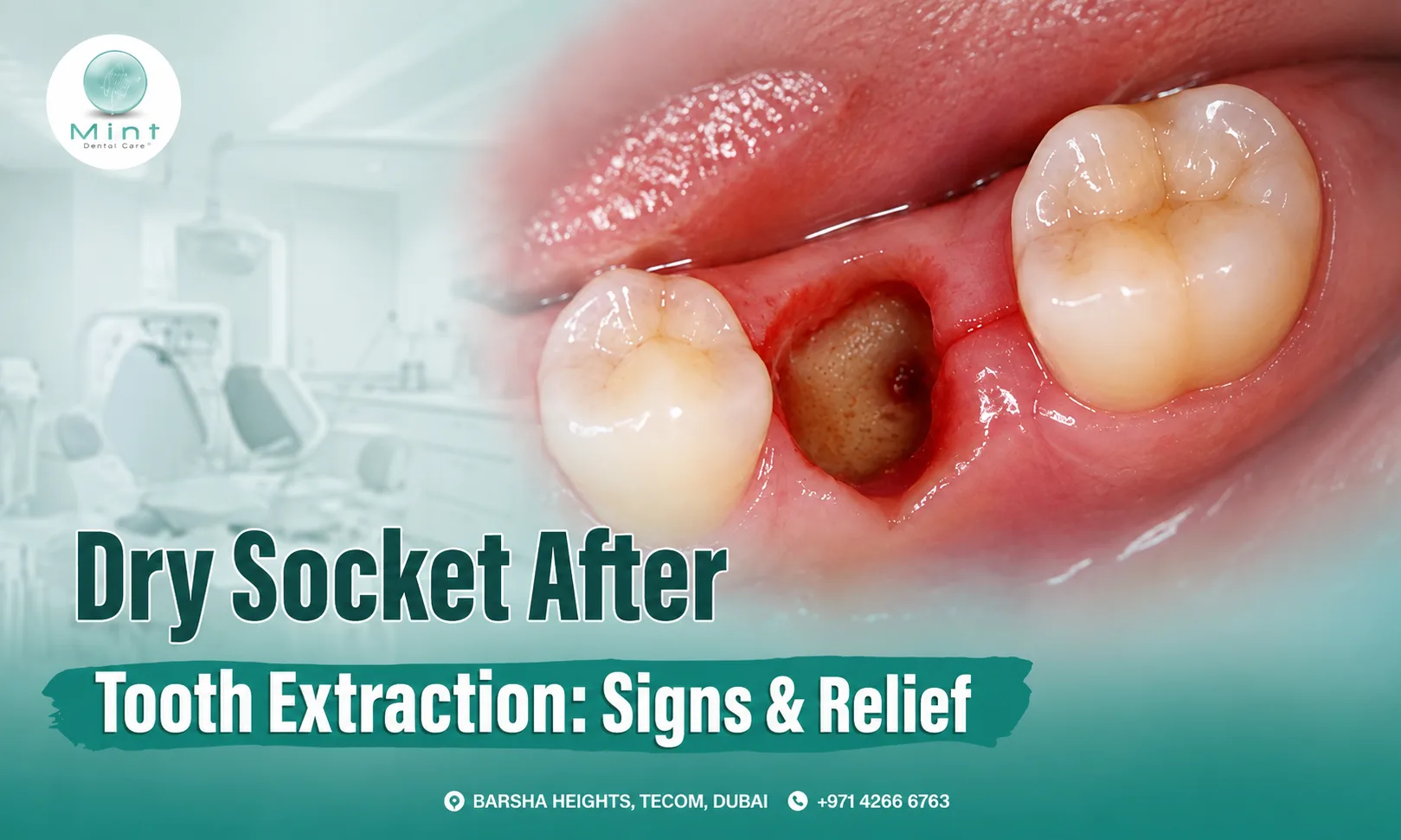
Dry socket is a painful complication that appears two to four days after a tooth extraction, when the blood clot protecting the healing bone breaks down or is washed away. It affects roughly 2 to 5 per cent of routine extractions and up to 30 per cent of difficult lower wisdom teeth. The pain is deep, throbbing, spreads to the ear, and unlike normal healing it gets worse rather than better.
The good news is that it is treatable in a single visit, and most patients feel relief within minutes of the socket being cleaned and dressed. The important thing is recognising it early instead of waiting it out with painkillers that will not touch it.
Pain getting worse three days after an extraction? Do not wait it out. Call Mint Dental Care on +971 4 266 6763 or WhatsApp us and we will see you the same day for extraction aftercare.
What is dry socket and how do you know you have it?
When a tooth comes out, the body fills the empty socket with a blood clot. That clot is a biological plaster: it seals the bone and nerve endings underneath and gives new tissue a base to grow on. Dry socket, known clinically as alveolar osteitis, happens when the clot dislodges or dissolves before the gum has closed, leaving bare bone exposed to air, food and saliva.
Timing is the clearest clue. Ordinary extraction discomfort peaks on day one and fades steadily. Dry socket pain starts after a quiet 48 hours and then climbs sharply. If you look into the socket you may see a pale, empty hollow with visible whitish bone instead of a dark red clot.
| Sign | Normal healing | Dry socket |
|---|---|---|
| Pain pattern | Worst on day 1, then improves | Improves, then worsens on day 2 to 4 |
| Type of pain | Dull, local, eased by painkillers | Deep and throbbing, radiates to ear, jaw or temple |
| The socket | Dark red clot filling the hole | Empty hollow, whitish bone visible |
| Breath and taste | Normal | Bad taste, unpleasant odour |
| Swelling and fever | Mild swelling, no fever | Usually no swelling or fever, which separates it from infection |
That last row matters. Swelling with fever and pus points to an infection rather than dry socket, and the two are treated differently.
Why the clot fails
Some sockets are simply more vulnerable, and some habits actively destroy the clot. The main risk factors are:
- Smoking or vaping in the first 72 hours, which is the single biggest cause, partly through suction and partly because nicotine narrows the vessels feeding the socket.
- Rinsing forcefully, spitting or drinking through a straw, all of which create the negative pressure that lifts the clot straight out.
- Difficult surgical removals, especially impacted lower wisdom teeth where the bone trauma is greater.
- An existing infection or heavy plaque around the tooth before it was taken out.
- Oral contraceptives and higher oestrogen levels, which are linked to a measurably higher rate.
- A previous episode of dry socket, since anyone who has had one is more likely to get another.
Our page on how to prepare for a tooth extraction covers what to sort out before the appointment, and it is worth reading before rather than after.
What the dentist does to treat it
Treatment is quick and the relief is immediate. The socket is gently irrigated to flush out debris, then packed with a medicated dressing containing eugenol, which soothes the exposed nerve endings almost on contact. Most patients walk out feeling dramatically better than they walked in.
The dressing is usually changed every two to three days until the pain stops, which normally takes one to two visits over a week. Antibiotics are not routine, because dry socket is a healing failure rather than an infection, and they are added only if there are signs of genuine infection alongside it. You will also be given pain relief that actually works on this type of bone pain, since paracetamol on its own rarely does.
Healing then continues normally. The socket closes over the following one to two weeks and there is no long-term damage to the bone or to the teeth beside it.
What the appointment should also include is a look at why it happened. If the socket is still holding food, if a fragment of bone is working its way out, or if the tooth next door is tender, those are separate problems that need their own answer rather than another dressing. A dentist who only packs the socket and sends you away has done half the job.
Home relief, and what to avoid
Nothing at home replaces having the socket cleaned and dressed, but these help while you wait for your appointment. Rinse very gently with warm salt water, half a teaspoon in a cup of water, letting it fall out of your mouth rather than spitting. Take ibuprofen if you can tolerate it, since it works better than paracetamol on bone pain. Keep your head raised when you sleep, and stick to soft, lukewarm food away from the extraction side.
Avoid the things that make it worse: no smoking or vaping, no straws, no vigorous rinsing, no poking at the socket with your tongue or a brush, and no clove oil poured directly into the hole, which sounds like folk wisdom but burns the surrounding soft tissue. Our guide on how to sleep after an extraction has more on getting through the first nights.
How to prevent dry socket
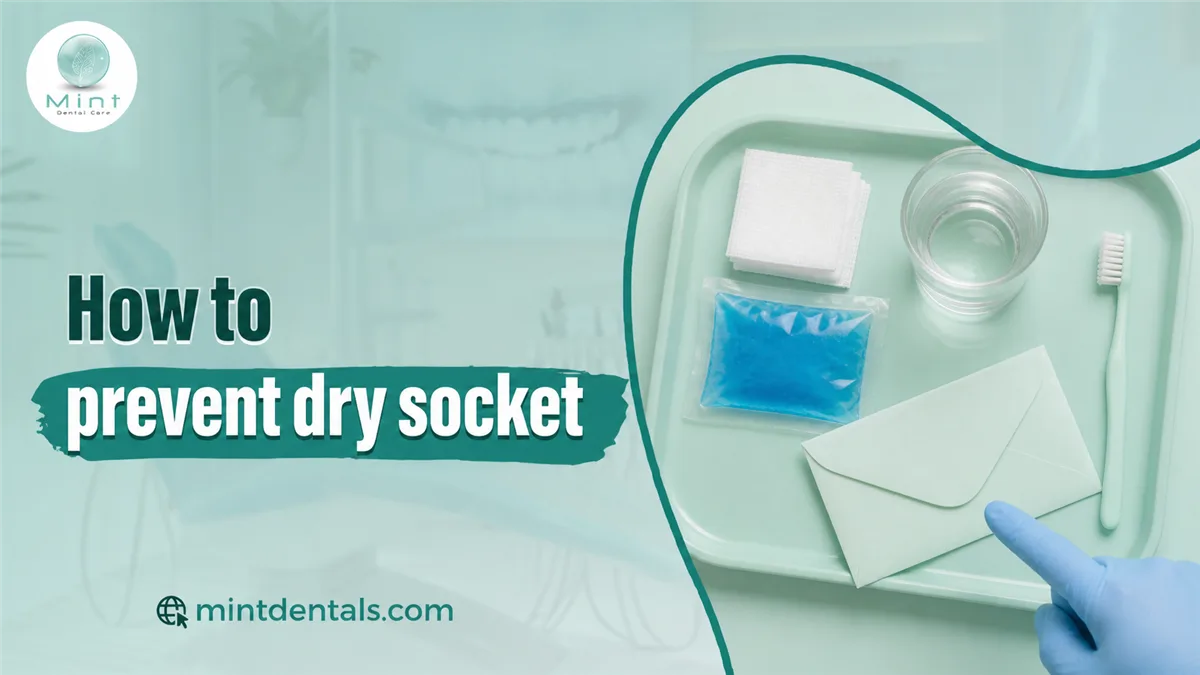
Prevention is mostly about the first three days. Do not smoke, do not use a straw, and do not rinse at all for the first 24 hours. After that, rinse gently with salt water rather than forcefully. Eat soft food, chew on the other side, and keep the rest of your mouth clean so bacteria are not sitting next to a healing wound. If you take an oral contraceptive, ask whether your extraction can be timed for a lower-oestrogen part of the cycle.
Difficult removals deserve extra care from the start, which is why impacted teeth are treated as surgical cases in our wisdom tooth extraction service, with the aftercare instructions matched to how complex the removal was.
Dry socket sounds alarming and it is genuinely one of the more painful things that can follow routine dental work, but it is neither dangerous nor difficult to fix. What turns a bad week into a bad day is calling the clinic early. If your pain is climbing on day three instead of fading, that is not something to sit out at home with more painkillers, and any dentist would rather see you and find nothing than see you a week later.
Extraction pain that is getting worse? Book a same-day check at Mint Dental Care, Barsha Heights (TECOM), Dubai. Our MOHAP-licensed team holds a 4.8-star patient rating. Call +971 4 266 6763, WhatsApp us, or book online.
Frequently asked questions
Can dry socket heal on its own?
It will eventually close by itself over one to two weeks, but you would be in significant pain for most of that time and the exposed bone stays at risk. A dressing settles the pain in minutes, so there is no medical reason to endure it.
What are the warning signs of dry socket?
Pain that improves and then sharply worsens two to four days after the extraction, a deep throb spreading to the ear or temple, an empty-looking socket with visible whitish bone, a bad taste and unpleasant breath. Fever and swelling point to infection instead.
Does salt water heal dry socket?
Gentle salt-water rinses keep the area clean and ease irritation, but they do not cover the exposed bone, which is what stops the pain. Use them as support alongside treatment, not instead of it, and never rinse forcefully.
How long should I worry about dry socket after an extraction?
The risk window is the first five days, and it is highest on days two to four. Once a week has passed with steadily improving pain, the socket has almost certainly healed normally.
Is dry socket more common after wisdom teeth?
Yes. Rates for routine extractions sit around 2 to 5 per cent, while impacted lower wisdom teeth reach up to 30 per cent because the removal is more traumatic and the site is harder to keep clean.
Do I need antibiotics for dry socket?
Usually not. It is a failure of clot healing rather than a bacterial infection, so cleaning and dressing the socket is the treatment. Antibiotics are added only when there is genuine infection alongside it, with swelling, fever or pus.
How much does treatment cost in Dubai?
If we carried out the extraction, reviewing and dressing the socket is part of your aftercare. For patients treated elsewhere, an emergency assessment starts at 200 AED for a general dentist consultation, with the dressing itself charged on top.