 Barsha Heights, Tecom, Dubai
 +971 (4) 266 6763
Gum Swelling Medicine: What Can the Pharmacy Actually Do?
12/10/2026 · Gum Disease Treatment in Dubai
 12/10/2026
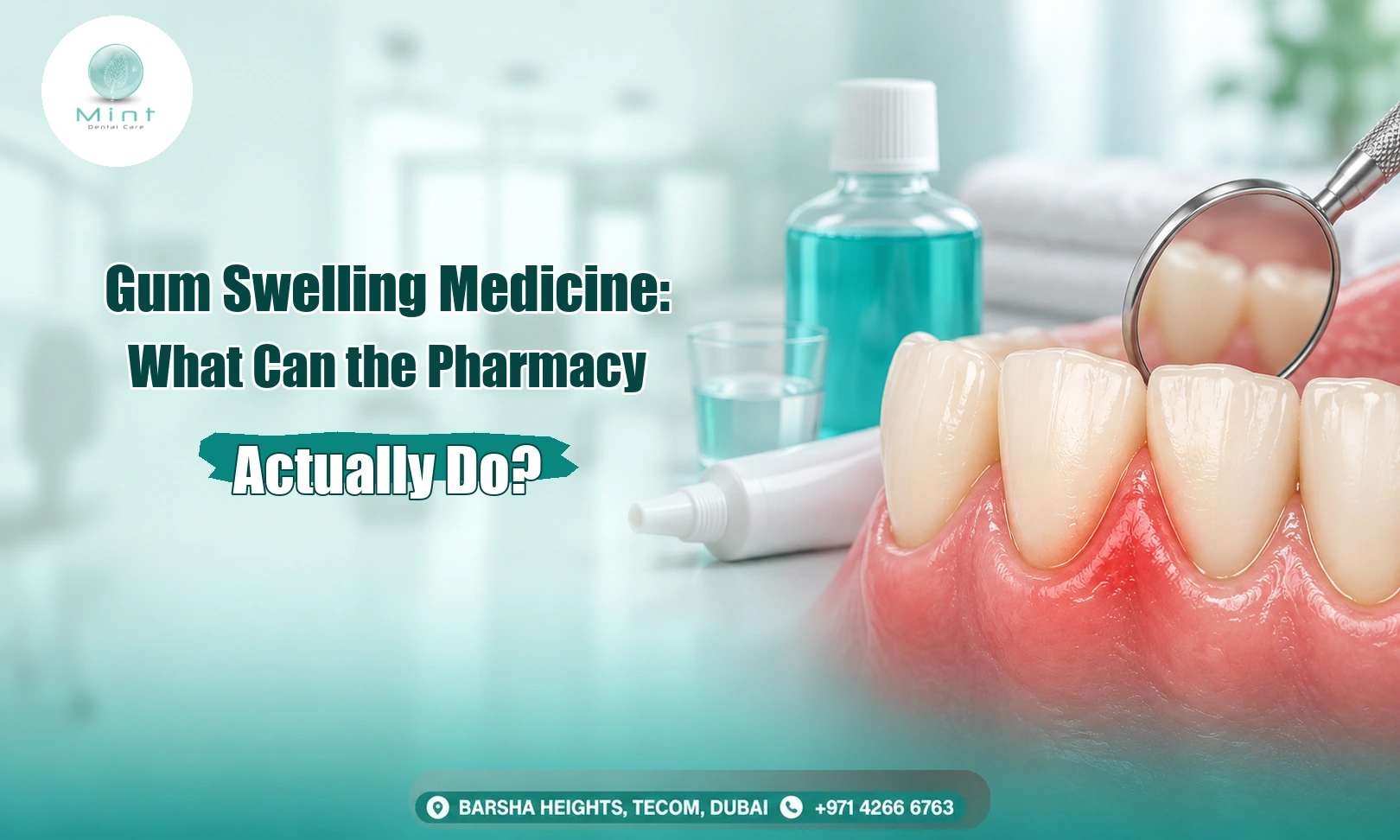
Gum swelling medicine can calm a swollen gum, but it cannot remove what caused it. A chlorhexidine rinse lowers bacteria for a short course of days, not weeks. An anti-inflammatory tablet eases the pressure. Neither lifts the plaque or tartar underneath, which is why a scaling and polishing at AED 500 is usually what ends it.
Most of the pharmacy shelf was never designed for gums. Teething gels, clove oil and whitening rinses sit beside the two that do something. This page says what each gum swelling medicine changes, and when to stop self-treating. Doses stay on the packet, confirmed by the pharmacist.
Gum swelling medicine: what works
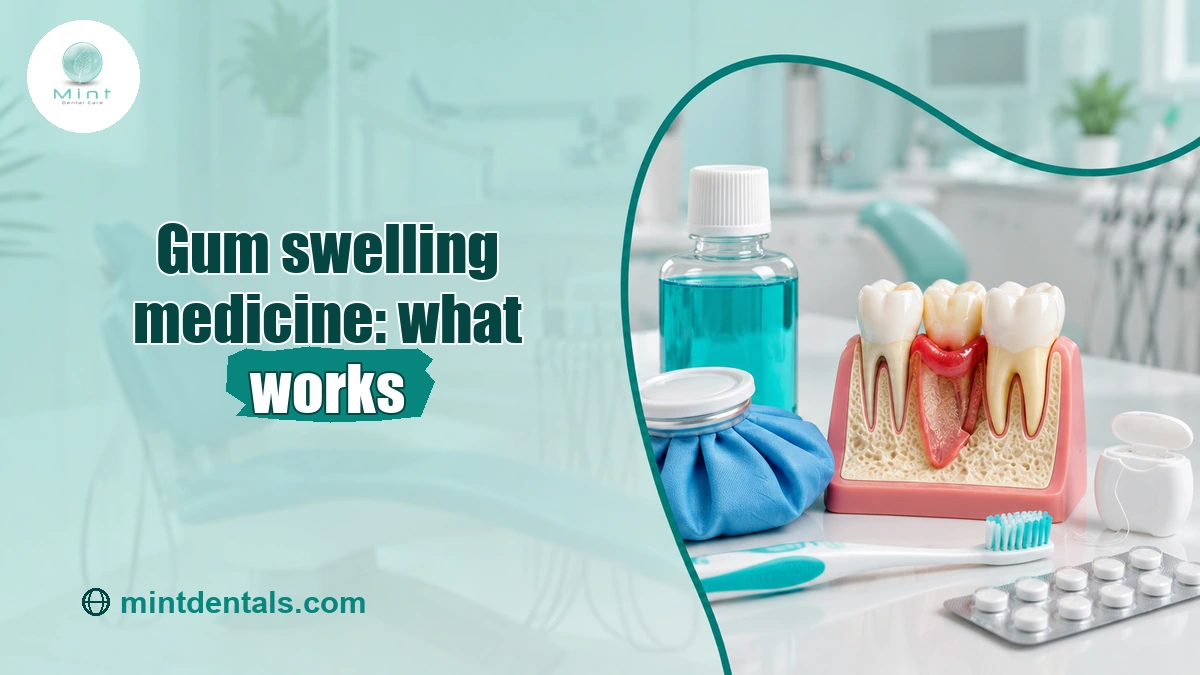
Three categories do anything measurable: an antiseptic rinse, an anti-inflammatory tablet, and a prescribed antibiotic when infection spreads. Everything else is comfort. Knowing which gum swelling medicine sits in which group stops you losing a week to something useless.
What a rinse changes
An antiseptic rinse cuts bacteria on the gum surface and in the first millimetre of the pocket. It settles redness and bleeding when deposit is light. It does not reach the base of a deep pocket, and it never dissolves tartar.
| Gum swelling medicine | What it does, and what it leaves |
|---|---|
| Chlorhexidine rinse | Cuts surface bacteria; leaves tartar and any pus pocket |
| Warm salt water | Soothes a draining gum; leaves the source |
| Anti-inflammatory tablet | Reduces pain and swelling pressure; leaves the cause |
| Topical anaesthetic gel | Numbs the surface briefly; changes nothing underneath |
| Antibiotic tablets | Prescription only; slows spread, removes no deposit |
Swollen gum: what to check first
Before reaching for anything from the pharmacy, it is worth working out what kind of swelling this is, because the answer changes what will help and how urgently you need to be seen.
Pressure under the swelling
Press the swelling gently with a clean fingertip. An inflamed but open gum feels soft and sore. A gum holding pus feels tight, shiny and domed, and the pressure itself hurts. That is a collection, and no rinse reaches inside one.
One tooth or all round
Swelling that runs along the gum line and bleeds when you brush is usually deposit. Swelling tied to one tooth, tender to bite on, points at the nerve or root. The two need different answers.
Antiseptic rinses for swollen gums
A rinse is the most common gum swelling medicine a pharmacist will hand over, and it does have a genuine use. The detail that matters is how long you are meant to use them.
Chlorhexidine as a short course
Chlorhexidine is the strongest gum swelling medicine sold without a prescription, and it is meant as a course of days, not a daily mouthwash. Follow the bottle, let the pharmacist confirm the length, and stop at the end rather than drifting into weeks.
Staining and taste changes
Prolonged chlorhexidine use stains teeth brown along the gum line and between the front teeth, and it dulls taste. The stain comes off with a scaling and polishing, but it is the real cost of treating a course as a routine.
Warm salt water rinses
Warm salt water is the one home rinse worth doing. It soothes a sore gum, helps a draining swelling keep draining, and stains nothing. It will not shrink a sealed swelling, and vigorous swishing hurts more.
Painkillers for a swollen gum
Pain relief is the part of gum swelling medicine most people get right, and the part that hides the problem longest. A tablet that works well carries you through a fortnight while the cause grows underneath.
Anti-inflammatory tablets
The ibuprofen family suits dental swelling because it acts on inflammation, not only pain. It does not suit everyone. Ulcers, kidney problems, asthma, pregnancy and blood thinners change the answer, so the pharmacist checks first. Paracetamol is the usual alternative.
Gels, clove oil and teething gel
Topical products are the weakest gum swelling medicine. A gel numbs the surface for minutes, which barely registers when pain comes from pressure below. Clove oil can burn the gum it sits on, and teething gel is made for infants.
Antibiotics for gum swelling
Antibiotics come up in almost every conversation about a swollen gum, usually because someone has a box left over from last time. This is where they help and where they do nothing at all.
Leftover antibiotics and the rebound
Antibiotics are prescription-only here, and a half-used box from a chest infection is the commonest mistake we see. It shrinks the swelling for a few days, then runs out. The deposit or dead nerve is still there, so the swelling returns larger.
Not a cure for gum disease
Gum disease is driven by a biofilm stuck to the tooth, and tablets do not remove a biofilm. Antibiotics have a place alongside cleaning in specific cases, never instead of it. No gum swelling medicine replaces the cleaning.
Products that do nothing
This is the stretch of the gum swelling medicine aisle worth walking past. None of it is dangerous. It has no mechanism that touches an inflamed gum, and the days spent on it are the real cost.
| Product | Why it does not help a swollen gum |
|---|---|
| Whitening mouthwash | Made for stain on enamel, no action on gum tissue |
| Herbal or detox rinses | No antiseptic strength at the level a swollen gum needs |
| Oil pulling | Moves oil around, leaves plaque and tartar in place |
Causes of a swollen gum
Three causes cover almost every swollen gum we see, and each explains why a gum swelling medicine bought yesterday has not fixed it. A fourth, food wedged into a tight gap, often shifts with careful flossing.
Tartar at the gum line
The commonest cause is deposit too hard for brushing to reach. The gum stays red, puffy and quick to bleed, settles with a rinse and returns, because tartar is a rough surface bacteria live on. The early signs of gum disease matter here.
A gum boil that keeps returning
A swelling that bursts, tastes foul, deflates and reappears weeks later is draining, not healing. Drainage is why the pain settles; the source, a dead nerve or a deep pocket, is untouched. That pattern needs dental abscess treatment, not another rinse.
Swelling behind a wisdom tooth
A gum flap over a partly erupted lower wisdom tooth traps food and swells in episodes, often with a sore jaw and bad breath. Rinsing helps the episode pass and does not stop the next one. Our guide to why wisdom teeth hurt covers the pattern.
How long to wait before booking
Give gum swelling medicine two to three days to show direction. You are looking for the swelling to be smaller, not merely less painful. Masked pain over an unchanged lump is not improvement.
| Day | What should be happening |
|---|---|
| Day 1 to 2 | Pain easing, swelling no larger |
| Day 3 | Swelling visibly smaller, bleeding settling |
| Day 4 to 5 | Gum near normal colour, no tenderness |
| Day 5, no change | The cause is still there, book an assessment |
| Spreading swelling | Be seen the same day |
What the visit costs
An examination and an X-ray tell you whether this is deposit, a nerve or a flap. A scaling and polishing removes the cause in most gingivitis cases, and our gum disease treatment page sets out what an assessment covers.
| Step | Published price |
|---|---|
| General dentist consultation | AED 200 |
| Specialist consultation | AED 300 |
| Periapical or bitewing X-ray | AED 150 |
| Scaling and polishing | AED 500 |
| Deep cleaning | Quoted at consultation |
What happens beyond that first clean, when pockets are deep, is set out on our page on gum disease treatment in Dubai.
Red flags: be seen today

A few signs mean no gum swelling medicine will be enough, and waiting for a rinse to work costs you something real.
Facial swelling and fever
Swelling that has left the gum and reached the cheek, jawline or under the eye means infection in the tissue spaces. Add a temperature or feeling generally unwell and it is no longer local. Be seen that day, not at the end of the week.
Bad taste and trouble swallowing
A persistent salty or metallic taste suggests pus draining into the mouth. Difficulty swallowing, a tight throat, or a jaw that will not open fully are more serious, because the swelling is near your airway. That is an emergency, not an appointment.
The pharmacy buys a few comfortable days. A rinse lowers the bacteria it can reach, a tablet reduces the inflammation, and the tartar, leaking filling or dead nerve underneath carries on as before. Swelling that keeps coming back is not the wrong product. Gum swelling medicine is a bridge to the visit that removes the cause.
Frequently asked questions
The questions below about gum swelling medicine are the ones people ask standing at the pharmacy counter, when the gum is already sore and a dental appointment feels like it can wait.
Which gum swelling medicine actually works?
A chlorhexidine rinse as a short course and an anti-inflammatory tablet are the two that change anything, and warm salt water helps a gum that is draining. Use the dose on the packet and let the pharmacist confirm it. None of them removes plaque, tartar or an abscess.
Is chlorhexidine mouthwash safe to use for weeks?
It is meant as a short course, not a routine. Prolonged use stains teeth brown along the gum line and blunts your sense of taste. Follow the length printed on the bottle and stop when the course ends.
Will leftover antibiotics clear a swollen gum?
No, and they usually make things harder. A partial box suppresses bacteria for a few days, so the swelling shrinks and you feel reassured. Then it runs out, the deposit or dead nerve is still there, and the swelling comes back larger.
Does a gum swelling gel do anything?
A topical gel numbs the gum surface for a few minutes, which barely registers when the pain comes from pressure underneath. Teething gels are made for an infant’s erupting tooth, and clove oil can burn the gum it sits on. Neither reduces the swelling.
How many days should I give a swollen gum before booking?
Two to three days of rinsing and sensible pain relief is a fair trial. By day three the swelling should be visibly smaller, not merely less painful. If it is the same size on day five, another week of gum swelling medicine will not change it.
What does it mean if the swelling drains and then returns?
It means an abscess found a route out, which relieves pressure without treating the source. Bursting, settling and returning can run for months while bone is lost around the tooth. A dentist traces it to a dead nerve or a deep pocket and treats that.