 Barsha Heights, Tecom, Dubai
  +971 (4) 266 6763
Permanent Retainer After Braces: Cost, Care & Risks
14/08/2026 · Braces in Dubai
 14/08/2026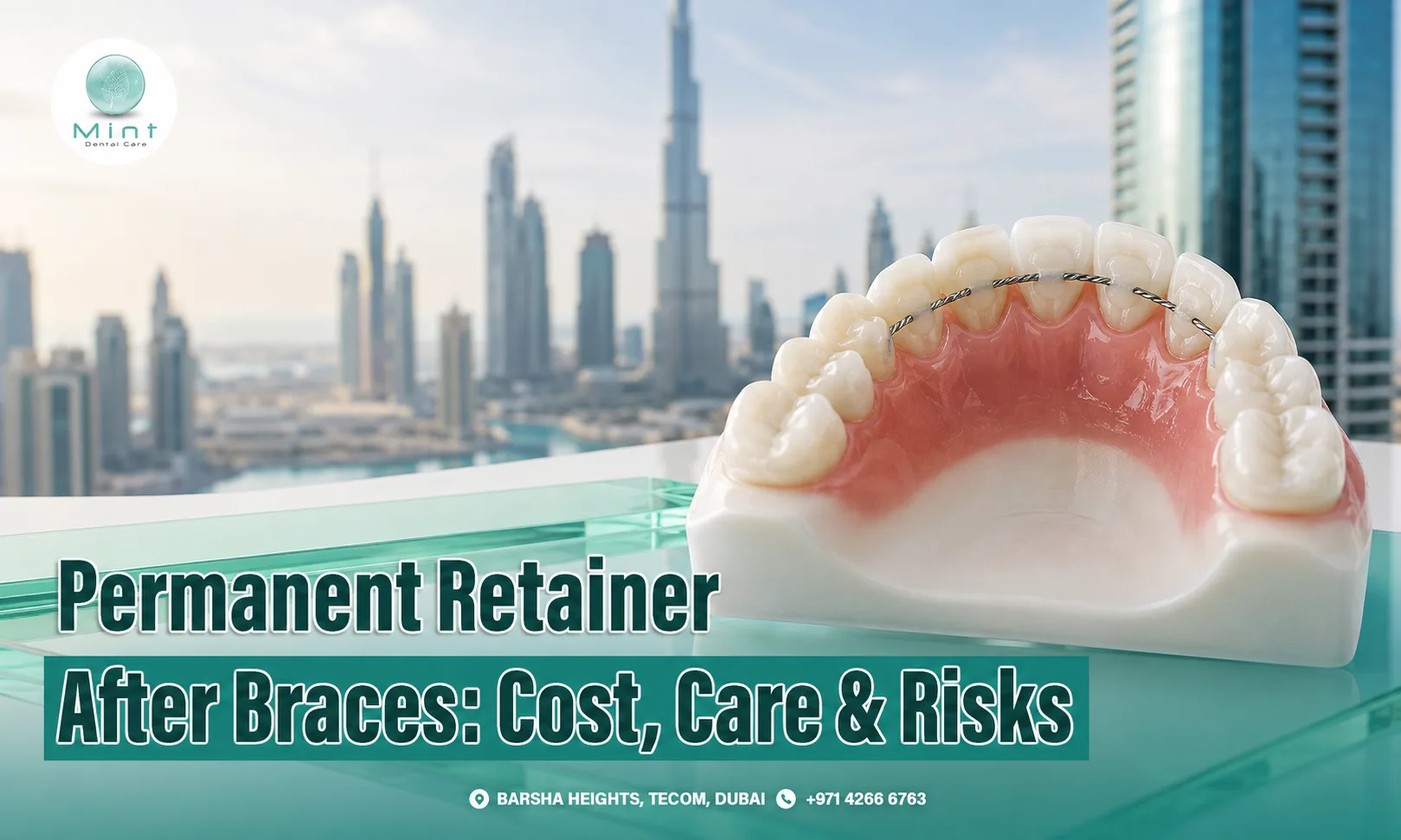
Permanent retainer treatment means bonding a thin wire behind your front teeth so they cannot drift back after braces or aligners. It stays in place for years rather than being taken in and out, it is invisible from the front, and it removes the single biggest cause of relapse, which is forgetting to wear a removable retainer.
It is not automatically the better choice for everyone. A bonded wire demands more of your daily cleaning, it can debond without you noticing, and some teeth are not suited to it. Here is how to decide, and how to look after one properly if you have it.
Finished braces and worried your teeth are moving? Book a retention check at Mint Dental Care before the drift becomes visible. Call +971 4 266 6763, WhatsApp us, or see our braces and orthodontic treatment.
What is a permanent retainer and who needs one?
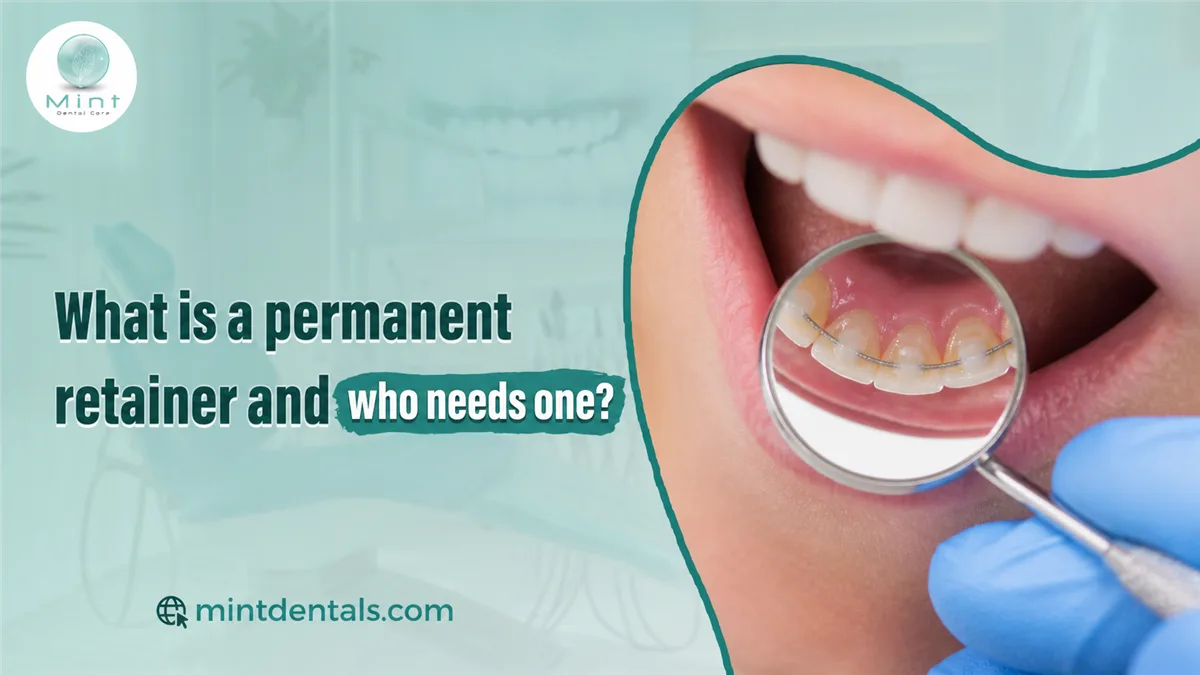
A permanent retainer, also called a fixed or bonded retainer, is a small multi-strand wire cemented to the inner surface of the teeth, usually the lower six front teeth and sometimes the upper four. You cannot see it or take it out. It holds the teeth in their finished positions around the clock, which matters because the fibres in the gum keep pulling teeth toward their old positions for years after treatment ends.
It is typically recommended when the original crowding was severe, when a gap between the front teeth was closed, when teeth were rotated a long way, or for anyone whose track record with removable appliances is honestly poor. Teenagers who will not remember a nightly routine are prime candidates.
It is less suitable when the bite closes very deeply on the back of the upper front teeth, since the wire is then repeatedly knocked, or when gum disease or heavy tartar makes plaque control around a fixed wire risky.
Fixed versus removable retainers
| Fixed (bonded) | Removable | |
|---|---|---|
| Compliance needed | None, it works by itself | High, must be worn nightly for life |
| Visibility | Invisible, sits behind the teeth | Clear plastic or a wire across the front |
| Cleaning | Harder, needs threaders or an interdental brush | Easy, taken out to brush |
| Failure mode | Silent debond, teeth move unnoticed | Lost, broken or simply not worn |
| Typical use | Lower front teeth, high relapse risk | Upper arch, deep bites, lower risk cases |
In practice most orthodontists use both: a permanent retainer on the lower front teeth plus a removable one at night for the upper arch. Our comparison of clear versus Hawley retainers covers the removable side of that choice, and if you finished with aligners, retainers after Invisalign explains why retention is not optional.
How it is fitted, and what it costs
Fitting takes one appointment of about 30 to 45 minutes and needs no anaesthetic. The teeth are polished and isolated, the wire is bent to match their exact contours, then each tooth is bonded to it with a small pad of composite. You leave able to eat normally, although the tongue notices the wire for the first few days.
At Mint Dental Care, the fee for fitting or replacing a permanent retainer is confirmed after a specialist assessment, which costs 300 AED. The question worth asking any clinic is what happens later: whether repairs, rebonds and reviews are covered, because a retainer is a ten-year relationship, not a one-off appointment.
Cleaning and flossing around the wire
This is where a permanent retainer succeeds or fails. Plaque and tartar build up along the wire faster than anywhere else in the mouth, and a neglected permanent retainer causes gum inflammation and decalcification on the very teeth it is protecting.
- Use a floss threader or superfloss to get under the wire between every pair of teeth, once a day, which takes about two minutes once you are used to it.
- An interdental brush or a water flosser makes the routine far quicker and is the reason most people actually keep it up.
- Angle a soft brush at the gum line behind the lower front teeth, the spot almost everyone misses.
- Keep six-monthly hygiene visits, since tartar that has already hardened around the wire cannot be removed at home.
When a permanent retainer fails
The most common problem is a silent debond: one composite pad lets go, the wire stays in place looking normal, and that single tooth quietly starts to move. By the time it is visible the tooth has already shifted. Run your tongue along the wire every few weeks, and if any part feels loose, sharp or moves independently, get it checked within days rather than months.
Wires can also fracture from biting hard food, and long-term a small number of cases develop unwanted tooth movement caused by the wire itself, which is exactly why orthodontists ask you to keep coming back for reviews rather than assuming it is a fit-and-forget device. Hard nuts, ice, crusty bread crusts and biting into whole apples are the usual culprits, so cut hard food rather than tearing at it with the front teeth.
How long does it stay in?

Indefinitely, in most modern retention plans. Teeth drift throughout life, so the honest answer orthodontists now give is that retention is permanent if you want the result to be permanent. A well-maintained permanent retainer often lasts 10 to 20 years before it needs replacing, and removing one is quick and painless when the time comes: the composite is polished off and the enamel underneath is unchanged.
The trade-off with a permanent retainer is simple enough to weigh up. You are exchanging a nightly habit you might forget for a daily cleaning habit you cannot skip. For most people who have just spent a year or two and a significant amount of money straightening their teeth, that is a good exchange, provided you keep up the flossing and get the wire checked at every routine visit. What ruins fixed retention is never the wire itself, it is the six years of not looking at it. Book a check if you have not had yours reviewed since the braces came off, and if you also use a removable one at night, bring it with you.
Book a retainer check at Mint Dental Care, Barsha Heights (TECOM), Dubai. MOHAP-licensed specialist orthodontists, 4.8-star patient rating. Call +971 4 266 6763, WhatsApp us, or book online and protect the result you paid for.
Frequently asked questions
How long does a permanent retainer last?
Commonly 10 to 20 years, and many stay in far longer. What ends its life is usually a debonded pad or a fractured wire rather than wear, both of which are repairable at a single appointment if you catch them early.
Is a permanent retainer better than a removable one?
It is more reliable, because it does not depend on you remembering. It is not better for everyone: deep bites, poor gum health and heavy tartar all favour a removable retainer instead. Most people do best with a bonded wire on the lower teeth and a night-time retainer on the upper.
Can I bite into an apple with a permanent retainer?
Better not to. Tearing into whole apples, crusty bread and hard nuts with the front teeth is the classic way to fracture the wire or pop a bond. Cut hard food into pieces and chew on the back teeth instead.
Why do some orthodontists dislike bonded retainers?
Because of the silent failure mode. A debond that goes unnoticed lets a tooth move while the retainer looks intact, and in a small number of cases a distorted wire actively pushes teeth out of position. That is an argument for regular reviews, not for skipping retention.
Does fitting a permanent retainer hurt?
No. There is no drilling and no anaesthetic. The appointment takes 30 to 45 minutes, and the only adjustment is your tongue getting used to the wire over the first few days.
How much does a permanent retainer cost in Dubai?
At Mint Dental Care, the fee for fitting or replacing a permanent retainer is confirmed after a specialist assessment, which costs 300 AED. The final figure depends on how many teeth the wire covers and whether an old retainer needs removing first.
What if my retainer comes loose?
Book within a few days, and do not try to reattach it yourself. A single loose pad is a five-minute rebond if it is caught early, whereas a tooth that has drifted for months may need aligners to reposition it before the wire can be replaced.